

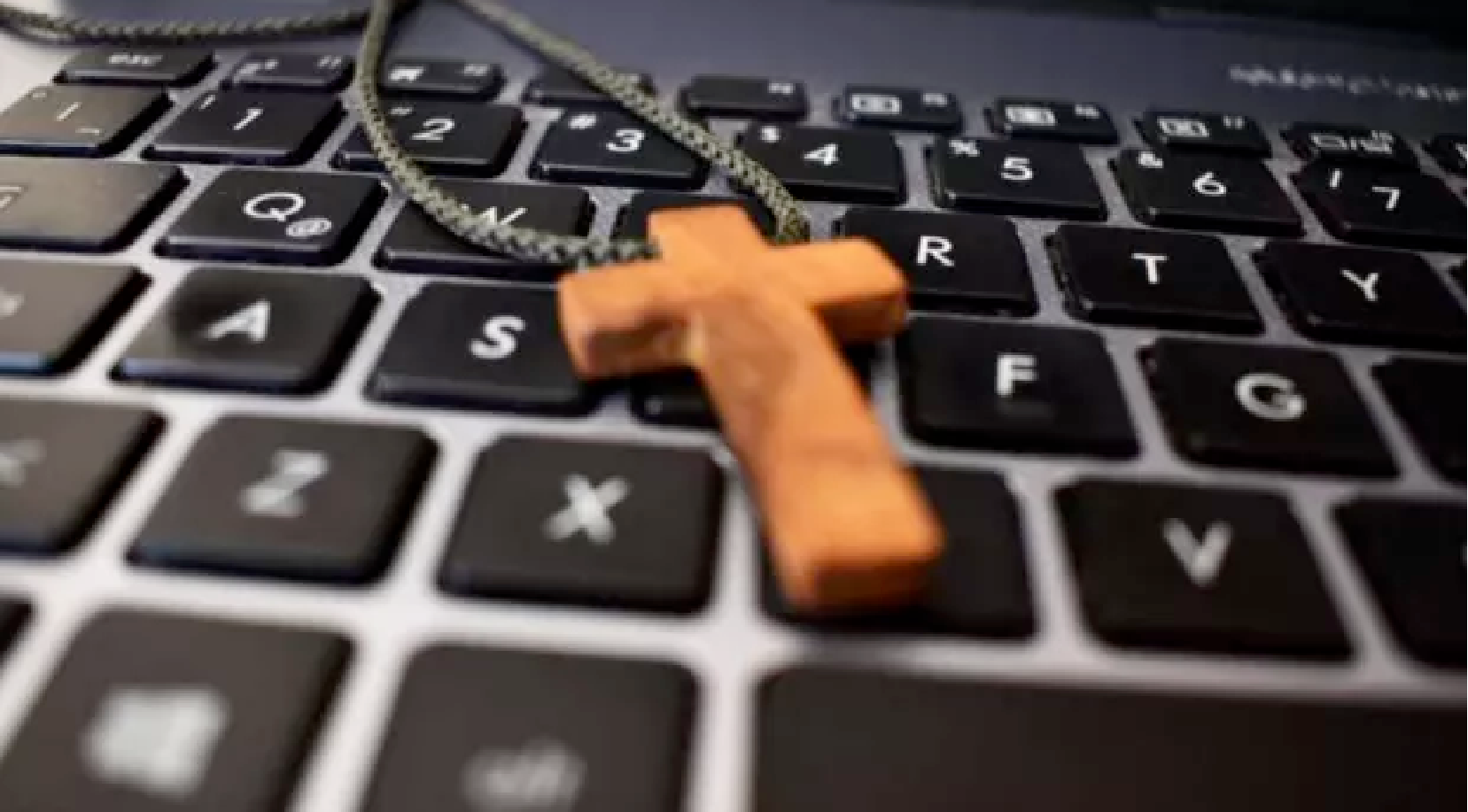
(ZENIT News – OMPress / Beijing, 10/21/2025) – The «Code of Conduct for Religious Clergy on the Internet,» promulgated by China’s State Administration for Religious Affairs, has just been published. Religious formation and education can only be provided through websites and applications legally approved by this organization.
This is a Code published on the website chinacatholic.cn, consisting of 18 articles, which regulates the behaviour of religious clergy online and affects all «approved» religious denominations. It clarifies that clergy must love the motherland, uphold the leadership of the Communist Party of China, defend the socialist system, and abide by national laws, regulations, and ordinances governing religious affairs. It also clarifies that religious clergy may only preach or provide religious education and formation online through websites, applications, and forums legally established by religious groups, religious schools, temples, monasteries, and churches that have obtained an «Internet Religious Information Services License.» It also clarifies that religious clergy are prohibited from using the Internet for promoting, supporting or participating in foreign religious infiltration activities, spreading religious extremism, promoting heretical cults, participating in unconventional practices, or using their religion to amass wealth. They must «maintain religious harmony, social harmony, and ethnic harmony.»
A harmony that requires religious personnel not to produce, copy, store, publish, or disseminate «content that incites subversion of State power, opposes the leadership of the Communist Party of China, undermines the socialist system, national unity, ethnic unity, and social stability, or interferes with the implementation of the State’s judicial, educational, marriage, and social management systems.»
Another point, contained in Article 10, states that they «shall not disseminate religious ideas or induce religious beliefs in minors through the Internet, nor organize minors to participate in religious education and formation, summer (winter) camps, etc., nor organize or force minors to participate in religious activities.»
All of this makes it prohibited, except through the approved pages referred to above, to preach «through live broadcasts, short videos, online meetings, WeChat groups, etc.; to organize or participate in online religious activities such as ceremonies, worship, and Masses, as well as religious rituals such as burning incense, offerings to Buddha, reciting scriptures, receiving precepts, and baptism; and to conduct online learning and formation with religious connotations or content such as ‘meditation,’ ‘purification,’ and ‘healing.'» In the event of violations of the Code’s provisions, the Authorities will set a time limit for correcting the «deficiencies» before proceeding to suspend religious activities or cancel their status as religious clergy, «and will hold those in charge of the relevant religious groups, religious schools, or places of religious activity accountable.» This regulation stresses that its provisions also extend to the religious clergy of Hong Kong, Macao, and Taiwan, as well as foreign religious clergy.
In Elise Anne Allen’s book-length interview, «Leo XIV, Citizen of the World,» published in July, the Pope addressed the Holy See’s contentious relationship with China. He said he was in dialogue with persecuted Chinese Catholics and was weighing the Holy See’s policy toward Beijing. «I would say that, in the short term, I will continue the policy that the Holy See has followed for some years. In no way do I claim to be wiser or more experienced than all those who have gone before me,» he noted. He acknowledged, however, that «I am trying to gain a clearer understanding of how the Church can continue its mission, respecting both the culture and the political issues, which are undoubtedly of great importance, but also respecting a significant group of Chinese Catholics who, for many years, have lived with some form of oppression or difficulty in living their faith freely and without choosing sides.»

Publicaciones relacionadas:
 San Francisco Archbishop Calls on Faithful to March for Mass
 Nicaraguan Dictatorship Closes Foundation of Dominican Nuns
 USA: Indiana school district pays former music teacher $650,000 to settle religious discrimination case
 This is what the 2026 Annual Report on Religious Freedom in Latin America states
