

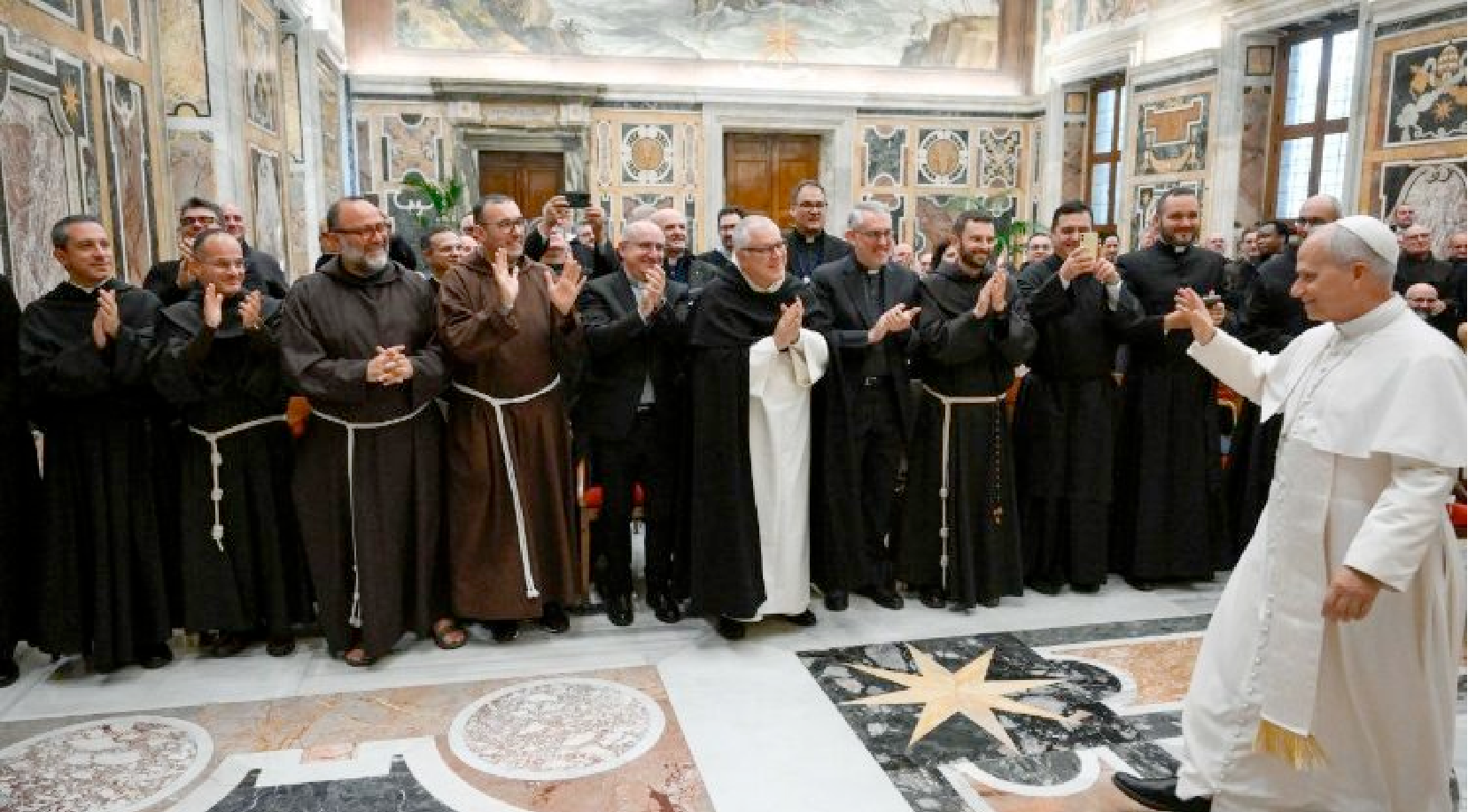
(ZENIT News / Rome, November 18, 2025) – In his address on November 7 to the Religious Superiors participating in the 65th General Assembly of the Italian Conference of Major Superiors (CISM), Pope Leo XIV indicated that the «ministry of authority» should be oriented toward supporting the apostolate carried out by Religious with «ecclesial discernment, careful decision-making processes, a commitment to accountability for one’s work, and to evaluating its results and methods.»
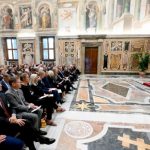
The Holy Father received the members of CISM in the Clementine Hall of the Apostolic Palace, after their Assembly held in Assisi from November 3 to 6 on the theme «Governing Hope: Forms and Styles of Government of the Provinces in a Synodal Church,» and gave them examples of «synodal life» in the Religious Family that «throughout the centuries» mature practices of «community discernment learning to harmonize individual gifts and the common mission.»
He emphasized the rotation of responsibilities and positions: «The importance of fostering a fruitful rotation of responsibilities and tasks in forms of government, avoiding static forms of activity that risk favouring rigidity and sclerosis. Pope Francis, in this sense, has warned us several times about the danger of ‘stagnant waters.'»
Pope Leo XIV took instructions from the last Synod and made reference to St. Augustine, in the Soliloquies: «Why do you want your loved ones to live and live with you? So that we may investigate our soul and God in harmonious collaboration. In this way, whoever first solves the problem will effortlessly lead others to the same result» (I, 12, 20).
He proposed that the Religious be listened to and that projects and approaches be exchanged, because in this way there is «a journey of purification destined to make individuals and communities ever freer in goodness, both at the level of personal growth and in the exercise of charity. And this also clearly favors a renewed charismatic fidelity, which requires a continuous stripping away of structures and ties that are not essential, or even harmful, to the full realization today of the original mission inspired by the Founders.»
And, from the perspective of synodality, I emphasize: «A heritage formed by these resources cannot be considered something defined and static: it is the fruit of a dynamism of life and faith that needs to evolve, grow, develop and express itself continually, both in the multiplicity of charismatic contexts and in the continuous novelty of situations and relationships.»
The Pope deduced «three important attitudes: ecclesial discernment, care for decision-making processes, commitment to accountability for one’s own work and evaluation of results and methods (Final Document, October 26, 2024, 79).» In this way charity will be lived among consecrated persons who share all that is good, and each community will be strengthened through the co-responsibility of its members.

Publicaciones relacionadas:
 On the controversy in the German episcopate regarding Leo XIV’s clear “no” to liturgical blessings for gay couples
 From Francis’ “globalization of indifference” to Leo XIV’s “globalization of powerlessness”
 Pope Leo XIV speaks out against anti-Semitism
 Pope Leo XIV and his “brief treatise” on journalism and communication
