

(ZENIT News / Rome, 08.19.2026).- The most revealing criticism of the Catholic Church’s synodal experiment may not be coming from opponents of synodality at all. It is coming from bishops and cardinals who accept consultation, dialogue and shared discernment, but fear that a method intended to serve the Church could gradually become a substitute for the Church’s own mission.
That concern has surfaced with unusual clarity in recent interventions from the Netherlands, Germany and Italy, just as the Synod on Synodality moves from its formal meetings into a longer phase of implementation.
Auxiliary Bishop Rob Mutsaerts of ‘s-Hertogenbosch has put the question most bluntly. In an open letter to Pope Leo XIV published August 13, he asks whether the years-long process is actually bringing souls closer to Christ and eternal salvation.
For Mutsaerts, that is the test that matters.
The process, begun in 2021 and formally covering the 2021-2024 period, has involved extensive consultation of bishops, priests, religious and lay Catholics. Its implementation is continuing, with further stages planned through 2028. But Mutsaerts argues that the Church should now measure the undertaking by outcomes rather than activity.
Has faith grown stronger? Is Christ being proclaimed more clearly? Are more people attending Sunday Mass? Are vocations increasing? Is Catholic teaching better understood? Is Eucharistic devotion deepening?
These questions shift the discussion away from the mechanics of synodality and toward evangelization.
And that distinction is becoming increasingly important.
Cardinal Rainer Maria Woelki of Cologne, who turned 70 on August 18, has likewise called for a clearer definition of synodality for the universal Church. In an interview published this month, he argued that the German Synodal Path placed too much emphasis on participation and forms of shared governance while insufficiently acknowledging that the Church is sacramental and hierarchical.
His formulation is strikingly simple: the Church does not belong to Catholics as though they were shareholders deciding what institution they want to construct. It belongs to Christ.
For Woelki, synodality has value precisely when it remains an instrument of mission and evangelization. The danger begins when structures designed to facilitate participation acquire a life of their own.
That question has immediate practical consequences in Germany. The proposed Synodal Conference, intended to give permanent institutional continuity to the German process, remains subject to scrutiny by Rome. Its statutes must receive approval from the Holy See, and its proposed November launch is not expected to proceed as originally envisaged.
Woelki, one of the German bishops who declined to participate in the committee preparing the new structures, is now waiting to see what corrections Rome considers necessary.
But the most nuanced intervention comes from Cardinal Angelo Scola, the emeritus Archbishop of Milan and former Patriarch of Venice. He does not call for an abandonment of synodality. Instead, he identifies the danger of confusing a procedure with the reality that procedure is supposed to express.
«The source of synodality is communion,» he argues.
It is a crucial distinction. A Church can hold more meetings without becoming more united. It can consult more people without necessarily becoming more missionary. It can create new structures without deepening the Christian life.
Scola therefore accepts synodality as a method, but rejects the idea that the method itself should become the organizing principle of Catholic existence.
His position also offers a useful corrective to the increasingly polarized debate. The choice is not necessarily between an authoritarian Church that never listens and a democratic Church in which doctrine is collectively negotiated. Catholic tradition has always known councils, synods, episcopal collegiality, pastoral councils and other forms of consultation.
What it has not traditionally understood is the Church as a political assembly whose truths are established by majority vote.
This is precisely where Mutsaerts’ criticism becomes more radical. He warns that prolonged discussion of issues on which Catholic doctrine is already defined can create expectations that the Church cannot ultimately fulfill.
If questions concerning priestly ordination, the female diaconate, sexual morality or the nature of authority are repeatedly presented as matters awaiting discernment, some Catholics may reasonably conclude that fundamental teaching is itself awaiting a vote.
The result, he argues, can be frustration rather than renewal.
There is also a more uncomfortable question behind the entire debate: whether the Church’s institutional energies correspond to the scale of its spiritual crisis.
Mutsaerts points to empty churches, disappearing monasteries, aging religious communities, declining knowledge of Catholic doctrine, weak sacramental practice and a shortage of priestly vocations across much of Western Europe.
His metaphor is deliberately dramatic: a house on fire has other priorities than rearranging the furniture.
That does not make questions of governance irrelevant. Good governance matters. So does listening. So does involving the laity in the life of the Church. But none of these things constitutes evangelization in itself.
Scola’s formulation provides perhaps the most constructive way through the dispute. Synodality should not be discarded; it should be rooted in communion. Participation should not become parliamentary competition. Diversity should not become fragmentation. Dialogue should lead somewhere.
The biblical image that Mutsaerts uses is the road to Emmaus.
Christ listens to the disappointed disciples, but He does not merely affirm their interpretation. He corrects them, opens the Scriptures and leads them toward recognition of Himself. When they finally recognize Him in the breaking of the bread, they do not remain in Emmaus indefinitely discussing their experience. They return to Jerusalem to proclaim what they have seen.
That may be the central challenge facing the Catholic Church’s synodal project as it enters its next stage.
The question is not whether Catholics should walk together. They should. The question is whether they are walking toward Christ, or increasingly spending their energy discussing how the walking itself should be organized.
For Leo XIV, this debate could become one of the defining ecclesial questions of his pontificate. His challenge is not simply to choose between competing factions in the synodal controversy, but to establish a Catholic synthesis in which listening serves truth, participation serves communion, and structures serve mission.
If synodality is genuinely a means of evangelization, its success should ultimately be visible beyond the synodal process itself: in stronger faith, deeper sacramental life, renewed vocations, families transmitting Christianity to their children and Catholics who are confident enough to proclaim Christ in a secular culture.
That is a much harder standard than counting meetings or measuring participation.
It is also the standard by which the Church’s reform movements have historically been judged.
The great renewals of Catholic life were not ultimately produced by organizational charts. They were driven by saints.
The question now facing the synodal Church is therefore deceptively simple: after all the listening, consultation and discernment, will it have something compelling to proclaim?
And if the answer is Christ, the next step should not be another meeting about the journey.
It should be the journey itself.
Thank you for reading our content. If you would like to receive ZENIT’s daily e-mail news, you can subscribe for free through this link.

Publicaciones relacionadas:
 Ten Surprising Facts About New Cardinals Chosen by Pope Francis
 Is Archbishop Georg Gänswein Against Pope Francis? Two Victims, Parts of the Archbishop’s Book and Other Contexts
 The Other Global Shortage: A Hundred Million Christians Still Waiting for a Bible
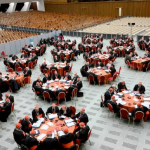 Cardinals will return to Rome for a new Consistory in June 2026 requested by Pope Leo XIV
