

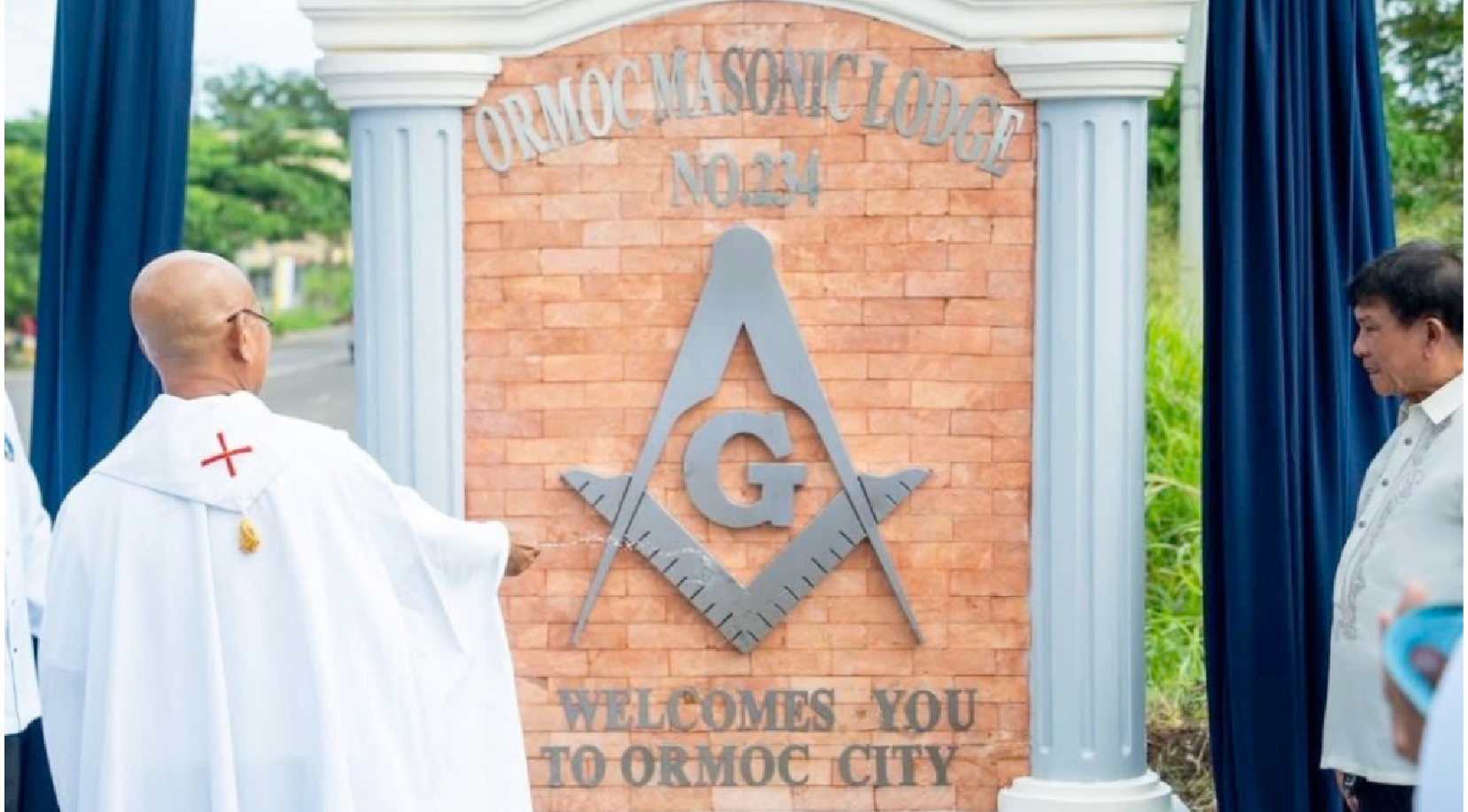
(ZENIT News / Manila, 09.10.2025).- The delicate relationship between Catholicism and Freemasonry resurfaced in the Philippines this month when a local priest was suspended after blessing a Masonic marker in a public ceremony. The incident, captured in photographs and quickly circulated on social media, has ignited debate over ecclesial discipline, doctrinal clarity, and the lived realities of Catholic life in a country where Freemasonry has a visible social presence.
On September 1, the Discalced Augustinians (OAD) announced the temporary suspension of Father Libby Daños, a priest serving in Ormoc City in Leyte province. The measure followed viral images showing Daños blessing a stone marker inscribed with Masonic symbols — a gesture that, according to Church authorities, contradicts Catholic teaching.
Father Luigi Kerschbamer, provincial prior of the OAD, said the priest had not fully realized the implications of the event but nevertheless acknowledged that the action caused scandal among the faithful. In a formal statement, Kerschbamer emphasized that Daños expressed “deep regret” and is cooperating with a canonical investigation. While the case is under review, Daños is barred from exercising public ministry.
“The incident illustrates the need for vigilance,” Kerschbamer wrote, adding that the order is strengthening formation programs for its members to ensure they can discern situations that may compromise the Church’s witness.
The suspension comes at a time when the Vatican has repeatedly clarified its stance on the incompatibility between Catholic faith and Masonic affiliation. In November 2023, the Dicastery for the Doctrine of the Faith reiterated that Freemasonry, particularly in the Philippines, is not limited to formal lodge members but includes a wide circle of sympathizers who consider their involvement compatible with Catholic identity. The statement firmly rejected that view, warning Catholics against participation in Masonic activities.
Historically, the Church’s opposition to Masonry has been unambiguous. Since the 18th century, successive popes have condemned the movement, citing its esoteric rituals, philosophical naturalism, and at times explicit hostility toward the papacy. Membership in Masonic lodges is considered a grave sin; Catholics who join are barred from receiving Communion.
Nevertheless, in places such as the Philippines, the boundary between civic and ecclesial life can be blurred. Masonic lodges are active in public works and social events, and some Catholics perceive them as benign associations. The recent incident reveals how this perception continues to generate friction between pastoral realities on the ground and official doctrine.
For the Discalced Augustinians, the case of Father Daños is being framed as both a cautionary tale and an opportunity for renewal. “We do not take lightly the trust placed in us,” Kerschbamer said, assuring benefactors and faithful that the order remains committed to safeguarding Catholic identity.
Beyond disciplinary action, the episode points to a wider question: how the Church in the Philippines can address the persistence of Masonic sympathies among lay Catholics, and how priests themselves can navigate public ceremonies in a society where symbols often carry ambiguous or contested meanings.
The suspension of Father Daños may resolve a disciplinary issue, but the deeper challenge remains unresolved — bridging the gap between the Church’s doctrinal firmness and the lived faith of Catholics whose cultural landscape includes influences long deemed irreconcilable with Rome.
Thank you for reading our content. If you would like to receive ZENIT’s daily e-mail news, you can subscribe for free through this link.

Publicaciones relacionadas:
 Cardinal Schönborn Adds His Voice to the Criticisms against the German Synodal Way: “It’s An Instrumentalization of Abuse”
 Proliferation of false accusations of blasphemy by Muslims against Christians, Catholic bishop calls for help from other countries
 On the controversy in the German episcopate regarding Leo XIV’s clear “no” to liturgical blessings for gay couples
 Grandmother arrested for praying outside a clinic where babies are killed and carrying a sign
