

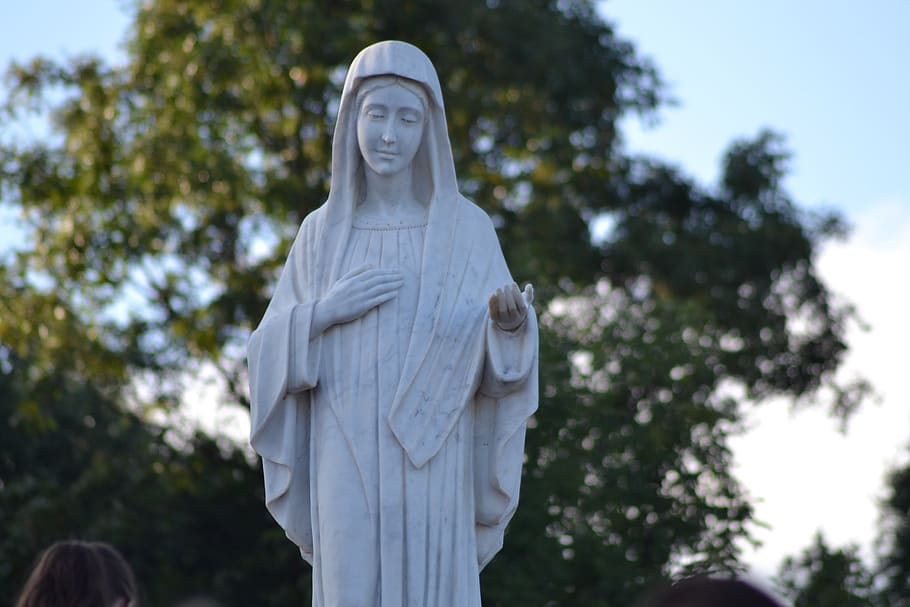
(ZENIT News / Rome, 08.26.2025).- A new survey of Catholic leaders in the United States offers a striking reminder of how deeply the figure of Mary, Mother of the Church, continues to shape the lives and callings of priests, deacons, bishops, and religious. Conducted by the Center for Applied Research in the Apostolate (CARA) in collaboration with the Diocese of Saginaw, the study drew responses from more than a thousand clerics and major superiors, revealing patterns of faith that stretch from childhood catechesis to the lived reality of ecclesial ministry.
The numbers tell a clear story. Nearly nine in ten respondents describe a living devotion to Mary, most often expressed through the rosary, pilgrimages, or the wearing of devotional medals. For many, such practices are not simply private habits but enduring sources of identity and strength in ministry. Over three-quarters reported that Marian devotion has directly fortified them in their vocation.
What is especially notable is the continuity of this devotion across generations and ministries. Almost all respondents first encountered Mary as children, often through family prayer or parish life, and for many that early familiarity ripened into a vocational compass. Forty-four percent visited a Marian shrine before committing to religious life or ordination, with Lourdes, Fátima, and Guadalupe cited most frequently as decisive moments of spiritual confirmation.
The survey also reveals tension. While devotion to Mary is widespread, formal study of Mariology lags behind. Almost half of respondents rated their theological formation in this area as weak, and just over half had ever taken a dedicated course. Even so, a significant number embraced personal acts of consecration to Mary, inspired by figures such as St. Louis de Montfort, St. John Paul II, and St. Maximilian Kolbe.
The findings show how Marian devotion extends beyond personal prayer to ecclesial culture. A third of respondents said that the Marian identity of their diocese or religious community significantly influenced their vocational choice. Marian titles—from Mother of God to Our Lady of Perpetual Help—were cited as meaningful touchstones, while Scripture passages from Luke’s Annunciation to John’s account of Cana and Calvary remain central reference points.
Asked to name what Mary represents to them today, the answers were intimate: companion, intercessor, model, mother, inspirer of vocation. Many spoke of her as a steady presence in moments of discernment, a figure of both comfort and challenge.
In the larger picture, the survey hints at something enduring: in an era when vocations are fewer and the Church in the West faces cultural headwinds, devotion to Mary remains a quiet but potent force. Her presence in the life of the Church is not a relic of the past but an active current running beneath the surface of ecclesial life, guiding, sustaining, and reminding ministers of their call to bear Christ into the world as she once did.
Thank you for reading our content. If you would like to receive ZENIT’s daily e-mail news, you can subscribe for free through this link.

Publicaciones relacionadas:
 Scientist hyper-realistically reconstructs face of Virgin Mary: this is how beautiful she was
 Virgin of the migrants: the Mexican virgin (who is not Guadalupe) to become an international shrine in the Philippines
 How Many People Visited the Fatima Shrine in Portugal in 2023? Record Numbers Are Released
 Historic drop in priestly ordinations in Germany by 2025 (these are the 4 exceptions)
