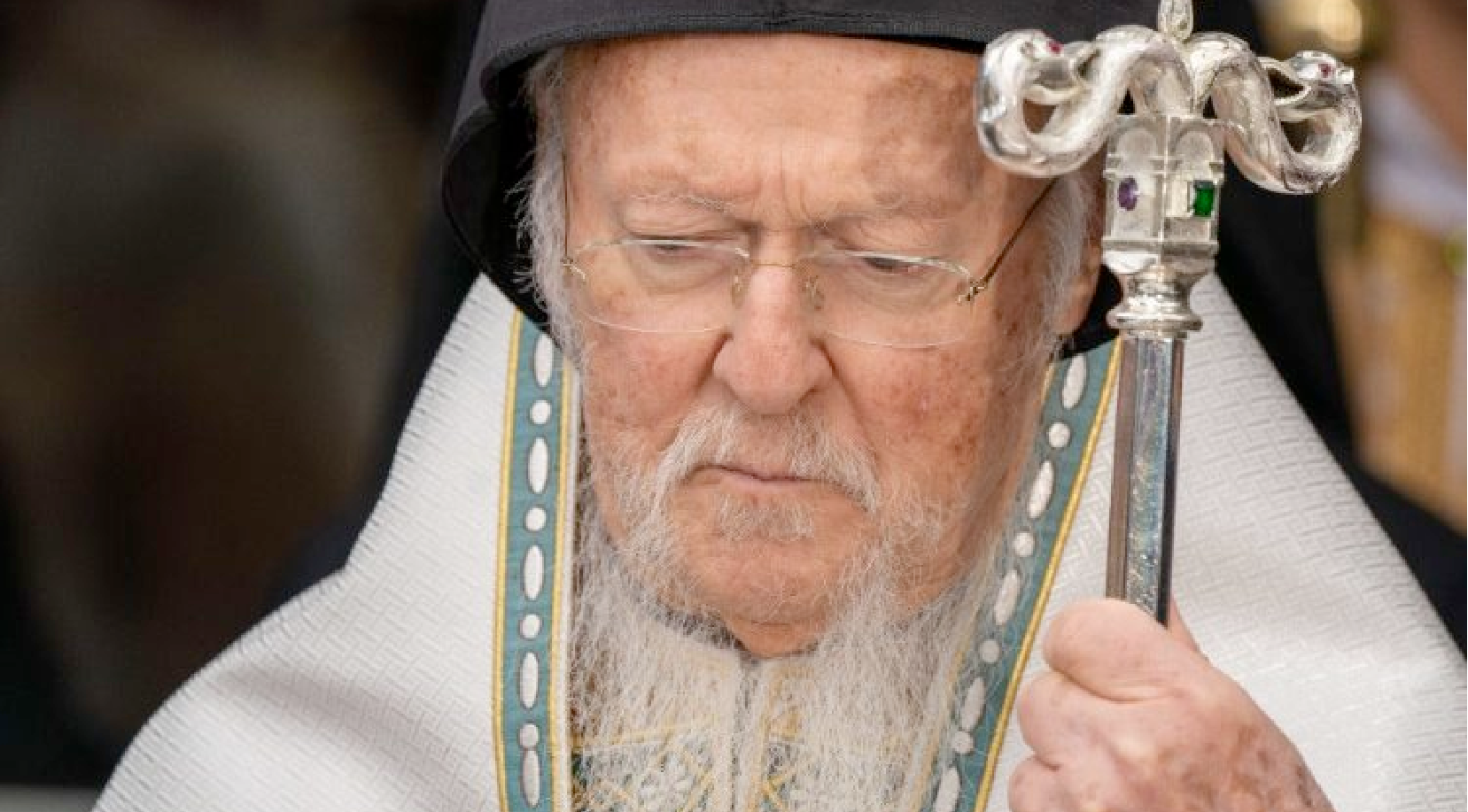
(ZENIT News / Rome, 08.28.2025).- When Christians proclaim “Christ is risen” each Easter, the unity of that declaration is fractured by dates that rarely coincide. For Ecumenical Patriarch Bartholomew of Constantinople, that fracture will remain until the Churches themselves summon the same authority that once forged consensus: an ecumenical council.
In a recent conversation with Vatican editorial director Andrea Tornielli, the Orthodox leader recalled that the First Council of Nicaea in 325 not only defended the faith against heresies but also sought to anchor Easter to a shared Sunday across Christendom. “The intention was clear,” Bartholomew explained. “The world should bear witness to the Resurrection together. History, however, has interrupted that vision.”
Centuries later, that interruption persists in the form of calendars. The Orthodox world largely continues to calculate Easter using the Julian system, while Western Christianity has long employed the Gregorian reform. The difference means that, year after year, Catholics and Protestants on one side, and Orthodox on the other, celebrate the central mystery of faith on different Sundays—sometimes weeks apart.
The Patriarch insisted that such dissonance cannot be resolved by committees or courtesy alone. “For the Orthodox, what was fixed by a council can only be altered by another council,” he said. Yet he also stressed that division must not deepen: “Our credibility as Christians depends on giving testimony to the Resurrection on the same day.”
The words mark a contrast with the position once expressed by Pope Francis, who had indicated that Rome would even accept a concession on its own dating method if it meant achieving unity. Bartholomew acknowledged the dialogue initiated jointly with the late Pope, but hinted that ecclesial sensitivities remain raw: “It is our duty to avoid new divisions, even as we remain open to the Spirit, who has made us see how essential unity truly is.”
The debate is not new. During the Second Vatican Council, the bishops of the Catholic Church left the door open to adopting a fixed Sunday for Easter, provided that agreement was reached with other Christian communities. More than half a century later, the aspiration has not yet borne fruit.
In his interview, Bartholomew did not shy away from the broader context of today’s fractured world. He spoke of Ukraine and Gaza, regions where war has desecrated Easter joy itself, and he placed the conversation about calendars alongside the urgent call for peace. For him, the alignment of Easter is not a technical adjustment but a spiritual necessity: “To be credible as witnesses, we must celebrate together the victory of life over death.”
The vision is bold, but its roadblock is as old as Nicaea itself: only a council, ecumenical and universal, can shift the weight of tradition. Until then, the global Christian family will continue to live Easter in echoes rather than in unison, waiting for a day when the calendar itself becomes an instrument of communion rather than a symbol of division.
Thank you for reading our content. If you would like to receive ZENIT’s daily e-mail news, you can subscribe for free through this link.