

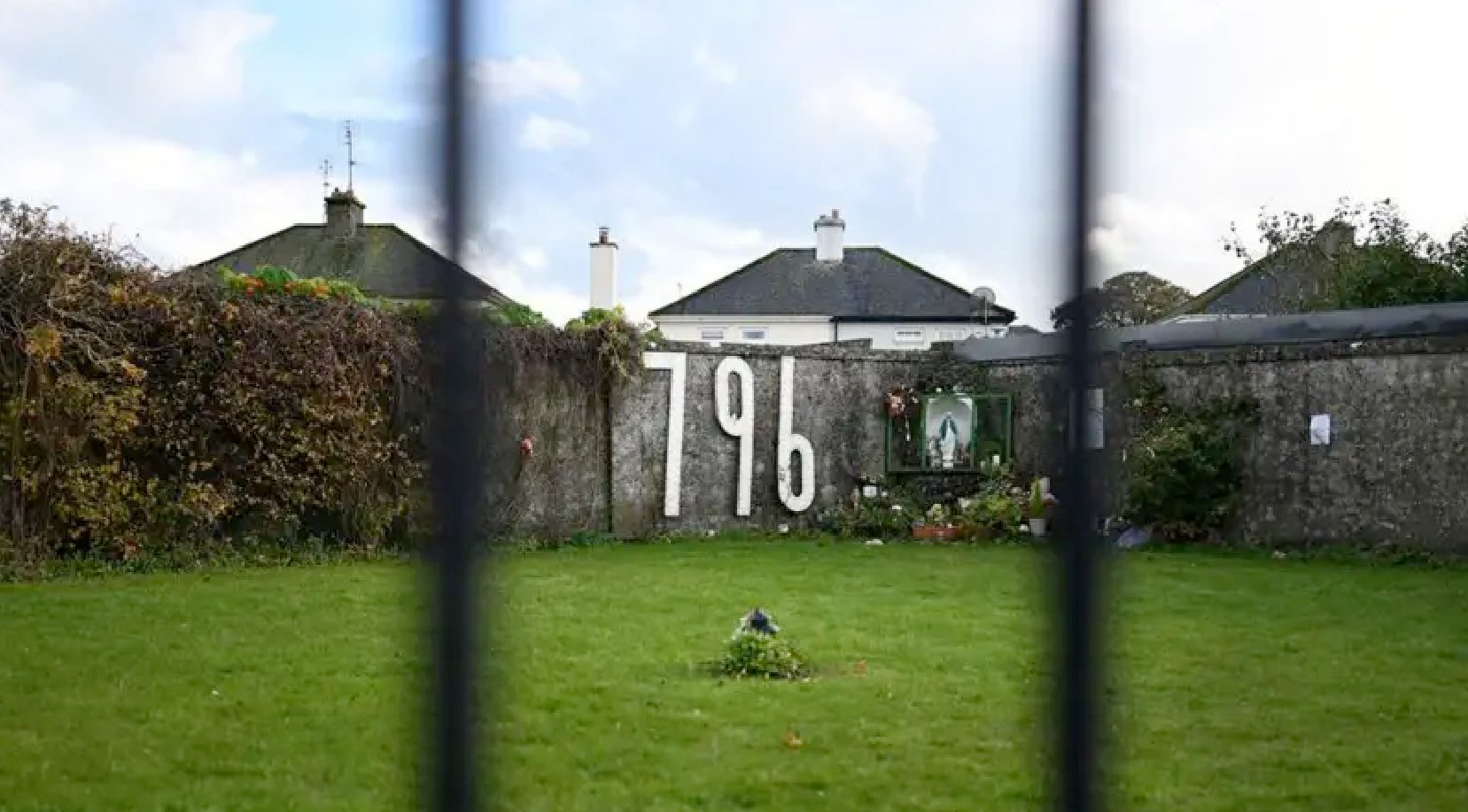
(ZENIT News – La Bussola Quotidiana / Italy, 19.07.2025) – Excavations are resuming in Tuam, County Galway, in western Ireland. The excavation is looking into the past, searching for the bones of 796 children buried near the local Mother and Baby Home, run by the Sisters of Bon Secour, between 1925 and 1961.
These were not orphanages, as the children were taken in with their mothers. They were places that welcomed single mothers and their children born out of wedlock. Judging by all the popular culture that developed around these Homes (books, films, journalistic investigations), the Church was guilty of massive discrimination, with a very high mortality rate. Therefore, the women who were housed in these Homes are now seen as «segregated,» their children «kidnapped» by being given up for adoption, or «murdered» and «forgotten in a mass grave.» A massive crime attributed to the Church, in short, in a past when Ireland was «darkly anti-Catholic» (the expression comes from an article in Corriere della Sera).
The case was raised eight years ago by Irish historian Catherine Corless, when it became clear that the bones accidentally discovered in Tuam in the mid-1970s did not belong to victims of the Great Famine (mid-19th century), but rather to children housed in the local Home. In January 2021, the «Final Report of the Commission of Inquiry into Mother and Baby Homes» was published in Dublin (on which La Nuova Bussola Quotidiana had also previously reported). The Report issued harsh judgments on Irish society in the first half of the 20th century and on a Church that did little to safeguard the dignity of the most vulnerable. The Bishop of Armagh, Eamon Martin, apologized unreservedly for this aspect. But at the same time, he exonerated the nuns of much of the blame attributed to them by the media.
It was their parents who abandoned the women. According to the Report, «the institutions investigated provided shelter, sometimes harsh, when the families failed to do so.» The Church was not responsible for the harsher treatment or the worse living conditions compared to other secular institutions. The Report, comparing Religious Homes with similar state institutions, concluded that in the latter, «conditions were far worse than in any Mother and Baby Home, with the exception of Kilrush and Tuam. By the mid-1920s, most lacked sanitary facilities, and perhaps running water; heating, where available, was provided by a fireplace; food was badly cooked, often in a different building, so that it was cold and even less tasty when it reached the women.»
Thus, Tuam, along with Kilrush, was the exception, not the rule. The rule was better treatment in religious institutions than in secular ones. That the Church is not guilty of the neglect and segregation of unmarried mothers and their children is also demonstrated by the fact that «by 1900, Mother and Baby Homes existed in every English-speaking country, and similar institutions existed in Germany, the Netherlands, and elsewhere.» So, that was the universal mentality at the time, not just in a nation of «dark Catholicism.»
It’s simply impossible to blame the nuns for the deaths of the children housed in the Homes. No one claims this, even though numerous articles appearing in recent days in the most popular newspapers suggest so. Those 796 children died during a period characterized by extremely high infant mortality, in a country that was the poorest in Europe, and in overcrowded conditions (and inadequate hygiene conditions) that facilitated the spread of infectious diseases. In any case, the Sisters of Bon Secour have made all the documents available.
And we’re not talking about «nameless» children, hidden after their deaths. Coreless’ investigation began with death certificates from the Tuam Home. For each child, we have a name, a date of birth and death, and the cause of death (due to illness). Cases where the cause of death is unreported will continue to be investigated. The forensic team that has returned to work on the Tuam burials intends to identify each skeleton through DNA analysis. But what conclusions can be drawn beyond those already published in the 2021 Report? Almost certainly: none. But any excuse is good enough to relaunch the same campaign against «Catholic obscurantism.»

Publicaciones relacionadas:
 Israel Has Fewer Women in Parliament, But More Women Workers Among the Ultra-Orthodox
 3 things a Catholic looks for in a parish (and that the pastor and the community should know)
 Gays in Seminaries? In Regard to Homosexuals and the Priesthood, the Norms Have Not Changed at All
 This is what the 2026 Annual Report on Religious Freedom in Latin America states
