

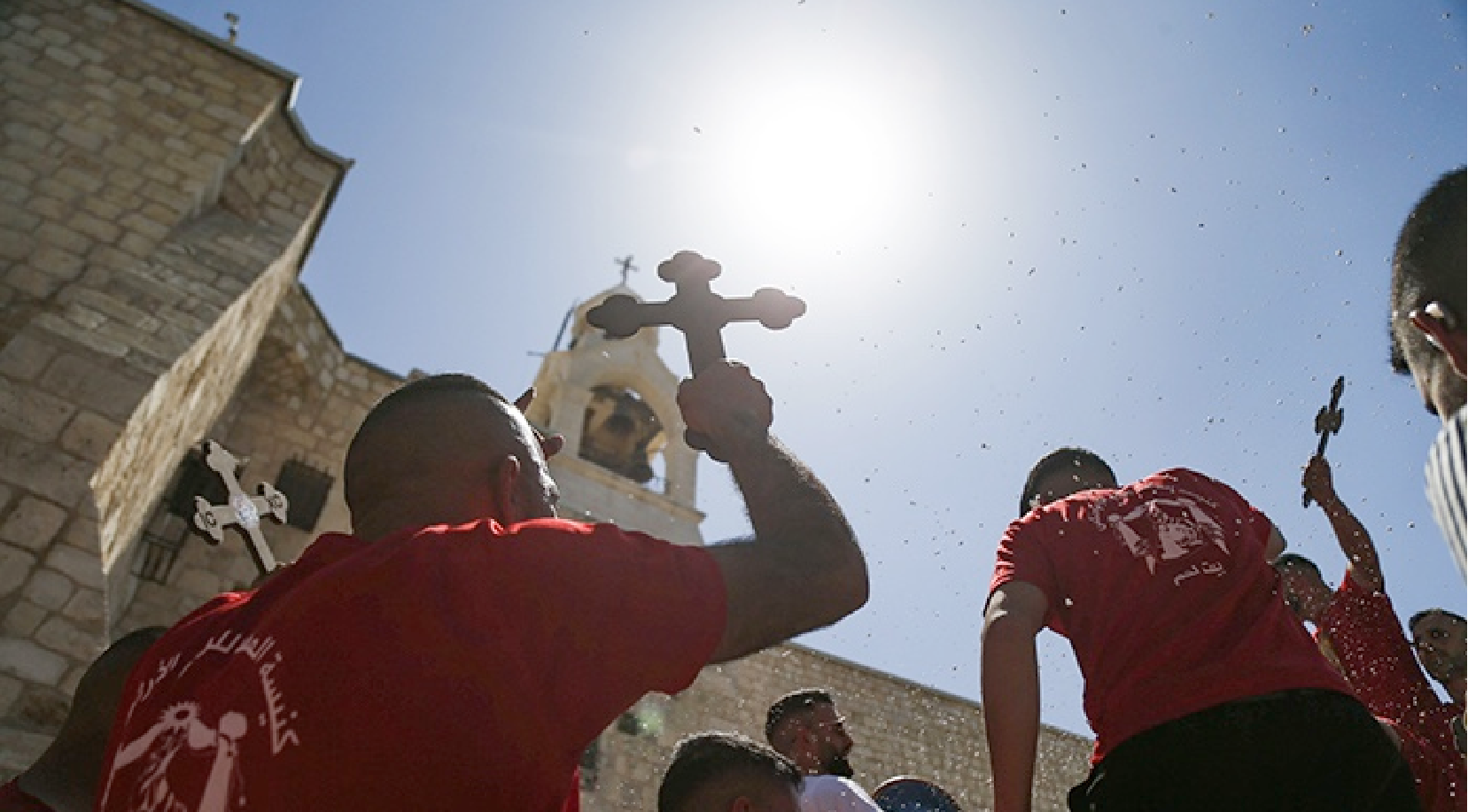
(ZENIT News – TerraSanta.Net / Jerusalem, 09.10.2025).- On September 26, 2025, before the United Nations General Assembly, Israeli Prime Minister Benjamin Netanyahu dedicated part of his speech to the Palestinian Authority. He accused it of “rewarding and glorifying the murderers of Jews,” but also of encouraging those who “kill Christians.” Furthermore, he attributed the decline of the Christian presence in Bethlehem — which, according to him, had fallen from 80% under Israeli control to “less than 20% under the Palestinian Authority” –to Palestinian mismanagement. This paragraph immediately provoked the indignation of Palestinian Christian representatives, who considered it a falsification of history and their daily reality.
“It is the Occupation that harms Christians.” The most anticipated and widely disseminated statement is that of the group “A Voice from Jerusalem for Justice.” Published on September 27, it accuses Netanyahu of “lying” and denies him the right to speak on behalf of Palestinian Christians. The text recalls that Bethlehem remained a predominantly Christian city until 1948, with more than 80% Christians. The demographic situation reversed after the Nakba (750,000 Palestinian refugees were expelled, some of them from Bethlehem, which altered the city’s demographic composition) and subsequently with the Israeli Occupation in 1967, long before the existence of the Palestinian National Authority.
According to this press release, it is the conditions imposed by the Occupation that are driving Christians and Muslims to leave Bethlehem today: land confiscation, the separation wall, checkpoints, discriminatory residency permits, and the collapse of tourism since the beginning of the war in Gaza. «Christians and Muslims continue to live together as one people, sharing the same struggles under the Occupation,» the text continues.
The Numbers Speak for Themselves
The available data confirm this interpretation. In Palestine, according to sources from the Latin Patriarchate, 162 Christian families have left the West Bank in the last two years. The majority of young people with university degrees express their desire to emigrate, citing a lack of prospects and fear of settler violence.
Even more surprising is that even Palestinian Christians living in Israel and holding Israeli passports are not particularly happy. A 2024 a Rossing Center survey revealed that 37% of Christians are considering leaving the country. The trend is even more pronounced among young people: 48% of those under 30 and 52% of those between 30 and 44. The reasons are diverse: lack of security in East Jerusalem, criminal violence in Arab areas of Israel (such as Nazareth), economic hardship, and lack of access to housing.
A clear majority of respondents (64.8%) also believe that the 2018 Nation-State Law confirms that Christians are considered second-class citizens in the Jewish state.
This data shows that the exodus of Christians is not linked to the Palestinian National Authority itself, but to a context of Occupation, restrictions, and prolonged crisis.
Another statement, published the same day by the Presidential High Committee for Ecclesiastical Affairs in Palestine, also denounced Prime Minister Netanyahu’s «lies.» In harsher language, it spoke of «ethnic cleansing,» «apartheid,» and «genocide.» It recalled the long history of expulsions (Iqrit and Kafr Bir’im, both located in Israel), attacks on churches in Gaza, restrictions on worship in Jerusalem, and looting of Patriarchate properties.
Although it expresses official Palestinian anger, this text has less pastoral weight than «A Voice from Jerusalem for Justice,» which is closer to the feelings of the faithful.
A Common Concern
Ultimately, the Christian reactions at the United Nations underscore the same conviction: the causes of the Christian exodus lie not in the Palestinian Government, but in Israeli policies. In Bethlehem, as in the rest of the West Bank and East Jerusalem, it is poverty, settlers, and economic strangulation that are driving families and young generations to seek a future elsewhere.
The Palestinian response to Netanyahu’s statements, therefore, is not just denial: it is also a cry of alarm. If nothing changes, the demographic haemorrhage risks accelerating.

Publicaciones relacionadas:
 Israeli government minister calls for construction of synagogue on Temple Mount (where Muslim mosque now stands)
 Israeli Jesuit David Neuhaus: the plan to remove Palestinians from Gaza feels like a kick in the stomach
 US Embassy in Israel Takes a Stand Against Israeli Measure Hindering Visas for Christian Groups
 The last historic Christian village in the Holy Land, threatened with annexation by the Jewish state of Israel
