

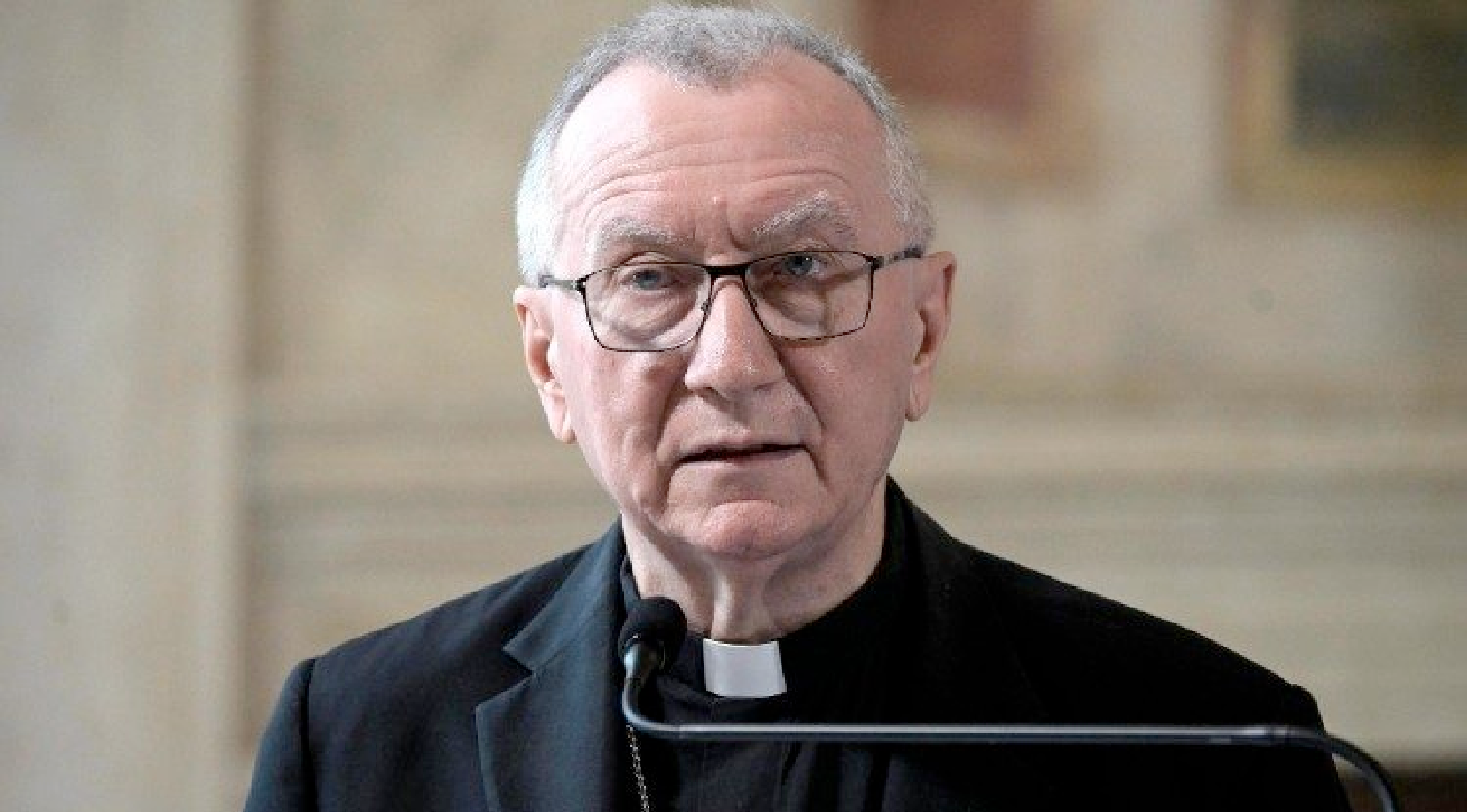
(ZENIT News / Rome, 01.18.2026).- In the days preceding the dramatic arrest of Nicolás Maduro by U.S. forces, Vatican diplomacy was quietly engaged in an effort that now appears emblematic of both its ambition and its constraints. According to Vatican Secretary of State Cardinal Pietro Parolin, the Holy See explored a negotiated exit aimed at preventing violence in Venezuela, including direct contacts with Maduro and figures close to his government. Those efforts, Parolin acknowledged, ultimately came up against what he described as a fait accompli.
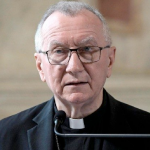
Speaking on Saturday, 17 January, on the margins of a public event in Rome, Parolin confirmed that the Vatican had worked toward a solution “that would avoid any bloodshed,” even if that meant reaching an understanding with Maduro himself. “We had tried what also appeared in some newspapers,” he said, an oblique reference to reporting by The Washington Post that shed light on the Holy See’s discreet role in the days before Maduro’s capture.
That report, published on 9 January, stated that Vatican diplomats had explored the possibility of securing a safe-conduct for Maduro, potentially leading to political asylum in Russia. While the Holy See has not officially confirmed the details, Parolin did not deny that such avenues were considered. Instead, he stressed a recurring theme of Vatican diplomacy: the consistent preference for negotiated outcomes over coercive ones. “We always supported a peaceful solution,” he said, adding that events on the ground ultimately overtook diplomatic efforts.
The arrest itself marked a watershed moment. On 3 January, U.S. forces detained Maduro and his wife, Cilia Flores, in an operation ordered from Washington. Both were transferred to New York to face federal charges linked to narcotrafficking and what U.S. authorities describe as “narcoterrorism.” The move not only reshaped Venezuela’s political landscape but also signaled a sharp escalation in U.S. involvement, with implications far beyond the country’s borders.
In the aftermath, Parolin described Venezuela as entering a phase of profound uncertainty. He expressed hope that the country might move toward stability and economic recovery, underscoring that the social situation remains “very precarious” and that ordinary citizens continue to bear the brunt of the crisis. Crucially, the Vatican’s second-ranking official was explicit in his assessment of what lies ahead: “A democratization of the country is now necessary.”
That position aligns closely with statements made by Pope Leo XIV, who has repeatedly addressed the Venezuelan crisis. Most recently, during a wide-ranging address to diplomats accredited to the Holy See, the Pope called for respect for the will of the Venezuelan people and urged that solutions be sought without surrendering to “partisan interests.” The pontiff has also emphasized that Venezuela’s sovereignty must be preserved, even as international actors intensify their involvement.
Behind the scenes, Vatican engagement has not been limited to contacts with the outgoing regime. In mid-January, Pope Leo XIV received opposition leader and Nobel Peace Prize laureate María Corina Machado in a private audience. According to sources at the Holy See, Machado appealed for the release of political prisoners and voiced support for an orderly democratic transition. She also held discussions with Parolin, who knows the country well, having served as apostolic nuncio to Venezuela from 2009 to 2013.
Meanwhile, power dynamics in Caracas remain fluid. Vice President Delcy Rodríguez has assumed a more prominent role since Maduro’s arrest, moving swiftly to consolidate authority. At the same time, U.S. President Donald Trump has taken an increasingly assertive posture. After receiving Machado at the White House on 15 January, Trump declared that the United States was now “in charge” of Venezuela, without clarifying the scope of that claim. His administration has already deepened its grip on Venezuela’s oil sector, completing initial sales valued at approximately 500 million dollars and signaling that further transactions are imminent.
For the Holy See, the Venezuelan episode underscores both the reach and the limits of moral diplomacy. The Vatican sought to broker an exit that might spare lives and preserve institutional continuity, even if that meant negotiating with a deeply controversial leader. When those efforts failed, Rome was left to confront a rapidly evolving reality shaped by military force and geopolitical calculation.
Yet the Vatican’s message has remained consistent. From Parolin’s carefully measured remarks to Pope Leo XIV’s public appeals, the emphasis has been on dialogue, democratic renewal and the human cost of political collapse. In a crisis increasingly defined by power politics and external intervention, the Holy See continues to position itself as a voice for peaceful transition—aware that, at times, its words arrive after decisions have already been made elsewhere.
Thank you for reading our content. If you would like to receive ZENIT’s daily e-mail news, you can subscribe for free through this link.

Publicaciones relacionadas:
 These are Pope Francis’ 3 pieces of advice for diplomats
 Pope Francis sparks debate with call to investigate Gaza genocide allegations
 3 key words of the missionary action of the Church and of the work of the Holy See’s diplomacy, according to Leo XIV
 Vatican Secretary of State reiterates Holy See’s position on total invasion of Gaza
