

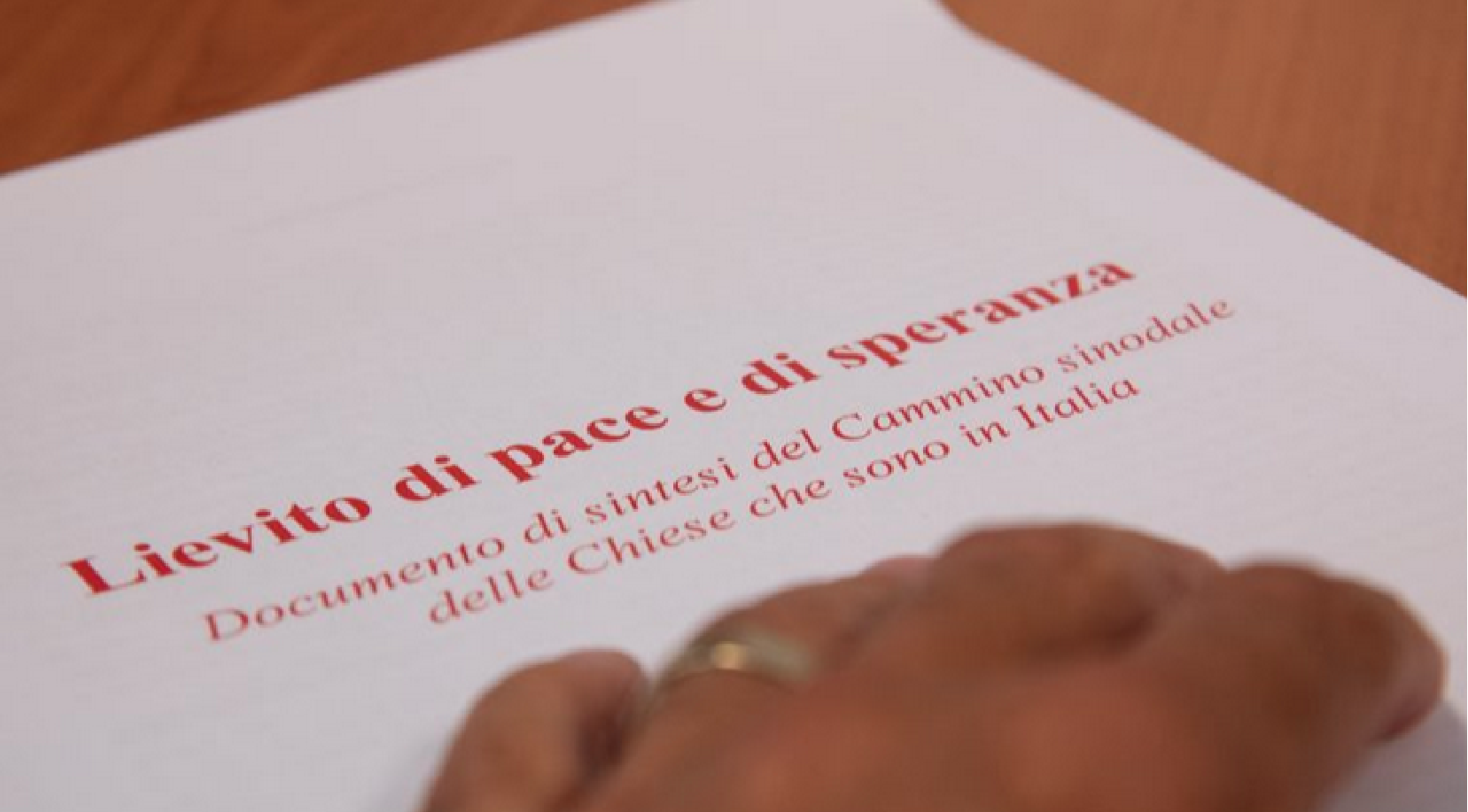
(ZENIT News / Rome, 10.22.2025).- After four years of listening, debate, and discernment, the Catholic Church in Italy has reached a turning point. Its long-awaited final document from the “Cammino sinodale” — the national synodal journey — outlines seventy-five specific proposals for renewal, reform, and mission. These are not mere administrative tweaks, but a blueprint for a Church that seeks to be more participatory, transparent, and outward-looking.
On October 25, the Italian Synodal Assembly will vote on this document, paragraph by paragraph. The votes will not determine winners and losers, but rather measure the Church’s consensus on each proposal, marking which directions enjoy broad support and where sensitivities remain divided. This process itself, organizers insist, embodies the spirit of synodality — not confrontation, but communion through discernment.
The document, the fruit of contributions from parishes, dioceses, associations, and religious movements across the country, unfolds along three main lines: the renewal of ecclesial practices and mentality, the formation of believers, and the shared responsibility in Church governance. Each section weaves reflection with practical action, balancing spiritual depth with a keen awareness of contemporary challenges.
Among its most striking priorities is a call to anchor the Church’s mission in justice, peace, and care for creation. It proposes, for instance, permanent working groups on disarmament and peace education, support for ethical finance, and anti-corruption initiatives. There is a strong appeal to promote restorative justice and to strengthen the Church’s commitment to nonviolence, dialogue, and reconciliation — both within society and among Christian denominations and other faith traditions.
Equally central is the emphasis on relationships. The Italian Church envisions communities that are more inclusive and attentive to those who feel marginalized or wounded. The prevention of abuse and the pastoral care of those affected are no longer treated as secondary concerns, but as an essential measure of credibility and holiness.
The second section focuses on formation — not as the mere transmission of knowledge, but as a shared journey of discernment. The proposals call for renewed catechetical programs, deeper engagement with Scripture, more attentive liturgical preparation, and the formation of formators themselves. The goal is a Church where faith is not inherited by habit, but embraced through personal conviction and communal experience.
The third section shifts toward governance, addressing how parishes and dioceses can embody co-responsibility. The vision is of a Church less clerical and more collaborative: where parish councils have a real voice, women hold visible decision-making roles, and the laity share in pastoral leadership. Economic transparency is not treated as an administrative issue but as a pastoral one — a test of integrity and trustworthiness before the world.
Perhaps the most innovative feature of this entire process is not what is written, but how it was written. The synodal journey in Italy has mobilized a scale of participation never before seen in the country’s Church life. Through meetings, assemblies, and surveys, voices from every corner — from bishops to young laypeople — helped shape this collective discernment. The process itself became a form of pastoral renewal, showing that dialogue and unity are not mutually exclusive.
The concluding paragraphs of the document reject pessimism, affirming that the Italian Church is “not adrift,” but “attentive to forgotten faces and trusting in God’s work that renews history.” The October vote, in that sense, is not an ending but a hinge point — the beginning of a new ecclesial style. What matters most is not the count of votes, but whether parishes and dioceses will continue to live out this synodal spirit in the years ahead.
What happens in Italy will not stay in Italy. The country’s Catholic Church, deeply intertwined with the papacy itself, remains a reference point for much of the global Church. As bishop of Rome, the Pope is part of this very local Church — and what is discerned and adopted here inevitably echoes through the wider Catholic world.
For that reason, the Italian Synodal Path is not just a national experiment. It is, in a sense, the testing ground of what a truly synodal Church might look like: one that listens before it teaches, that shares responsibility before it governs, and that seeks to read the signs of the times not with anxiety, but with faith and courage.
Thank you for reading our content. If you would like to receive ZENIT’s daily e-mail news, you can subscribe for free through this link.

Publicaciones relacionadas:
 United States: this is the numerical status of permanent deacons in the country
 172 Children of Iraq Make Their First Communion in the Land that the Islamic State Had Destroyed
 Bomb Threat at Córdoba’s Cathedral Sparks Debate Over Sacred Heritage and Security
 USA: The National Catholic and Muslim Dialogue: “Journeying Together”
