(ZENIT News / Krakow, 06.05.2025).- In an age where priests often find themselves at the crossroads of public criticism and private exhaustion, an unassuming spiritual movement in Poland has been quietly weaving an invisible net of support—one prayer at a time.
For over two decades, the «Bethany Mission of Support for Priests» has been matching laypeople with individual priests, not for mentorship, debate, or oversight—but for lifelong, silent intercession. This isn’t a lobbying group or a reform committee. It’s something far more ancient and, perhaps, more radical: a community that believes the best way to help priests is to pray for them.
It began modestly on February 4, 1999. Sister Gabriela Bassista, moved by listening to both the burdens and joys of priests, decided to respond not with critique or strategy but with sustained prayer. The first act of Eucharistic Adoration dedicated solely to praying for priests gathered just eight people. Each one committed to spiritually accompany a specific priest for life.
Today, that circle of quiet devotion has grown to over 8,800 members, guided by the Sisters of the Family of Bethany—an order founded with a unique mission to spiritually and pastorally support clergy. Their work flows from the legacy of the Servant of God Fr. Józef Małysiak, who believed that behind every priest stands not only a bishop, but an entire people.
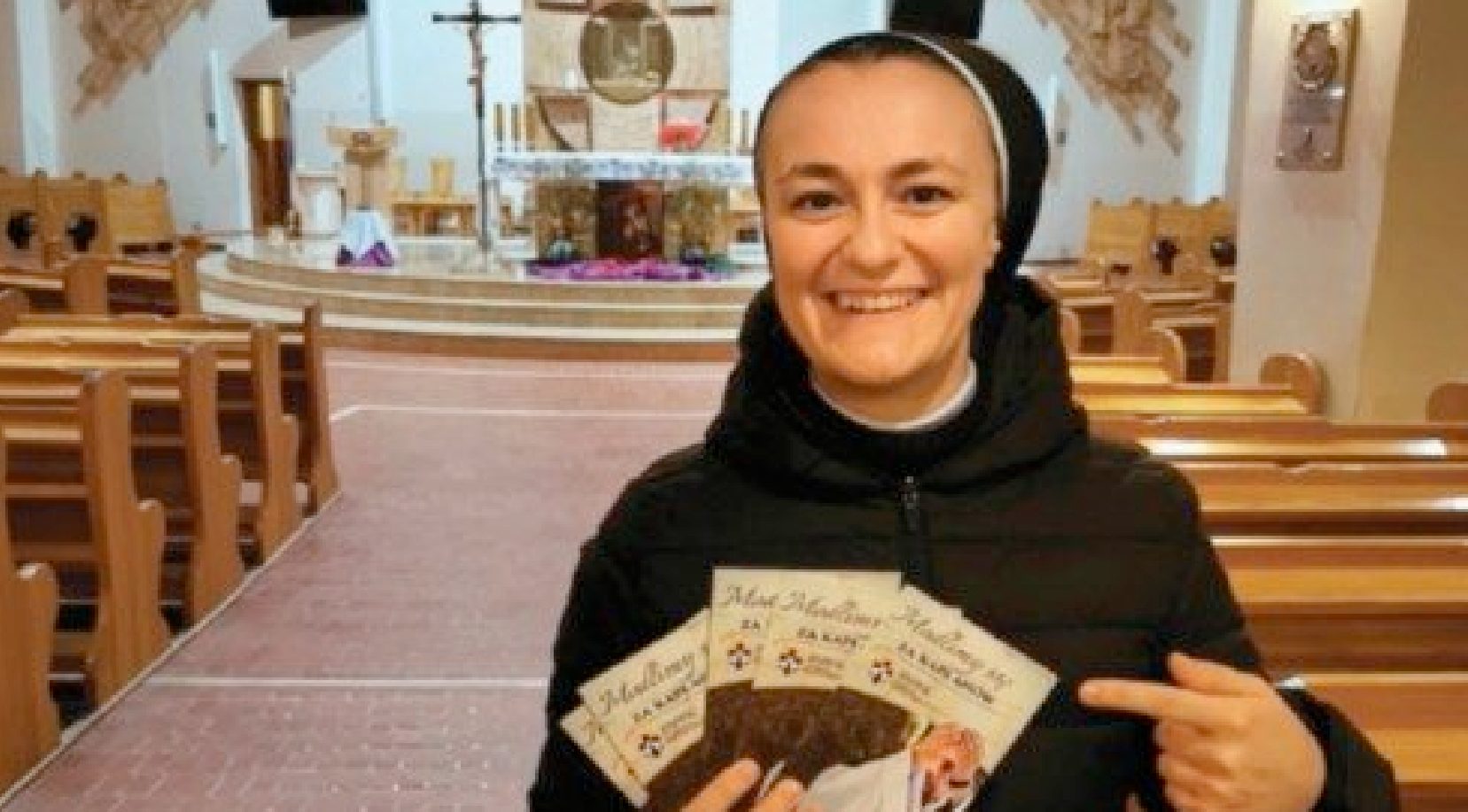
Sister Daria Tyborska, a voice of the mission today, offers a poignant reminder: “It’s easy to focus on what priests lack. It’s harder—and holier—to ask how we’re helping them be the shepherds we long for.” In her view, the initiative is not about idealizing clergy, but about restoring a forgotten responsibility of the faithful: to uphold the priesthood through prayer, not just opinions.
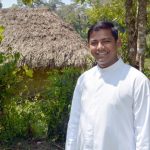
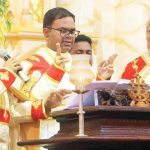
The structure is simple, yet deeply personal. Each member of the mission is paired with a priest, whom they accompany in prayer for the rest of their life. Participants receive a photo of their assigned priest, a prayer book, and a membership card—not as symbols of belonging, but as reminders of a vow made before God.
The role is not passive. It’s an intentional, committed act of spiritual accompaniment. These lay intercessors become invisible shadows to their priests, invoking the Holy Spirit and the intercession of the Mother of God on their behalf, day by day.
The mission doesn’t stop at silent prayer. It actively cultivates spiritual resources and connections: an online prayer book for priestly intentions, a system for requesting Masses for clergy (living or deceased), monthly Adoration services, and even what they call the “emergency SMS for priests”—a discreet channel through which clergy can send urgent prayer requests when the burden becomes too heavy to carry alone.
One of the most compelling dimensions of the Bethany Mission is its countercultural simplicity. It quietly asserts that laypeople have more power than they realize—not through noise, but through fidelity. At a time when the priesthood is often viewed through a lens of institutional critique or spiritual distance, this movement quietly bridges the divide.
The mission also challenges a deeper cultural assumption: that responsibility for the Church lies solely with the ordained. Sister Tyborska sees that mindset beginning to shift. “The renewal of the Church won’t come only from better programs or stronger leadership,” she says. “It must come from a shared sense of spiritual responsibility—from laity and clergy alike.”
The mission echoes the conviction of St. John Vianney, who famously said, “We have the priests we pray for.” In a time when it’s easy to grow cynical or to ask whether the priesthood is even necessary, the Bethany Mission offers a humble, resounding yes—by choosing not argument, but prayer; not despair, but fidelity.
On parish “Priesthood Sundays,” the Sisters share their testimony in local churches. These aren’t rallies or recruitment events—they are moments of reflection that invite the faithful to see the priesthood not just as a role, but as a relationship, and to see support not as flattery, but as responsibility.
There is no glamour here, no spotlight. Just people, often unseen, praying for men who are often exhausted. It’s a work done mostly in silence, rooted not in idealism, but in mercy.
Thank you for reading our content. If you would like to receive ZENIT’s daily e-mail news, you can subscribe for free through this link.