

(ZENIT News / Washington, 07.08.2025).- Weeks after the white smoke signaled a new era for the Catholic Church, a quiet storm continues to swirl around a modest home on the outskirts of Chicago. The mailbox overflows with letters, the phone rings late into the night, and baseballs arrive in the hope of being signed by the new pope. But Robert Francis Prevost—now Leo XIV—didn’t rise to the papacy through ambition or theatrics. According to those who know him best, his life has been a slow, steady shaping by faith, people, and providence.
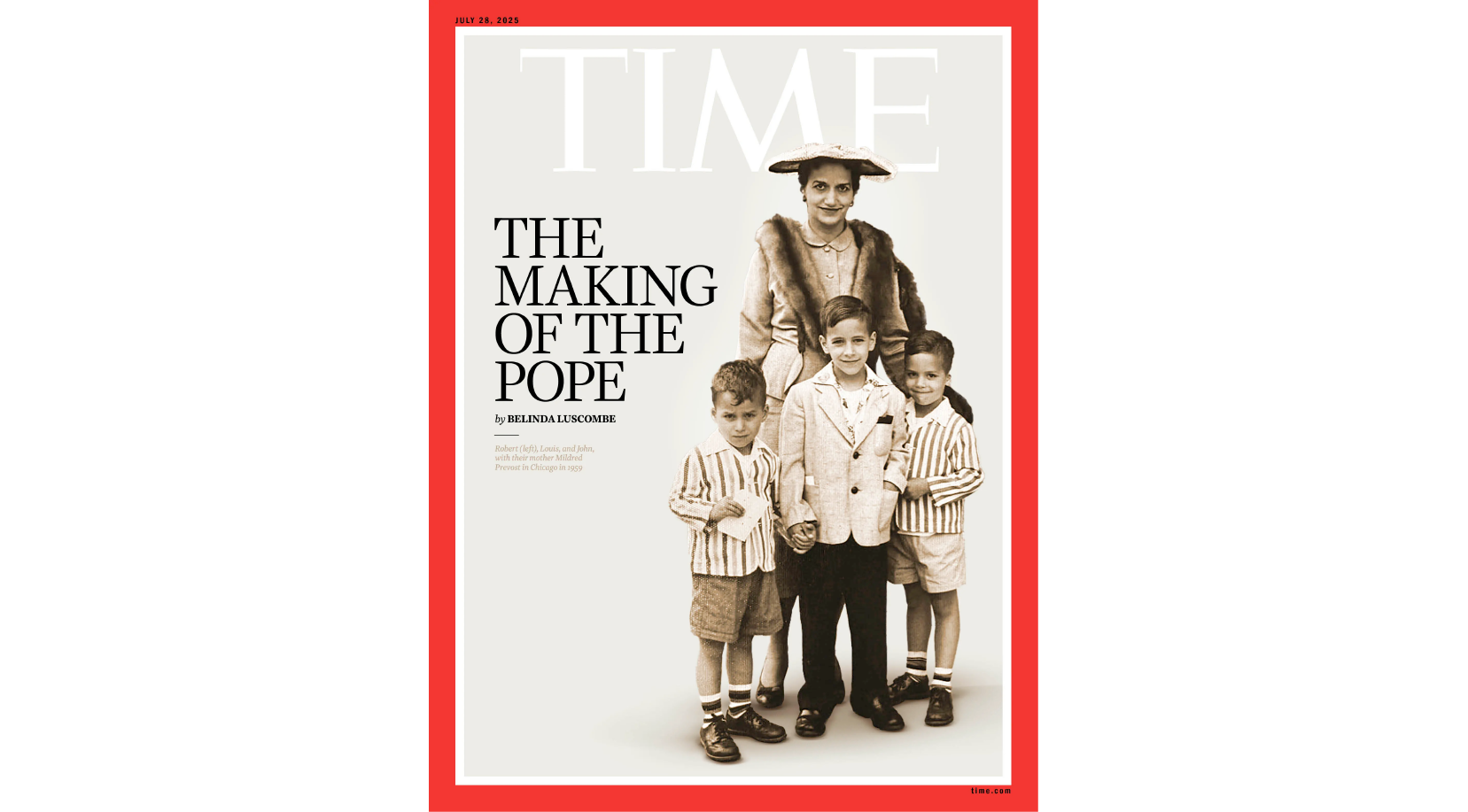
In a cover story titled “The Making of the Pope”, Time Magazine’s Belinda Luscombe paints a portrait of a man formed less by Vatican intrigue than by pastoral grit, theological patience, and the steady pressure of humility. Her report is as much about the road that led him to the papal balcony on May 8, 2025, as it is about what kind of pope he might become.
Raised in a deeply Catholic family on Chicago’s southwest side, young Robert was the kind of child who built altars out of shoeboxes and played priest in the backyard. Yet he was also a boy who rode bikes, caught bugs, and was just as at home on the playground as in the parish pews. A neighbor once told him, “One day, you’ll be pope.” Decades later, her words would ring with uncanny clarity.
His early years in the Augustinian seminary in Michigan were shaped by long days, early mornings, and a demanding schedule. Those who studied alongside him still recall his intellect, but more so his capacity for kindness and silence. “He never interrupted. He listened. That was his strength,” says a former classmate, now a parish priest in Philadelphia.
Prevost’s theological path took him from Villanova to the Catholic Theological Union, and eventually to the Pontifical Gregorian University in Rome, where he studied canon law in the early years of John Paul II’s papacy. But it wasn’t the lecture halls that marked him most—it was the dusty roads of Chulucanas, Peru, where he served as a young missionary priest during the aftermath of devastating floods. He was just 30 years old.
“He fixed what needed fixing, whether it was roofs, hearts, or parish governance,” said Bishop Daniel Turley, who mentored him at the time. “He learned the strength of communities, the richness of people who have little, and the joy of building trust across divides.”
That Peruvian mission left an imprint deeper than most careers. It gave Prevost a sense of the Church not just as institution, but as incarnation—tangible, fragile, and capable of healing.
After years of service as provincial and then superior general of the Augustinians, Rome called again. By 2001, he was leading his order worldwide. Eventually, Pope Francis sent him back to Peru, this time as bishop. It was there, in the heat of refugee crises and ecclesial tensions, that his pastoral resilience truly surfaced. His path took him from “Chicago to Chiclayo”—a now-famous phrase among those who tracked his rise.
That journey ultimately brought him to the Vatican’s Dicastery for Bishops, where he quietly became one of the most influential voices in episcopal appointments worldwide. By 2023, he was named a cardinal. Two years later, he became pope.
But for those who knew him, his elevation wasn’t a break from the past; it was the next chapter in a life already steeped in ecclesial service. His brother John, now overwhelmed with the symbolic and practical weight of siblinghood to a pope, notes an unexpected trend. “People keep showing up at the door,” he says. “They say: ‘I’ve been away from church for a long time. But your brother? I think I’m ready to come back.’”
The legacy of Leo XIV may be just beginning. But its roots lie not in Vatican corridors but in an ordinary boy’s quiet decision to serve—and the extraordinary life that followed.
Thank you for reading our content. If you would like to receive ZENIT’s daily e-mail news, you can subscribe for free through this link.

Publicaciones relacionadas:
 Pope Leo XIV Named Treccani’s Person of the Year: A Pontificate of Subtle Strength and Measured Influence
 Pope Leo XIV Receives Nobel Prize Laureate Maria Corina Machado: This Is What the Venezuelan Leader Asked Him
 Photo Gallery: Leo XIV Now Has An Official Mosaic to Enrich St. Paul’s Basilica, and This Is How He Reacted When It Was Shown to Him
 In what sense is the Bible the Word of God in human words? Pope Leo XIV responds
