

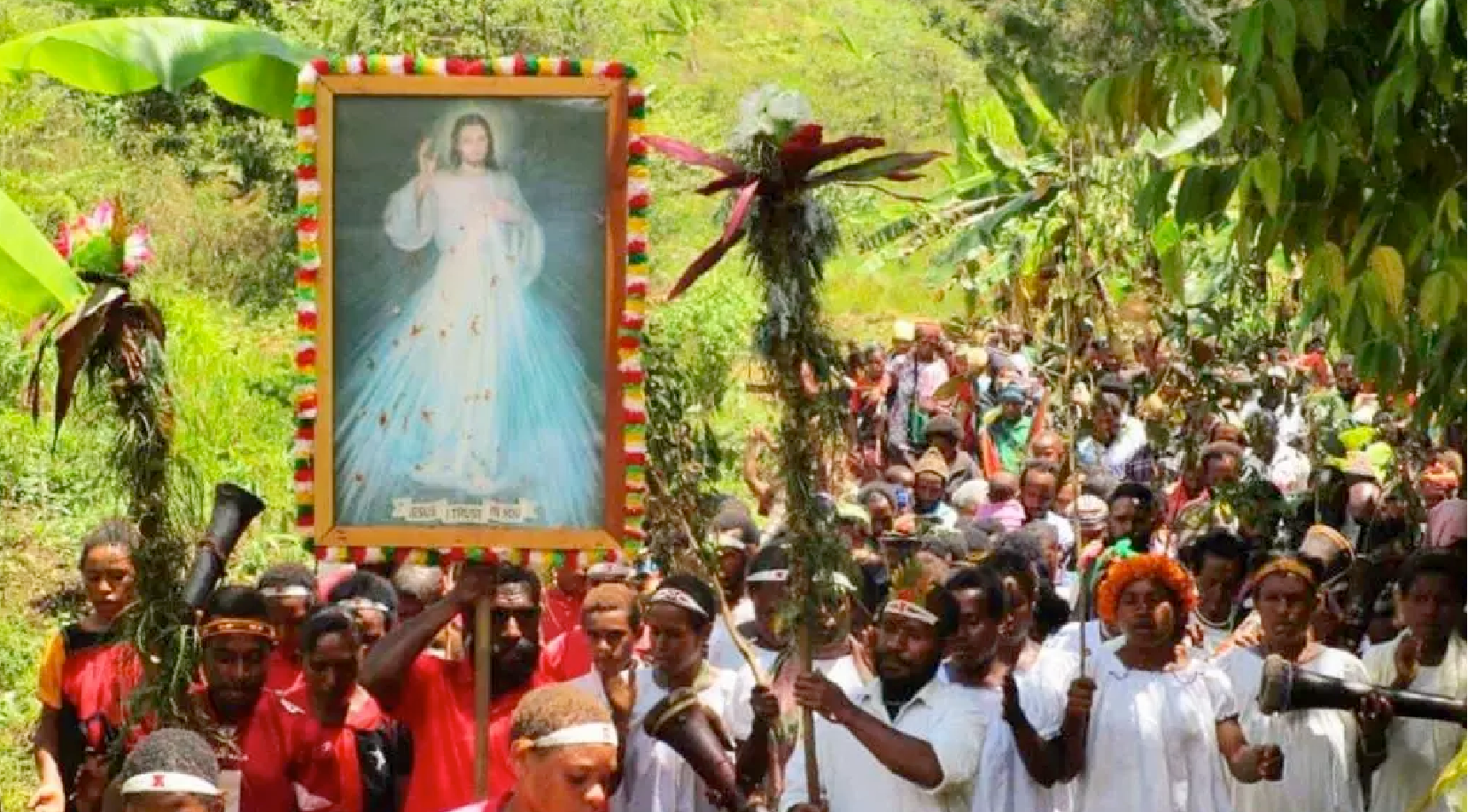
(ZENIT News / Ports Moresby, 07.16.2025).- A constitutional amendment proclaiming Papua New Guinea a Christian nation has prompted sharp concern from Catholic Church leaders, who warn the move may erode the country’s foundational commitment to religious freedom.
At a parliamentary hearing in early July 2025, Archbishop Rochus Tatamai of Rabaul expressed unease over the recent decision to embed Christianity directly into the country’s constitution. While acknowledging the country’s overwhelmingly Christian demographic, the archbishop questioned the wisdom of transforming personal faith into a matter of state identity.
In March, lawmakers passed a constitutional amendment that added an explicit invocation of the Trinity—God the Father, Jesus Christ, and the Holy Spirit—into the preamble of the nation’s founding document. Christianity is also now enshrined in the Fifth National Goal and recognized symbolically through the Bible, which has been granted national emblem status.
But Archbishop Tatamai warned that these changes could backfire, legally and spiritually. “Which Christianity are we referring to?” he asked, pointing to the nation’s denominational diversity. Catholics comprise about 26 percent of Papua New Guinea’s population, according to the most recent census from 2011, followed by Lutherans, Seventh-day Adventists, Pentecostals, and a wide range of independent Christian groups.
Tatamai stressed that attempts to legislate Christian identity risk undermining core constitutional protections for freedom of religion and conscience. More than a legal technicality, he argued, the change could distort both civic life and religious practice. “There may come a day,” he cautioned, “when going to church becomes an act of legal compliance rather than faith.”
The Church leader also voiced concern about a growing political tendency to appropriate theological language and symbolism without sufficient spiritual discernment. “Politicians are not theologians,” he said bluntly, “and they are stepping into sacred territory without the tools to handle it responsibly.”
Papua New Guinea’s founding fathers, he recalled, had deliberately avoided imposing a state religion, choosing instead to protect pluralism and preserve a clear boundary between faith and government. Tampering with that balance, Tatamai argued, risks unraveling the very vision of unity and respect upon which the country was built.
Despite these concerns, Prime Minister James Marape has been an outspoken champion of the amendment, framing it as a return to spiritual roots rather than a restriction on belief. Yet for many within the Catholic Church and beyond, the move raises fundamental questions about the nature of belief in a democracy—and whether Christianity can or should be written into law.
Thank you for reading our content. If you would like to receive ZENIT’s daily e-mail news, you can subscribe for free through this link.

Publicaciones relacionadas:
 In Face of the Assassination of a Presidential Candidate, Pope Sends Message to the Country and to the Politicians
 Re-inauguration of Notre Dame de Paris will be in 2024. Macron invites the Pope
 Catholic Church Generates 3% of Spain’s GDP in 2024 Thanks to Its Cultural Patrimony
 Kenya’s President Sparks Debate with Plans for Grand Church at State House
