

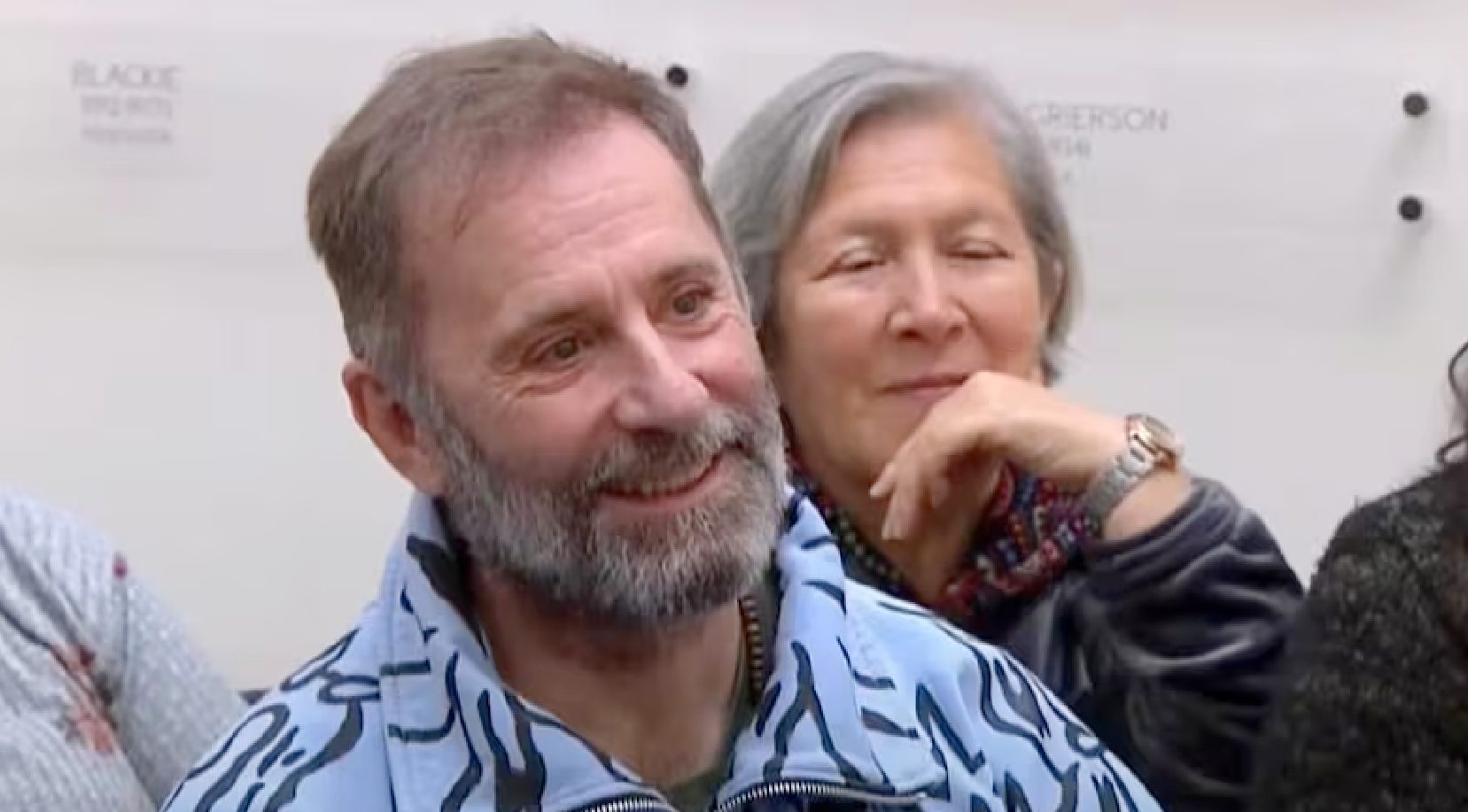
(ZENIT News / Buenos Aires, 08.22.2025).- The announcement of Father Juan Carlos Molina’s candidacy for Argentina’s Congress has reignited a long-standing tension between Catholic discipline and political ambition. Within hours of the priest’s decision to lead the Peronist list in Santa Cruz, the Diocese of Río Gallegos released a statement clarifying that Molina’s step into electoral politics was a “personal decision” with no endorsement from the Church. The communiqué underscored that during the campaign—and, if successful, throughout his term—Molina would no longer exercise priestly ministry, either publicly or privately.
The swift distancing reflects more than an internal disciplinary measure. It reveals the Church’s sensitivity in a country where religion and politics have often overlapped but where canon law draws a clear boundary. Canon 287 explicitly prohibits clergy from active involvement in political parties, except in extraordinary cases authorized by ecclesiastical authority. The principle is clear: the priesthood and partisan politics are meant to remain separate spheres.
Molina, however, has never been a conventional parish priest. Long associated with the Kirchner family, he served during Cristina Fernández de Kirchner’s presidency as head of SEDRONAR, the government agency tasked with drug policy. There he advocated for a controversial “non-criminalization” approach to consumption and positioned himself as a reformer unafraid of challenging orthodoxy, both secular and ecclesiastical.
His closeness to political power has long raised eyebrows within the Church. Yet Molina has also cultivated ties with Rome. He once described himself as a devoted admirer of Pope Francis, recalling an emotional moment in Rome when, after praying at Jorge Bergoglio’s tomb, he received a message urging him to bring a note to Pope Leo XIV. In his own telling, he felt almost like a messenger sent by Francis, engaging in a wide-ranging conversation with the current pontiff about Argentina’s poverty, unemployment, health crises, indigenous struggles, and political polarization. “He’s a great listener,” Molina recalled, “he spoke to me with his eyes.”
Those anecdotes reflect Molina’s conviction that his ministry and his politics are inseparable. He speaks with the cadence of a pastor and the urgency of a campaigner, blending the language of faith with a partisan critique of Argentina’s inequalities. That very fusion, however, is precisely what canon law seeks to prevent. For the Church, the risk is reputational: when a priest enters the partisan arena, his words can easily be mistaken for the Church’s own.
The communiqué from Bishop Ignacio Medina, who now leads the Río Gallegos diocese once headed by Cardinal Jorge Ignacio García Cuerva, leaves no ambiguity. Whatever Molina says on the campaign trail or, potentially, in Congress, “should not be understood as an expression of this diocese.”
The episode illustrates a wider challenge facing Catholicism in Latin America. Clerics have long played prominent roles in social and political life, from liberation theology to grassroots activism. Yet the institutional Church remains cautious, wary of being drawn into the orbit of partisan politics at a time when its own moral authority is contested.
Thank you for reading our content. If you would like to receive ZENIT’s daily e-mail news, you can subscribe for free through this link.

Publicaciones relacionadas:
 Father Sirico continues his battle in Rome for media mogul Jimmy Lai’s liberation
 USA: Two Bishops Publish Letter on Gender Ideology (Full Text)
 Pope’s health as of Monday, February 24: general improvement; abstinence in prognosis by physicians
 Religious Life in Post-Pandemic America: Change, Resilience, and Stability
