

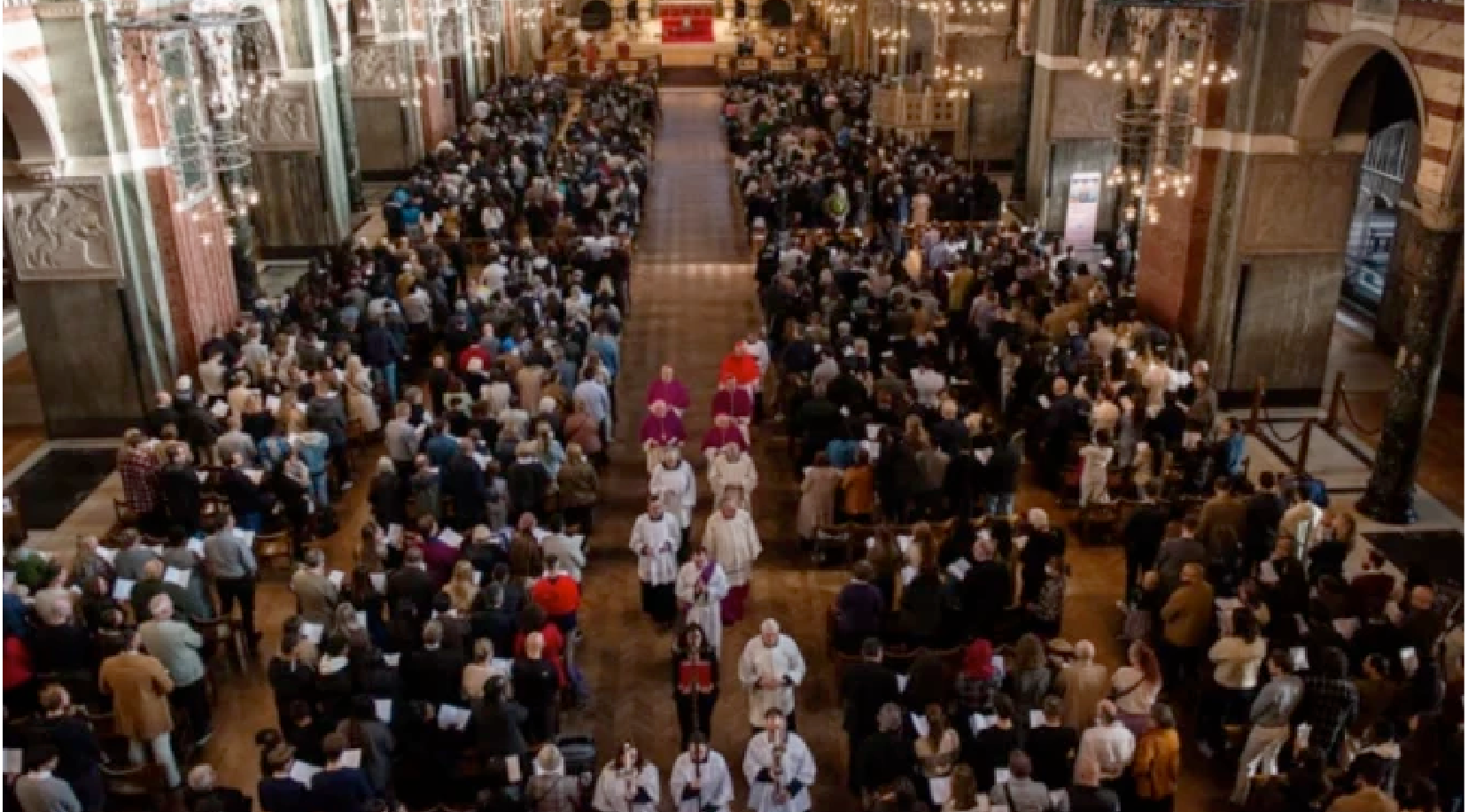
(ZENIT News / London, 08.30.2025).- England’s great cathedrals have once again become magnets for millions. New figures released on August 27 reveal that annual visitor numbers in 2024 not only recovered from the pandemic downturn but even surpassed pre-Covid levels for the first time.
According to the Church of England’s (anglicans) data team, more than 9.87 million people visited the country’s 42 cathedrals last year. This marks a clear rebound from 9.35 million in 2023 and edges above the 9.7 million reported in 2019, just before the pandemic closed church buildings for months on end.
The picture is less straightforward, however, when it comes to worship attendance. Weekly participation in cathedral services rose by just over 10 percent between 2023 and 2024, yet it still lags behind 2019 by roughly 14 percent. On a typical week last year, around 31,900 people—mostly adults, with children making up just 14 percent—took part in Sunday or weekday services. That number is encouraging compared to the previous year’s 28,900, but falls short of the 37,300 recorded before the pandemic struck.
The recovery also has uneven contours. Weekday worship, particularly among adults, has nearly returned to its former strength, while Sunday congregations and the presence of children remain thinner. In fact, weekday attendance by children was one-third lower than in 2019, raising questions about how future generations will connect with the cathedral tradition.
Special occasions continue to draw large crowds. Easter services attracted 50,200 worshippers in 2024, a notable rise on the previous year and nearly on par with pre-pandemic levels. Christmas, by contrast, has not recovered in the same way: 121,100 people attended seasonal services last year, down from both 2023 and 2019.
Volunteering—a backbone of cathedral life—also shows signs of strain. Around 13,000 people gave their time in 2024, fewer than in 2023 and almost one-fifth fewer than in 2019. These volunteers, serving as guides, ushers, committee members, florists, and more, remain indispensable to cathedral life, though the decline points to challenges in sustaining this vital workforce.
The Dean of Canterbury, David Monteith, who chairs the College of Deans, offered a cautiously hopeful perspective. He described the figures as evidence of “a Church full of possibilities,” noting especially the energy visible in weekday worship, sacred music, and community engagement. He praised those who serve within the cathedrals, describing their work as “imaginative dedication” that helps shape “a Church that is resilient, responsive, and rooted in the life of the nation.”
Taken together, the numbers suggest that England’s cathedrals are regaining their role as cultural and spiritual landmarks. The crowds are back, the music resounds once more beneath medieval vaults, and worshippers are returning in greater numbers than a year ago. Yet the quieter pews at Sunday services and the drop in younger participants leave church leaders with a clear challenge: how to translate the renewed curiosity of visitors into a deeper, sustained commitment to cathedral worship and life.
Thank you for reading our content. If you would like to receive ZENIT’s daily e-mail news, you can subscribe for free through this link.

