

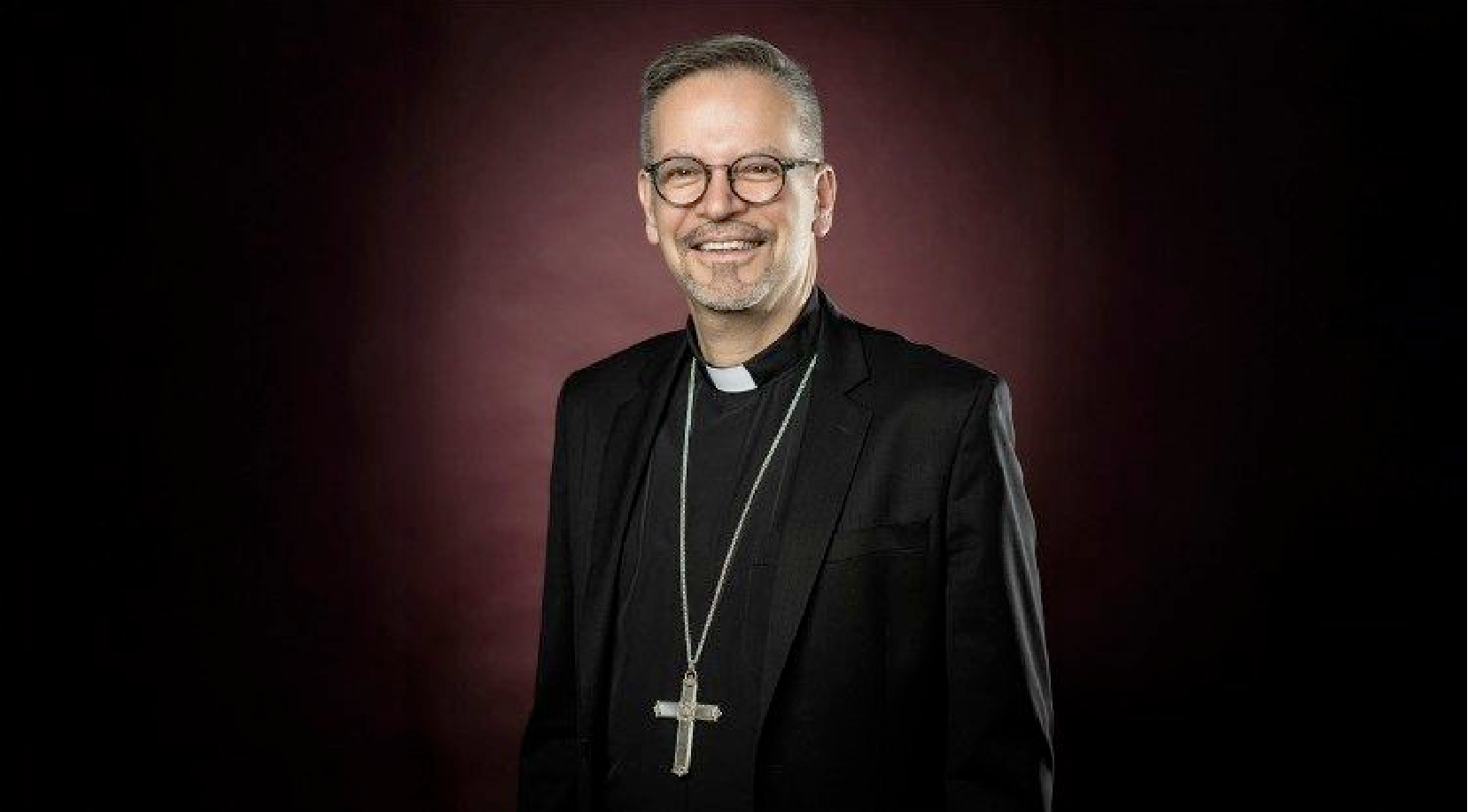
(ZENIT News / Otawwa, 10.02.2025).- The Canadian Conference of Catholic Bishops (CCCB) has chosen a new president to guide it through a new time. Monsignor Pierre Goudreault, Bishop of Sainte-Anne-de-la-Pocatière in Quebec, was elected to succeed Bishop William T. McGrattan, marking a return to francophone leadership in accordance with the conference’s tradition of alternating between Canada’s two linguistic communities.
Born in Rouyn-Noranda in 1963, Goudreault brings to the post more than three decades of priestly ministry and nearly a decade of episcopal experience. His election also reflects the deep roots of Catholicism in French-speaking Canada, where the Church has long served as a cultural anchor even amid growing secularization. Supporting him as vice-president will be Archbishop Donald Bolen of Regina, an anglophone prelate known for his commitment to ecumenical dialogue and indigenous reconciliation.
The transition comes at a moment of significant discernment for Canadian Catholicism. In his farewell address on September 23, Bishop McGrattan spoke candidly about the disruptive pressures the Church must confront: the relentless pace of digital media, the ethical dilemmas raised by biotechnology, and the unpredictable implications of artificial intelligence. Each of these, he warned, poses questions not only of governance but of human dignity.
The bishops’ plenary assembly, held in recent days, highlighted just how broad their agenda has become. Sessions included reflections on Christian unity, with ecumenical guests participating in the presentation of a draft National Ecumenical Strategy; discussions on safeguarding minors from sexual abuse and strengthening diocesan policies; and preparations for the 1700th anniversary of the Council of Nicaea, whose legacy of doctrinal clarity remains central to Christian identity.
One recurring theme was synodality—the call for a more participatory Church life emphasized by Pope Francis. A year after the Synod’s final document was released in Rome, Canadian bishops are still working out how to bring its insights into local parish structures and national initiatives. Artificial intelligence was also singled out as an urgent topic, not merely as a technical tool but as a cultural force reshaping how people imagine truth, authority, and even humanity itself.
Perhaps the most sensitive issue remains the Church’s relationship with Indigenous peoples. Since Pope Francis’ historic penitential pilgrimage to Canada in 2022, bishops have sought to accompany First Nations, Métis, and Inuit communities in the long process of healing after the traumas of residential schools. The assembly reaffirmed a commitment to reconciliation, emphasizing that it is not a short-term program but a generational responsibility.
By placing Goudreault at the helm, the CCCB has chosen a leader rooted in Quebec’s Catholic heritage yet tasked with responding to national challenges that transcend linguistic and cultural lines. His mandate, lasting two years, will require balancing tradition and innovation, continuity and reform, in a Church that remains an important moral voice in Canadian society—even as its influence is tested by secular currents and technological upheaval.
Thank you for reading our content. If you would like to receive ZENIT’s daily e-mail news, you can subscribe for free through this link.

Publicaciones relacionadas:
 Pope Francis removes Belgian bishop convicted of abuse from the clerical state
 Bishop: Church’s true influence is sharing God’s mercy, not chasing ‘likes’
 Bishop Barron announces founding of new congregation dedicated to digital evangelization
 China recognizes first bishop appointed by Pope Leo XIV for a Chinese diocese
