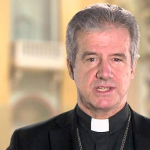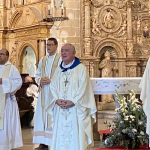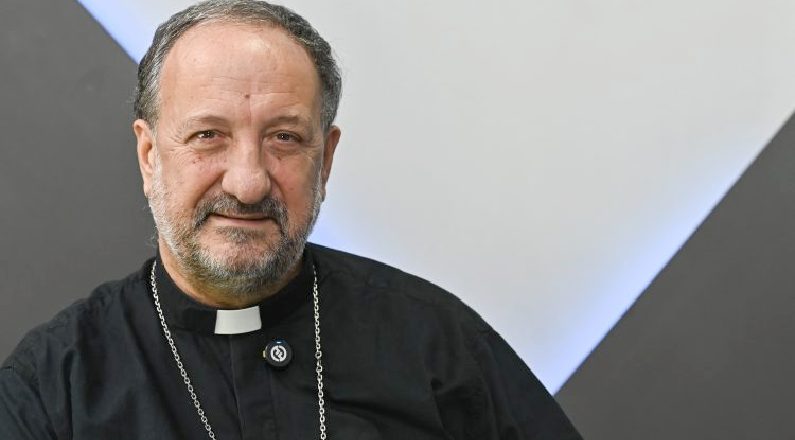
(ZENIT News / San Luis, Argentina, 10.22.2025).- In the diocese of San Luis, Argentina, a new decree is quietly redefining what sacred music can sound like—and what it should mean. Bishop Gabriel Barba has issued Decree No. 236, a document that opens the door to a wider range of musical instruments in the liturgy while calling for a deeper harmony between art, faith, and community life.
The text, grounded in the teachings of the Second Vatican Council and the Church’s own liturgical guidelines, does more than regulate. It listens—to the evolving musical language of local communities, to the pastoral need for inclusion, and to the perennial truth that song in worship is not performance, but prayer.
For centuries, the pipe organ has been held as the privileged instrument of the Catholic liturgy. Bishop Barba’s decree does not diminish that tradition; rather, it broadens it. It recognizes that other instruments—when played with the reverence and skill proper to worship—can also lift hearts toward God. Yet the bishop insists that music must always serve the assembly’s participation, not overshadow it.
“The voice of the people remains the primary instrument of worship,” he wrote in an accompanying pastoral letter addressed to the faithful. The decree reminds parish musicians that instrumental accompaniment should never drown out the congregation’s song or obscure the meaning of the texts being sung. The people’s response, not the performer’s virtuosity, is the measure of beauty in liturgical music.
Bishop Barba’s letter situates this reform within a broader pastoral vision: strengthening communion among the faithful and fostering active, conscious participation in the Mass—principles long at the heart of postconciliar liturgical renewal. He urges parish leaders and music ministries to prepare celebrations with care, so that no individual or ensemble becomes the center of attention. “The celebration belongs to the whole people of God,” he writes, “not to a few.”
The decree also gestures toward a distinctive Argentine note: the integration of local musical expressions. Far from being an act of cultural accommodation, this is presented as a theological statement—an affirmation that divine worship takes flesh in real communities and their histories. Within the limits of Church norms, melodies and instruments rooted in regional culture may find their place in the liturgy, provided they serve the sacred action and not mere aesthetic novelty.
To ensure coherence and fidelity, Bishop Barba has entrusted the implementation of the decree to pastors, religious communities, and diocesan musicians. They are asked to see music not as ornamentation but as a ministry—one that carries the Word, unites voices, and makes audible the faith of a people.
The document also reaffirms the doctrinal grounding of liturgical texts. Lyrics must flow from the Church’s faith, not from personal or ideological inspiration. This insistence reflects a wider concern in the Church today: that creativity in worship must never detach from theological substance.
For many, this new decree represents more than an administrative act. It reflects a pastoral sensitivity to the shifting realities of Catholic worship in Argentina and beyond. As congregations diversify and musical traditions evolve, the Church faces the challenge of preserving unity without imposing uniformity.
By striking this balance, the Diocese of San Luis offers a small but resonant sign of how renewal can sound—neither nostalgic nor experimental, but grounded in tradition and alive to the present.
In the end, Bishop Barba’s initiative suggests that true liturgical music is not about instruments, but about intention. When musicians play and sing in the service of communion, even the simplest melody can become, in his words, “a prayer that unites heaven and earth.”
Thank you for reading our content. If you would like to receive ZENIT’s daily e-mail news, you can subscribe for free through this link.