

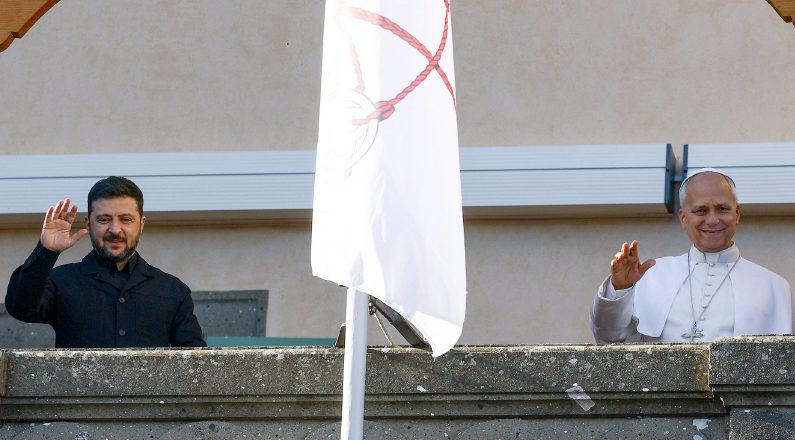
(ZENIT News / Castelgandolfo, Vatican City, 12.09.2025).- A winter tour through Europe has placed Volodymyr Zelenskyy at the center of a dense web of diplomatic expectations, political frustrations, and moral appeals. Yet among the many stops the Ukrainian president made in early December, his conversation with Pope Leo XIV at Castel Gandolfo stood apart, not simply as another diplomatic engagement, but as a reminder that the conflict in Ukraine is being watched not only in political capitals, but also from the vantage point of a global conscience.
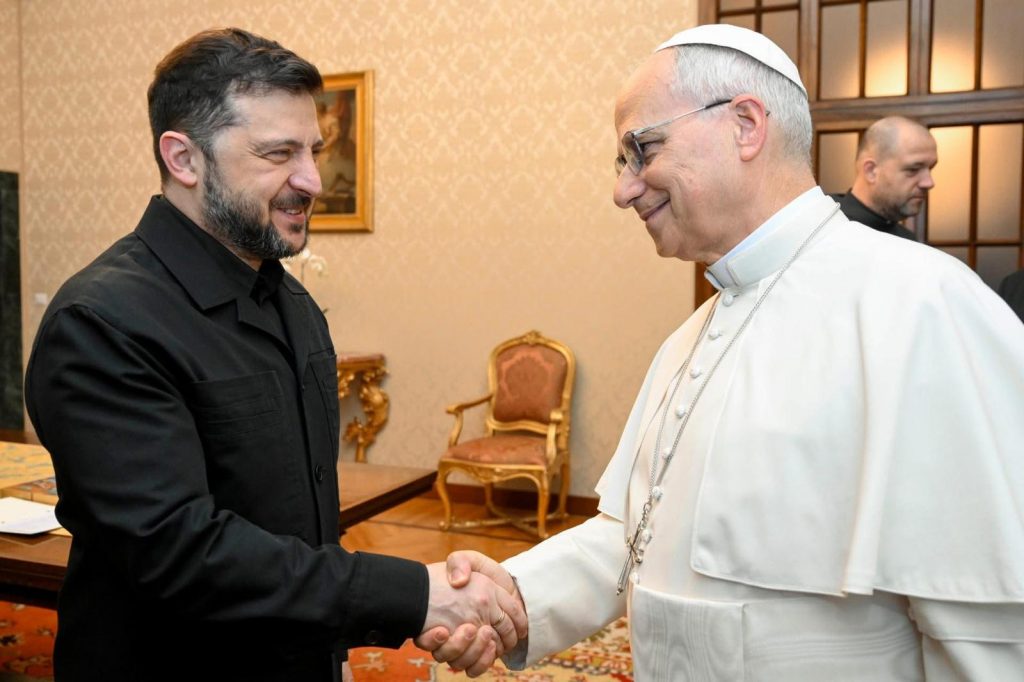
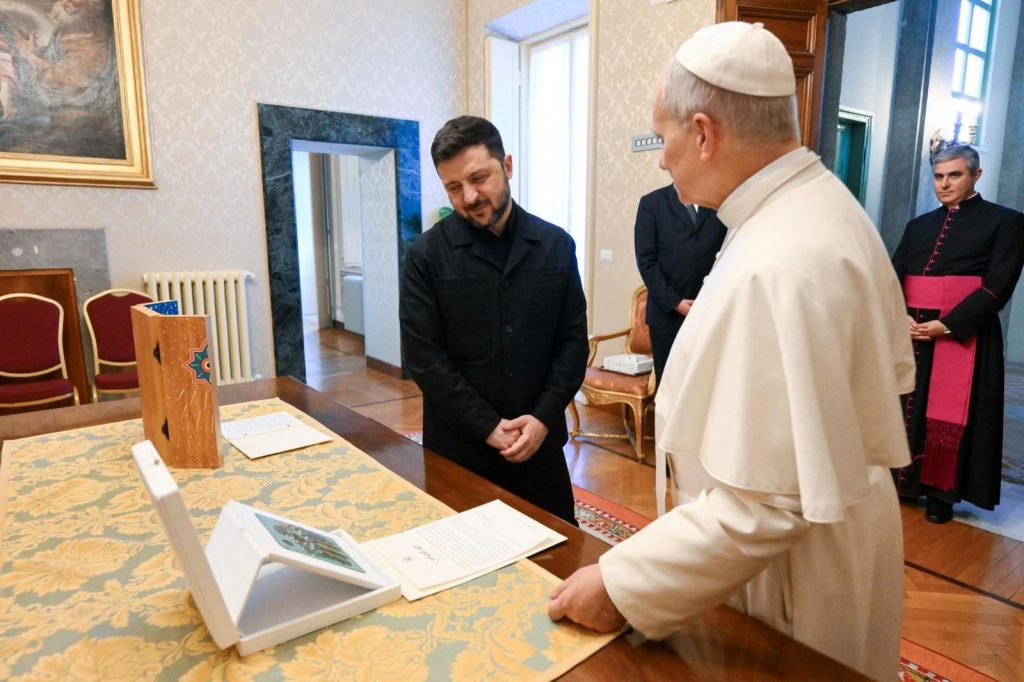
The meeting took place on 9 December inside the papal villa in the Alban Hills, a setting that has long offered pontiffs a quieter space for difficult conversations. According to the Holy See, the atmosphere was cordial, and the war was the unavoidable centerpiece. The Pope renewed his call for sustained dialogue and voiced the hope that the ongoing diplomatic initiatives—many of them marked by tension and conflicting expectations—might produce a peace that is both just and durable.
Zelenskyy, who is navigating an increasingly complex relationship with the United States, arrived in Italy after days of intense talks with European leaders. In London he met British Prime Minister Keir Starmer, German Chancellor Friedrich Merz and French President Emmanuel Macron, before briefing EU officials and NATO’s Secretary General Mark Rutte in Brussels. The European bloc has shown far more sympathy for Kyiv’s position than Washington, where President Donald Trump has pressed for concessions that Ukraine considers untenable.
No topic illustrates this friction more clearly than the proposed American peace framework. Negotiators completed another round of talks on 7 December, but significant gaps remain. The most controversial point involves a suggestion that Kyiv relinquish control of the Donbas region—territory occupied illegally by Russian forces. Zelenskyy has rejected the proposal outright, saying publicly that Ukraine has no legal, constitutional or moral right to surrender any part of its land. Trump has expressed impatience, remarking that Zelenskyy had not yet read the proposal and insisting that prolonging the war wastes American taxpayer money.
European leaders, for their part, have backed Kyiv’s refusal. Starmer described the peace effort as entering a “critical stage” and emphasized the need for a cease-fire framed by credible security guarantees. Merz struck a more cautious tone, signaling discomfort with aspects of the American plan and warning that the coming days could be decisive.
These geopolitical pressures formed the backdrop to the conversation in Castel Gandolfo. For Leo XIV, who has already met Zelenskyy several times and has spoken at least once with Vladimir Putin, the priority remains humanitarian diplomacy—particularly concerning prisoners of war and the thousands of Ukrainian children taken into Russia during the conflict. The Vatican has long worked toward their return, often through discreet channels led by Cardinal Matteo Zuppi.

Zelenskyy highlighted this dimension after the meeting, thanking the Pope for his continued prayers and for the Holy See’s assistance. He confirmed that the Vatican remains involved in efforts to reunite abducted children with their families and added that he had invited the Pope to visit Ukraine, calling such a gesture a powerful signal of solidarity.
The Vatican’s role remains a delicate one. While it has repeatedly appealed for a cease-fire, it has not inserted itself directly into the formal negotiations, mindful of its standing outside NATO and wary of appearing to side with any military bloc. Leo XIV’s predecessor, Pope Francis, spent years attempting to carve out a position equidistant from Moscow and Kyiv, a balancing act that was not always well received but underscored Rome’s intention to remain available to both sides.
In the days surrounding the papal audience, the war itself offered its own grim commentary. Russia launched more than a hundred drones overnight, striking infrastructure and forcing emergency blackouts across several Ukrainian regions. Ukraine, meanwhile, continued its drone operations deep into Russian territory, including a major attack on a liquefied petroleum terminal in Krasnodar that triggered fires burning for days.
The brief conversation between Zelenskyy and Leo XIV carried a symbolic weight disproportionate to its length. And while the geopolitical path ahead remains fraught, Zelenskyy left Castel Gandolfo having secured at least one constant: the Pope’s determination to keep Ukraine, its suffering people and the search for a just peace firmly at the center of the Holy See’s attention.
Thank you for reading our content. If you would like to receive ZENIT’s daily e-mail news, you can subscribe for free through this link.

