

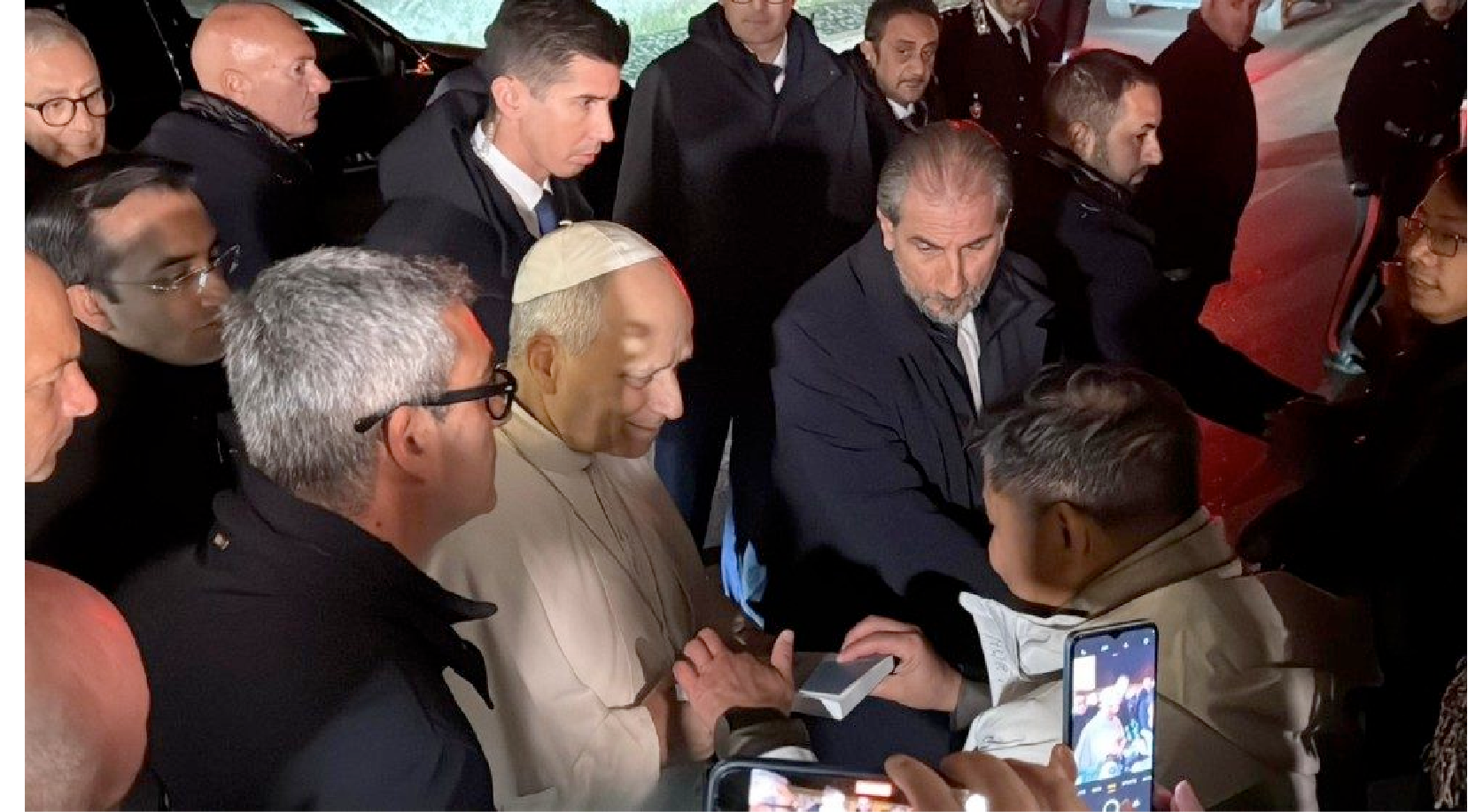
(ZENIT News / Castelgandolfo, 12.10.2025).- Diplomacy, war strategy, and a swirl of media narratives converged around Pope Leo XIV after his recent encounter with Ukrainian President Volodymyr Zelenskyy in Castel Gandolfo, a meeting that opened an unusually transparent window into how the Holy See views the geopolitical fractures shaping Europe’s security landscape.
Speaking informally with journalists outside the Villa Barberini, in Castelgandolfo, Leo offered a set of reflections that went well beyond the traditional papal language of appeals for peace. His comments outlined a view of Europe as an indispensable partner in any future settlement of the war in Ukraine and expressed concern over political signals coming from Washington that appear, in his interpretation, to undercut the transatlantic partnership.
The Ukrainian president had arrived earlier in the day to solicit firmer European backing for Kyiv, particularly as negotiations gain new momentum among Western powers. Leo confirmed that the primary focus of their private exchange was the humanitarian dimension of the conflict, with emphasis on the repatriation of Ukrainian minors taken into Russian custody. He described these efforts as painstaking and often invisible, conducted through channels where discretion is essential. A handful of children recently welcomed at the Vatican was, según él, merely a small sign of progress.
Zelenskyy has been circulating revised drafts of a three-part peace framework that involves the United States and several European states. While the Pope refrained from adjudicating the details of the American plan—acknowledging that he had not reviewed all of it—he drew attention to what he called new “strategic language” emerging from the Trump administration that appears to relegate Europe to the margins. That, he warned, represents more than a procedural oversight.
In Leo’s assessment, any agreement that sidelines European actors ignores the geographical and historical realities of the conflict. The continent, he insisted, cannot be treated as a spectator to a war that is unfolding within its borders. He pointed to the longstanding reliance on the Euro-Atlantic partnership and added that certain recent characterizations of Europe in U.S. political discourse—particularly criticisms portraying the continent as weakened or adrift—seem to erode a bond that has been fundamental for decades.
At the same time, the Pope balanced his critique with an acknowledgment that American society itself is divided on these issues: “There are many in the United States,” he said, “who understand Europe differently from how some recent statements have portrayed it.”
His remarks also touched on Vatican diplomacy more broadly. The Holy See continues to position itself as a venue for dialogue, signaling again its willingness to host negotiations should the warring parties give their consent. Leo reiterated that this offer remains open, even if no government has yet taken it up. He also kept alive the possibility of visiting Ukraine, describing it as a hope rather than a scheduled undertaking.
Questions from the press inevitably turned to his recent visit to Turkey, and specifically to the now-viral discussion about whether he prayed during his stop at Istanbul’s Sultan Ahmed Mosque. The Pope dismissed the controversy with a mix of humor and reserve, noting that contemplation requires no theatrical display. He emphasized that his encounter inside the mosque unfolded in quiet attentiveness and insisted that external speculation about posture or gesture risks missing the substance of the moment. Prayer, he said, is not always identifiable to the camera.
This explanation came after contrasting statements from the mosque’s muezzin, who recounted that Leo politely declined an invitation to pray. The Vatican’s description of the visit portrayed the event as an act of silent reverence, distancing itself from debates over optical expectations. The episode nevertheless revived comparisons with Leo’s predecessors, both of whom had prayed visibly in the iconic Ottoman-era complex.
Toward the end, reporters shifted to lighter matters, asking about his long-anticipated move to the Apostolic Palace. Leo indicated there is no scheduled date and expressed contentment with his current residence at the Palazzo del Sant’Uffizio, which he shares with his private secretaries. The question, he seemed to suggest, holds more fascination for the public than for him.
Thank you for reading our content. If you would like to receive ZENIT’s daily e-mail news, you can subscribe for free through this link.

