

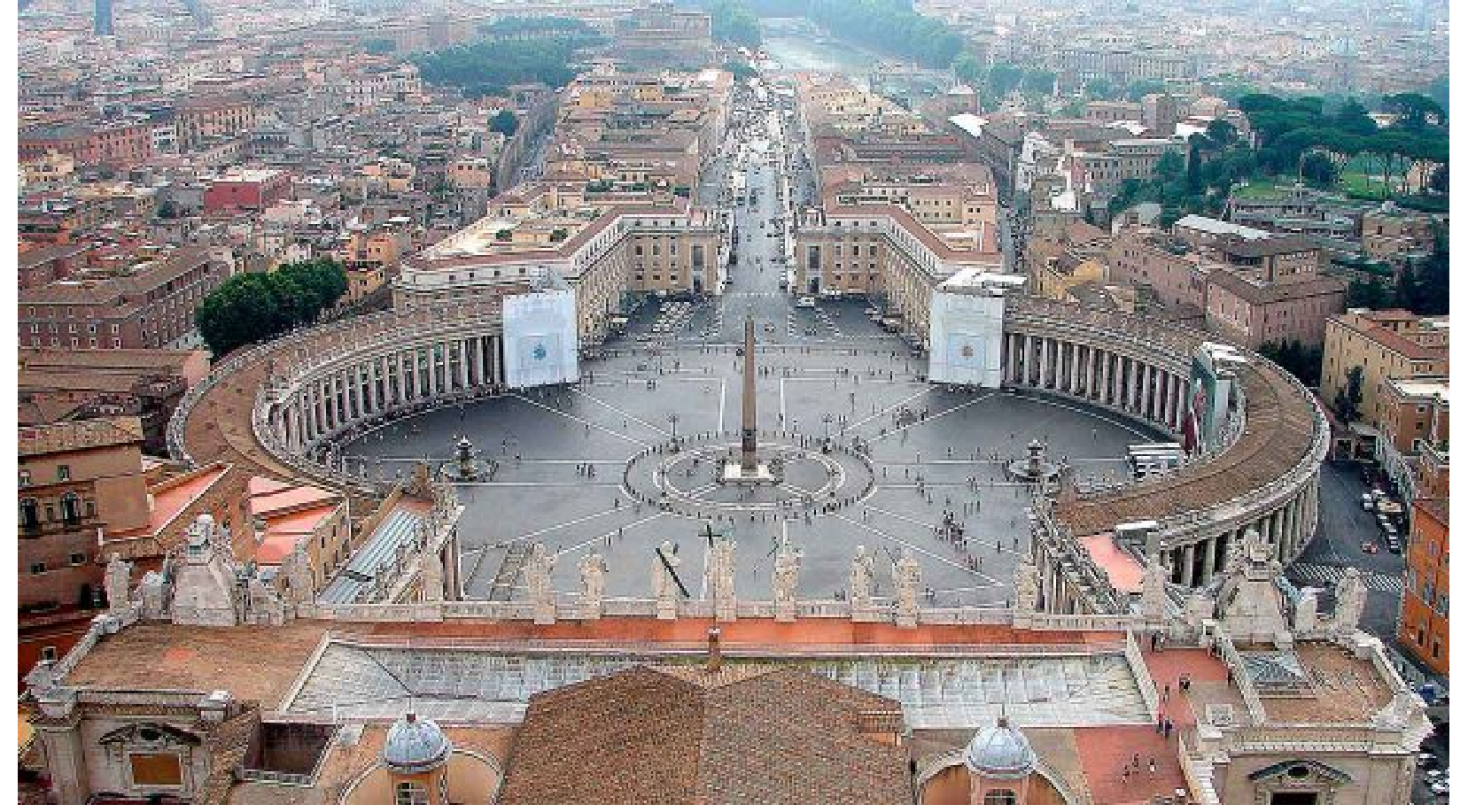
(ZENIT News / Vatican City, 12.22.2025).- Pope Leo XIV has taken a consequential step in shaping the internal life of the Holy See. By approving a revised statute for the Office of Labor of the Apostolic See (ULSA), the Pope has quietly redrawn how labor relations, employee protections, and workplace governance function inside the Vatican’s complex institutional ecosystem.
The reform was enacted through a Rescriptum ex audientia Sanctissimi signed on 25 November 2025, shortly after an audience with Cardinal Secretary of State Pietro Parolin and just one day after the publication of the new General Regulations of the Roman Curia. The timing is not accidental: together, the two texts outline a coordinated effort to modernize governance while grounding it explicitly in the Church’s social doctrine.
At the heart of the reform lies a significant expansion of ULSA’s governing council, the body responsible for consultation and for drafting proposals in labor legislation. For the first time since the office was created in 1988 under Saint John Paul II, the Secretariat of State will have a formal seat at the table. Alongside it come representatives of the Vicariate of Rome, the Vatican Pension Fund, and the Health Assistance Fund (FAS), joining institutions already present such as the Dicastery for Evangelization, the Secretariat for the Economy, APSA, and the Governorate of Vatican City State.
This broader composition is more than administrative fine-tuning. It reflects Leo XIV’s insistence on shared responsibility and institutional dialogue, ensuring that decisions affecting Vatican employees draw on pastoral, financial, medical, and legal perspectives simultaneously. The stated objective is greater internal coordination, but the deeper effect is cultural: labor questions are no longer treated as marginal technical matters, but as a common concern touching the Church’s moral credibility.
The revised statute also alters how the council operates. Previously, individual members had limited capacity to shape the agenda unless supported by several colleagues. Under the new rules, each councillor may independently propose items for discussion, subject to the president’s discretion. This change, modest on paper, embodies a more participatory and “synodal” working style, encouraging initiative from both administrators and staff representatives.
ULSA’s core mission remains intact. The office continues to oversee labor legislation, promote fair working conditions, support professional development, and enhance social security and welfare provisions for Vatican employees. It also retains its role as a technical adviser to dicasteries and other entities, assisting them in drafting internal regulations where the general norms leave room for interpretation. After thirty-five years of accumulated experience, ULSA is positioned not merely as a regulator, but as a repository of institutional memory and best practices.
One of the most consequential aspects of the reform concerns labor disputes. The statute reaffirms that any employee or former employee who believes they have been harmed by an administrative labor decision may seek recourse, either through ULSA or before the Vatican judicial authorities, unless the measure was personally approved by the Pope. Mandatory conciliation before the director of ULSA remains a prerequisite before cases proceed to arbitration or court.
Here, however, Leo XIV has introduced a clear professional threshold. Lawyers involved in conciliation must now demonstrate proven expertise in labor law, while civil attorneys seeking admission to ULSA’s register are required to show solid knowledge of Vatican law. The intent is twofold: to raise the technical quality of proceedings and to reinforce a sense of ecclesial responsibility among those who litigate within the Holy See.
The reform builds on proposals unanimously approved by ULSA’s own council, but it also bears the unmistakable imprint of the Pope’s priorities. Since the beginning of his pontificate, Leo XIV has emphasized the dignity of work and the Church’s duty to embody its social teaching not only in external advocacy, but within its own institutions.
In that sense, the new statute is less about bureaucracy than about coherence. By strengthening representation, encouraging shared discernment, and demanding professional rigor, the Pope is sending a message that the Vatican’s labor system must reflect the values it proclaims—justice, participation, and care for the human person—starting at home.
Thank you for reading our content. If you would like to receive ZENIT’s daily e-mail news, you can subscribe for free through this link.

Publicaciones relacionadas:
 Why did Pope Leo give 500 euros to each Vatican employee?
 Leo XIV Appoints Former Doctor of Pope Francis New Director of Health of the Vatican
 Pope Leo XIV’s warm words to his army and a challenge: may they be a message of unity for the entire Roman Curia
 The traditional Latin Mass celebrated in St. Peter’s Basilica marks a new chapter under the pontificate of Pope Leo XIV
