

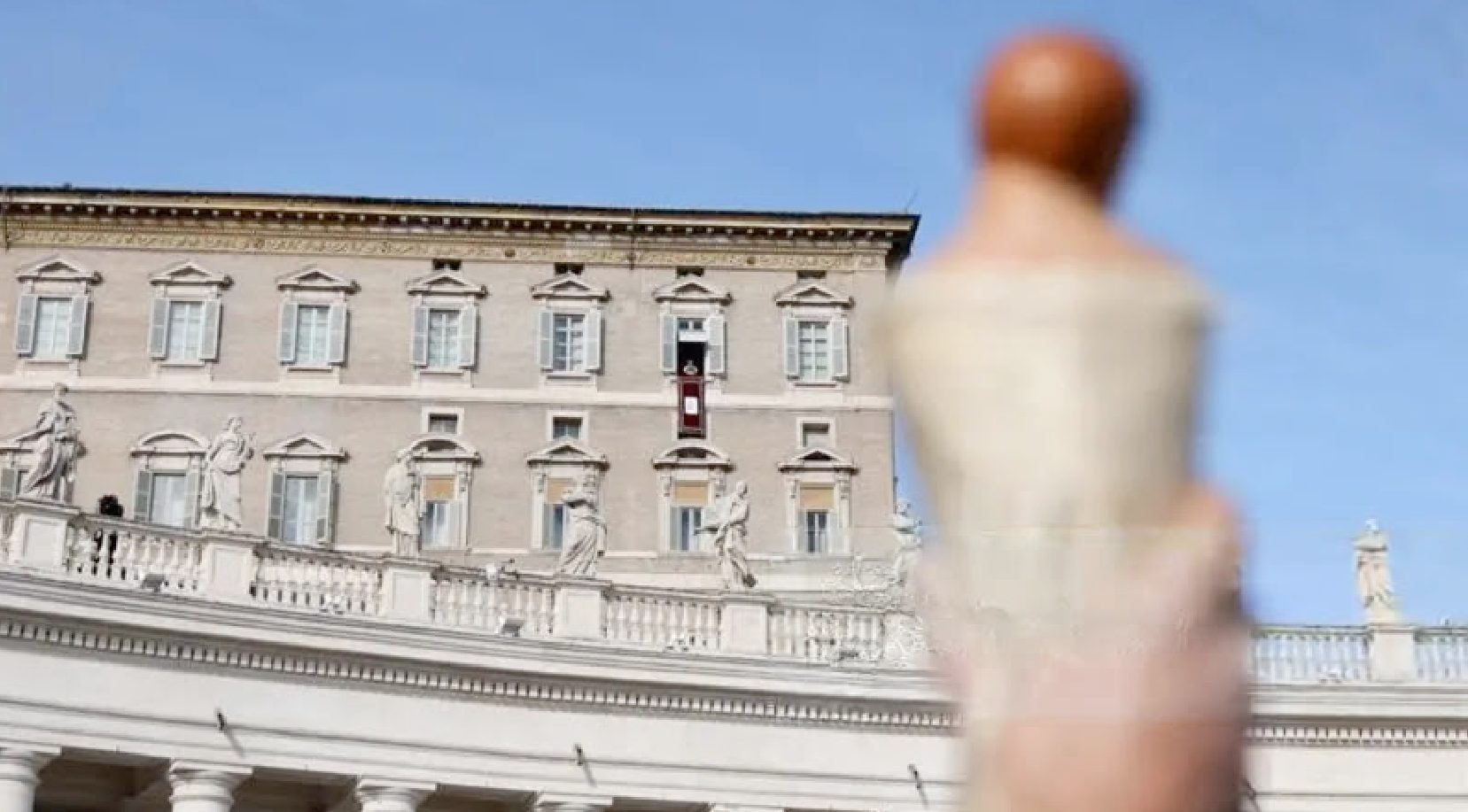
(ZENIT News / Vatican City, 12.22.2025).- St Peter’s Square took on a distinctly domestic tone on Sunday morning, as hundreds of children arrived clutching small statues of the Christ Child. The scene, familiar to Romans yet newly charged with meaning, marked Pope Leo XIV’s first blessing of the Bambinelli—an Advent tradition that quietly weaves together popular devotion, catechesis, and the Church’s public life.
Addressing pilgrims during the Angelus on 21 December, the Pope turned his attention especially to the youngest among the crowd. Many, he noted, had come with a clear purpose: to have the figures of the Infant Jesus blessed before placing them in Nativity scenes at home, in schools, and in parish centers. With a brief but affectionate gesture, Leo XIV extended his blessing “with all my heart” to the Bambinelli, using the Italian term that has become inseparable from the custom itself.
Yet the moment went beyond ritual. Speaking directly to the children, the Pope entrusted them with a task of their own. Standing before their family crèches in the days ahead, he asked them not to forget to pray for him, and above all to pray that children everywhere might live in peace. It was the first major appeal Leo XIV has explicitly addressed to children since his election, and it framed them not merely as recipients of a blessing, but as participants in the Church’s prayer.
The initiative, organized by the Centro Oratori Romani and dating back to 1969 under Paul VI, has long been a fixture of Advent in Rome. This year, however, it carried particular resonance. The blessing traditionally takes place on the third Sunday of Advent, Gaudete Sunday, with its emphasis on joy. In 2025, it was moved to the fourth and final Sunday, lending the event a more contemplative, almost threshold-like character as Christmas approached.
Before the blessing, Leo XIV reflected on the Gospel of Matthew and the figure of Saint Joseph, whom he presented not as a distant icon but as a man marked by quiet courage and deep humanity. Joseph, the Pope observed, is called “righteous” in Scripture not only for his fidelity to the law, but for his capacity for mercy. Faced with a situation he did not understand, Joseph chose trust over withdrawal, welcoming both Mary and the child entrusted to him by God.
In Joseph’s silence and obedience, Leo XIV suggested, there is a lesson for the Church at the close of Advent: a way of preparing the heart to receive Christ by forgiving, encouraging, and offering hope. The emphasis on Joseph also subtly aligned the Bambinelli blessing with a broader spiritual horizon, linking the simplicity of a child’s prayer to the adult challenges of faith and responsibility.
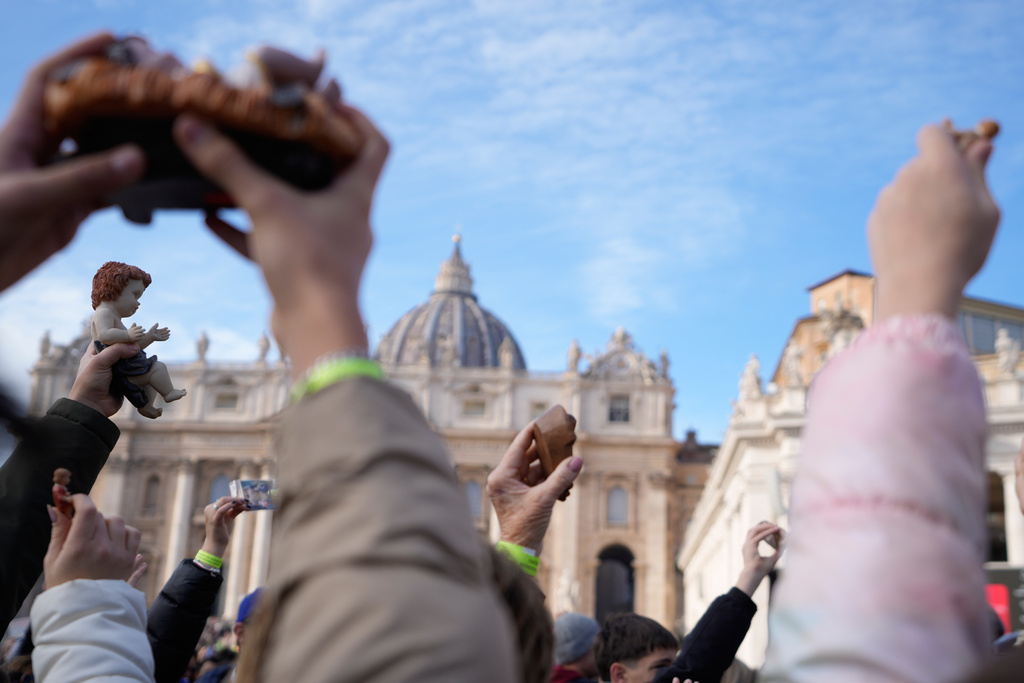
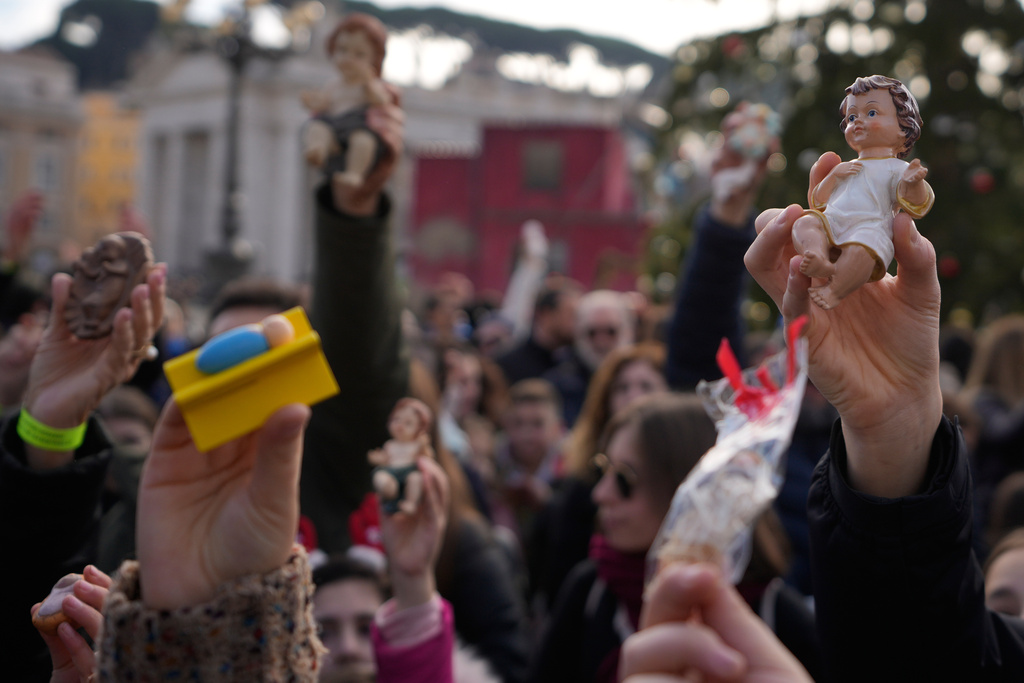
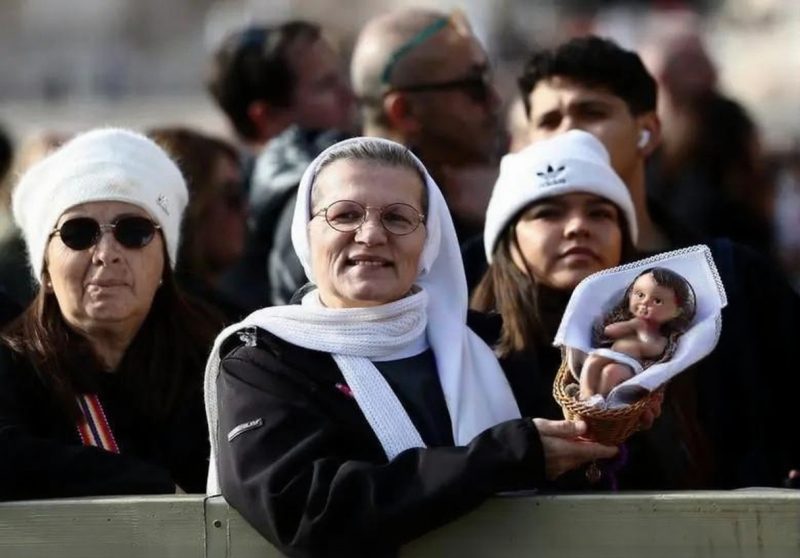
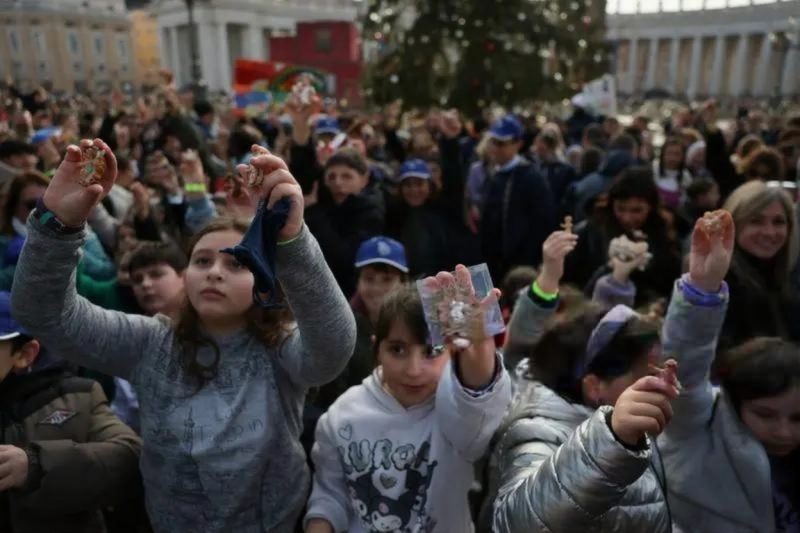
The scene in the square was vivid and unpolished. Some statues were bare, as tradition dictates before Christmas night; others were dressed in white or gold garments. Held aloft by small hands, they transformed the vast space before the basilica into something closer to a parish courtyard. Families and catechists looked on as the Pope’s blessing passed over the figures that would soon anchor Christmas celebrations far from Rome.
This Angelus also served as a quiet threshold for Leo XIV himself. His schedule reflects the full rhythm of the season: the Vigil Mass on Christmas Eve, Mass and the Urbi et Orbi blessing on Christmas Day, and the Angelus on 26 December. The transition into the new year will follow with Vespers on 31 December, the Mass for the Solemnity of Mary, Mother of God on 1 January, and the Epiphany liturgy on 6 January.
That final celebration will also carry a larger ecclesial significance. Christmas marks the end of the Jubilee of Hope inaugurated by Pope Francis in December 2024. In the days surrounding the feast, the Holy Doors of Rome’s other papal basilicas will close. Leo XIV will then formally conclude the Jubilee by sealing the Holy Door of St Peter’s Basilica during the Epiphany Mass of 6 January 2026.
Against that backdrop, the blessing of the Bambinelli may appear modest. Yet it offers a revealing glimpse into the tone of this early pontificate: attentive to tradition without nostalgia, comfortable with gestures that speak to families and children, and anchored in a theology that sees trust and mercy as the first language of faith.
Thank you for reading our content. If you would like to receive ZENIT’s daily e-mail news, you can subscribe for free through this link.
Pope Leo XIV framed by the Vatican Christmas tree, delivers the Angelus noon prayer from the window of his studio overlooking St. Peter’s Square, at the Vatican, Sunday, Dec. 21, 2025. (AP Photo/Gregorio Borgia)
Pope Leo XIV framed by the Vatican Christmas tree, delivers the Angelus noon prayer from the window of his studio overlooking St.Peter’s Square, at the Vatican, Sunday, Dec. 21, 2025. (AP Photo/Gregorio Borgia)
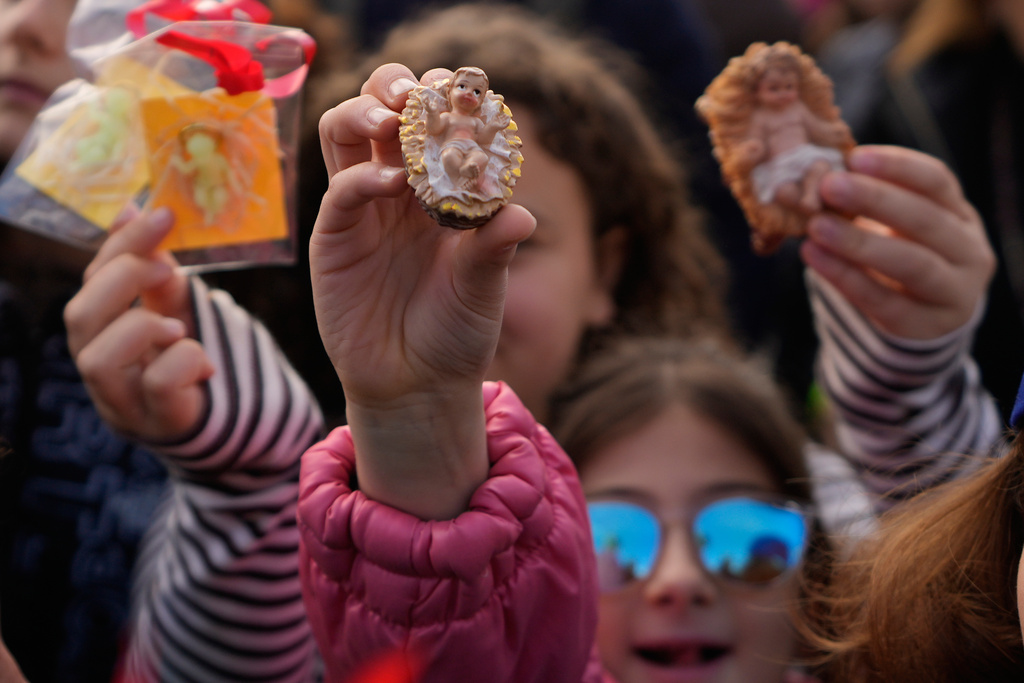
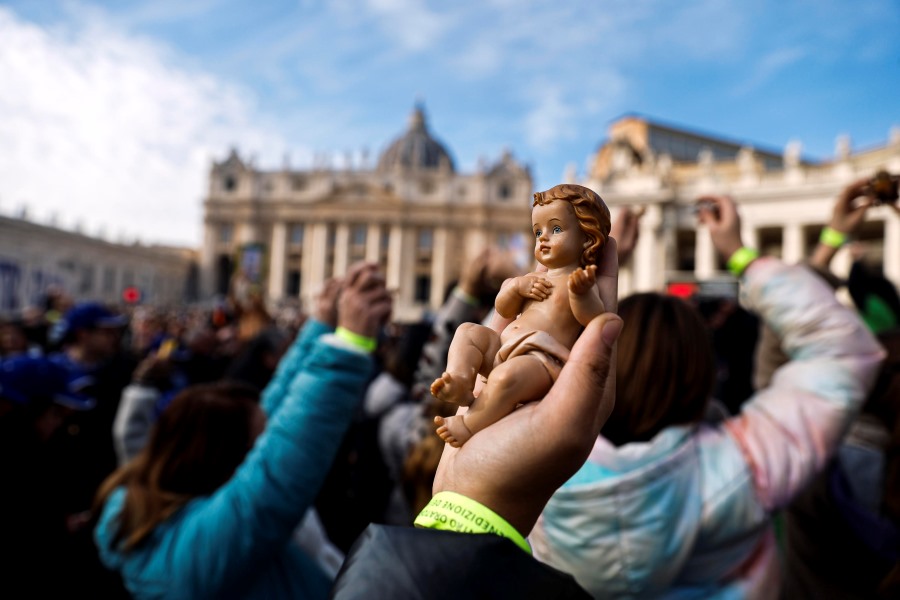
Faithful hold up statuettes of baby Jesus prior to the start of Pope Leo XIV Angelus noon prayer in St. Peter’s Square, at the Vatican, Sunday, Dec. 21, 2025. (AP Photo/Gregorio Borgia)
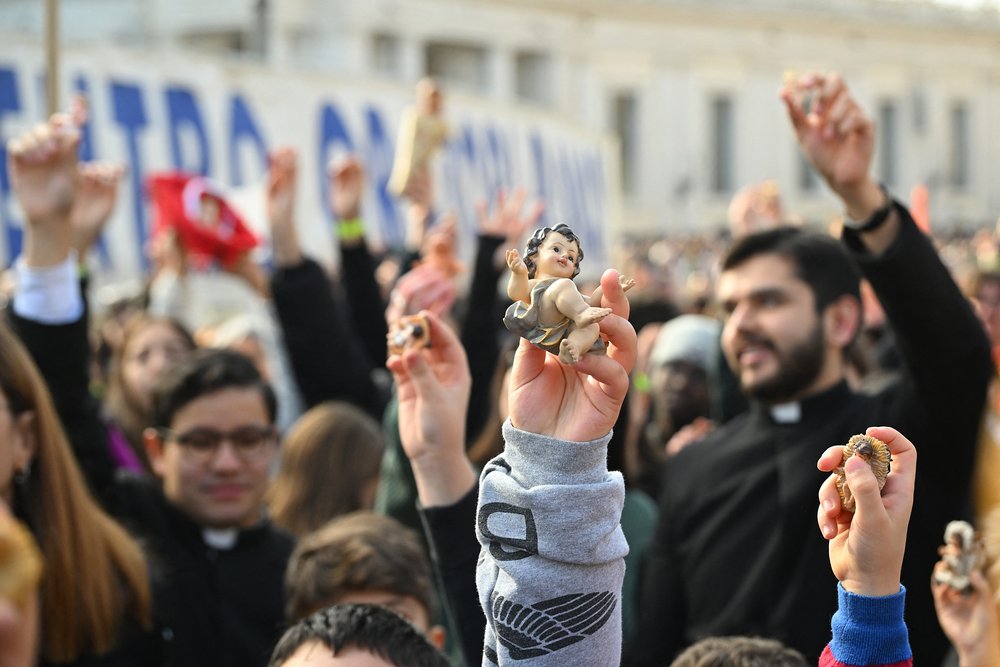
Children hold a Nativity Scene figurine of baby Jesus before the traditional blessing of figurines as part of the pope’s Sunday Angelus prayer before Christmas in Saint Peter’s Square in the Vatican on December 21, 2025. (Photo by Andreas SOLARO / AFP via Getty Images)
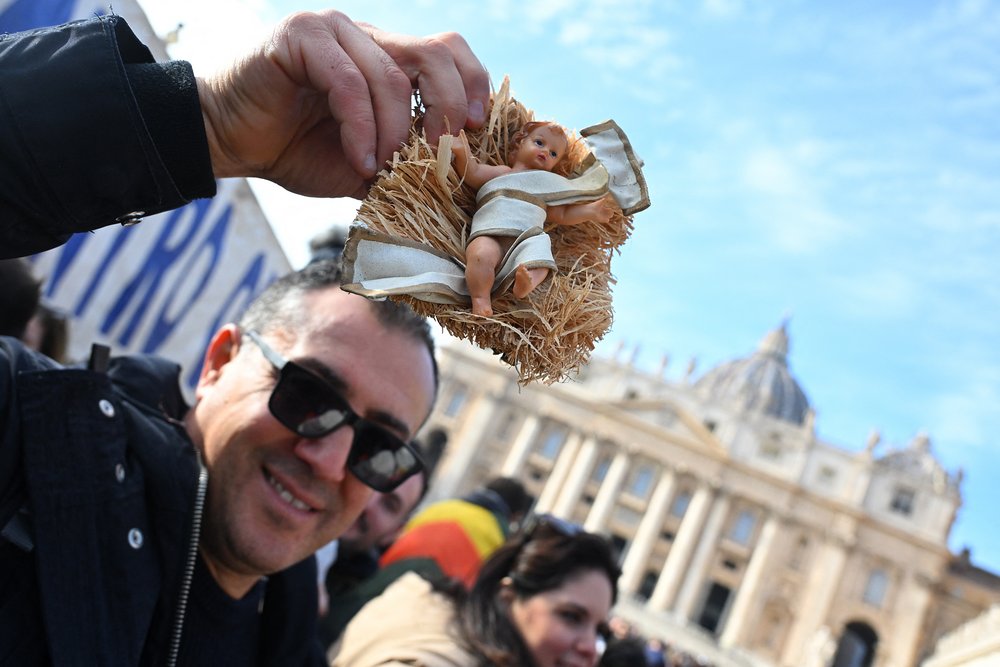
A man holds a Nativity Scene figurine of baby Jesus before the traditional blessing of figurines as part of the pope’s Sunday Angelus prayer before Christmas in Saint Peter’s Square in the Vatican on December 21, 2025. (Photo by Andreas SOLARO / AFP via Getty Images)
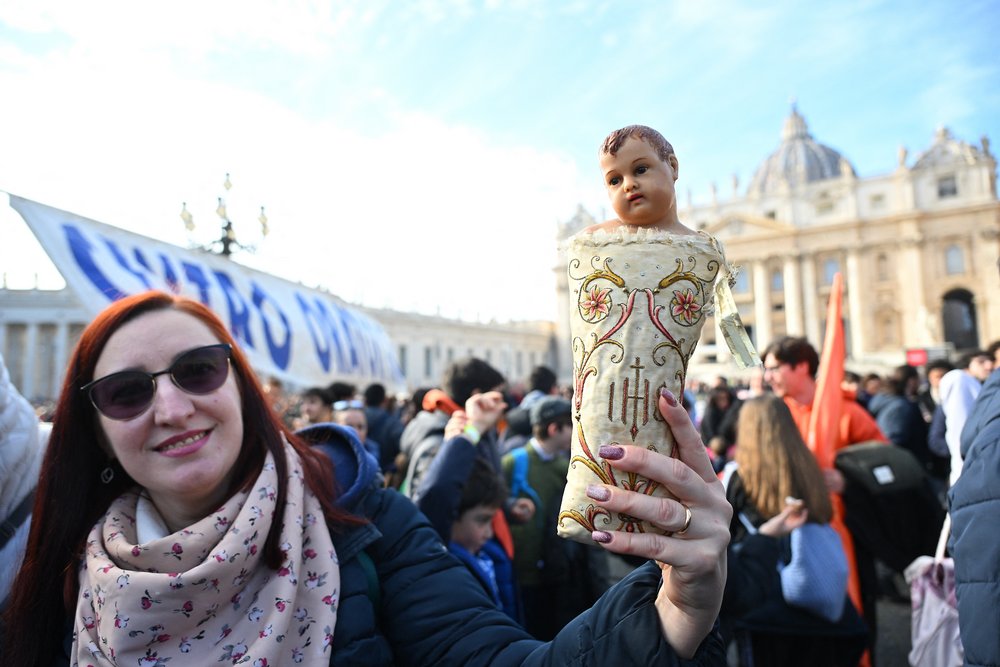
A woman holds a Nativity Scene figurine of baby Jesus before the traditional blessing of figurines as part of the pope’s Sunday Angelus prayer before Christmas in Saint Peter’s Square in the Vatican on December 21, 2025. (Photo by Andreas SOLARO / AFP via Getty Images)
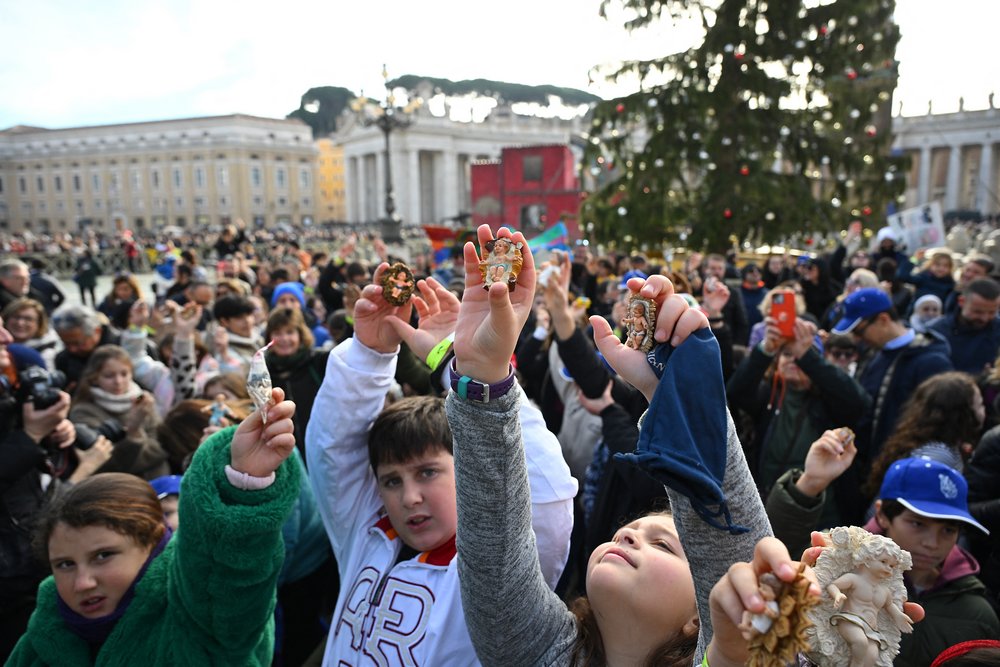
Children hold a Nativity Scene figurine of baby Jesus before the traditional blessing of figurines as part of the pope’s Sunday Angelus prayer before Christmas in Saint Peter’s Square in the Vatican on December 21, 2025. (Photo by Andreas SOLARO / AFP via Getty Images)
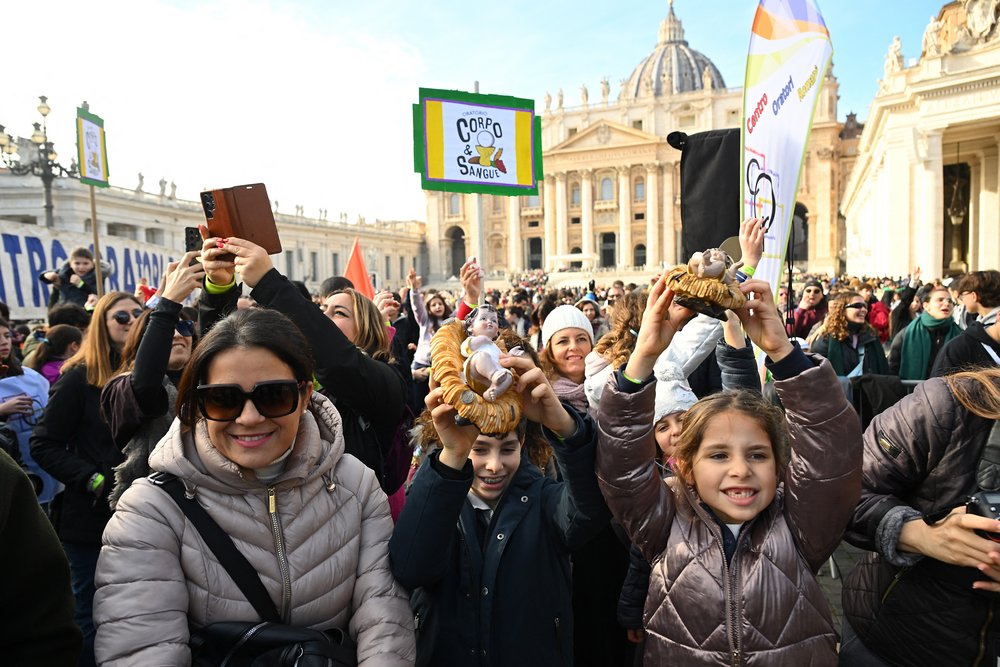
Children hold a Nativity Scene figurine of baby Jesus before the traditional blessing of figurines as part of the pope’s Sunday Angelus prayer before Christmas in Saint Peter’s Square in the Vatican on December 21, 2025. (Photo by Andreas SOLARO / AFP via Getty Images)
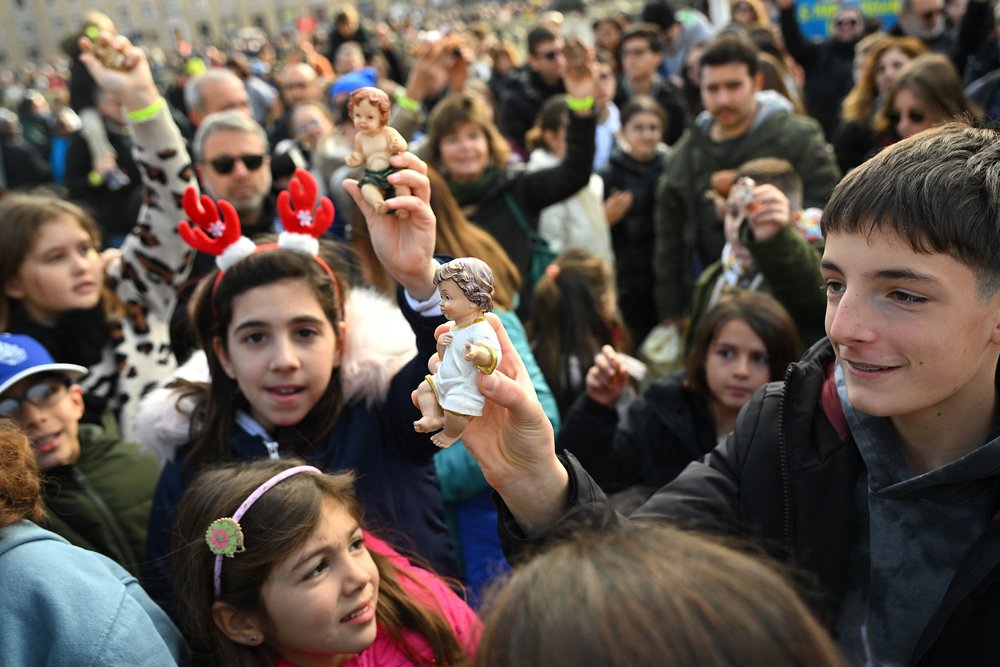
Children hold a Nativity Scene figurine of baby Jesus before the traditional blessing of figurines as part of the pope’s Sunday Angelus prayer before Christmas in Saint Peter’s Square in the Vatican on December 21, 2025. (Photo by Andreas SOLARO / AFP via Getty Images)
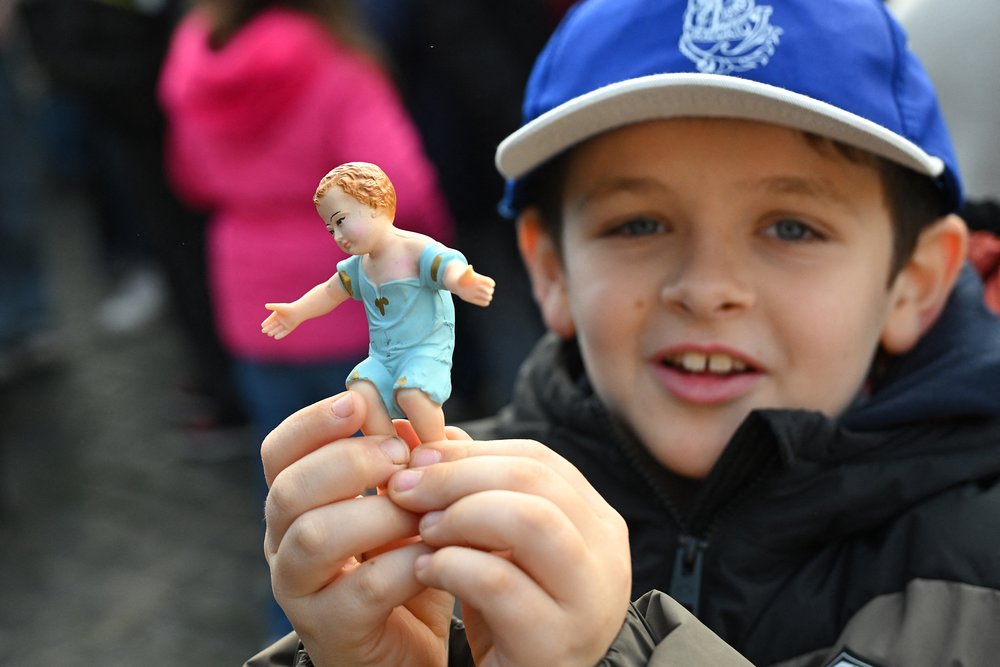
A child holds a Nativity Scene figurine of baby Jesus before the traditional blessing of figurines as part of the pope’s Sunday Angelus prayer before Christmas in Saint Peter’s Square in the Vatican on December 21, 2025. (Photo by Andreas SOLARO / AFP via Getty Images)
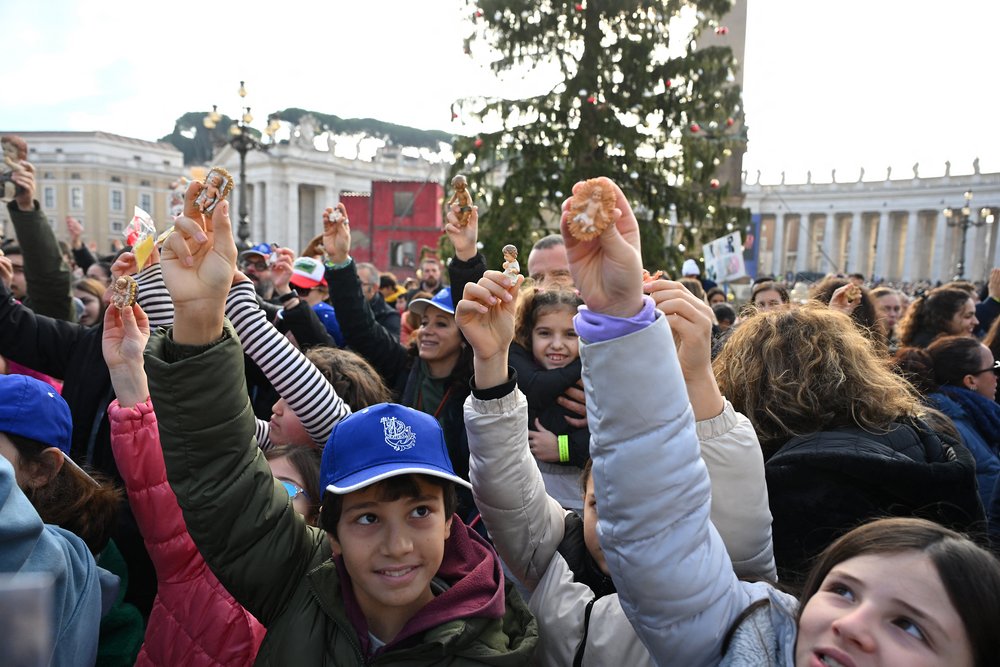
Children hold a Nativity Scene figurine of baby Jesus before the traditional blessing of figurines as part of the pope’s Sunday Angelus prayer before Christmas in Saint Peter’s Square in the Vatican on December 21, 2025. (Photo by Andreas SOLARO / AFP via Getty Images)
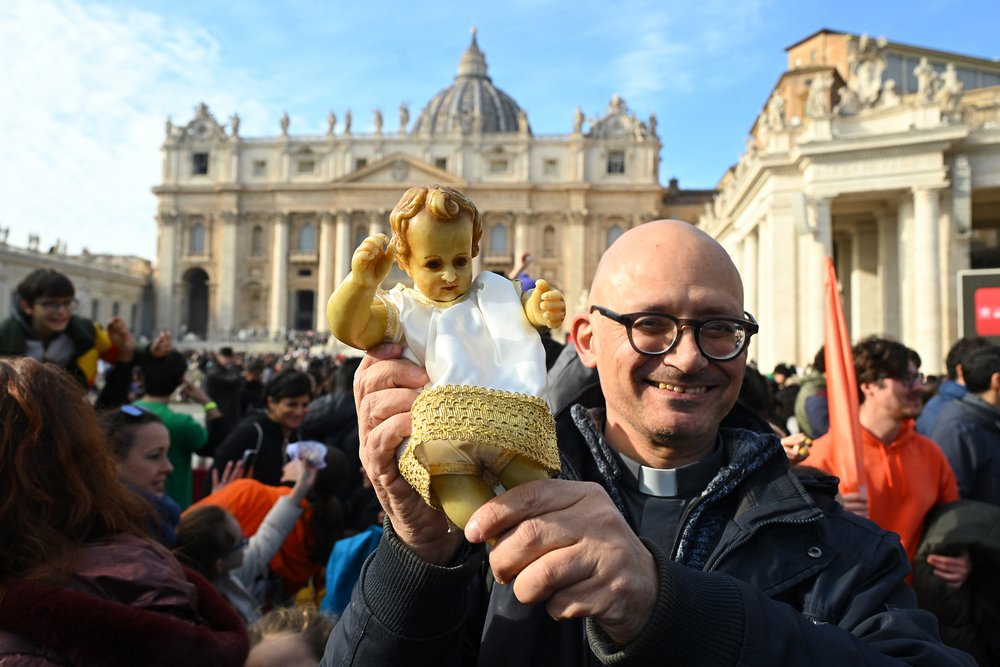
A priest holds a Nativity Scene figurine of baby Jesus before the traditional blessing of figurines as part of the pope’s Sunday Angelus prayer before Christmas in Saint Peter’s Square in the Vatican on December 21, 2025. (Photo by Andreas SOLARO / AFP via Getty Images)
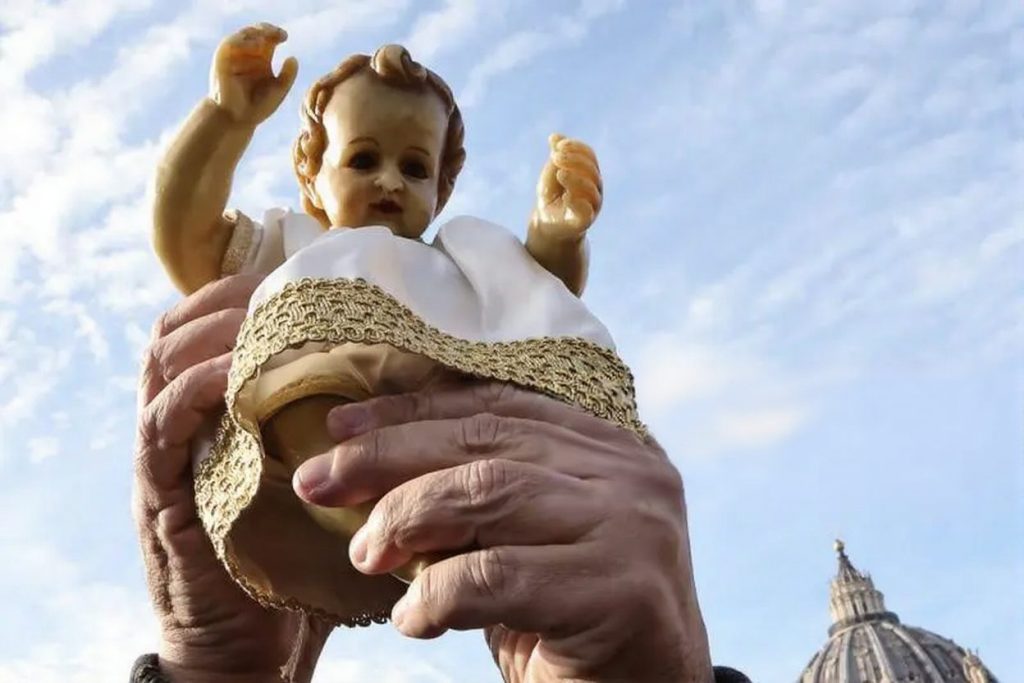
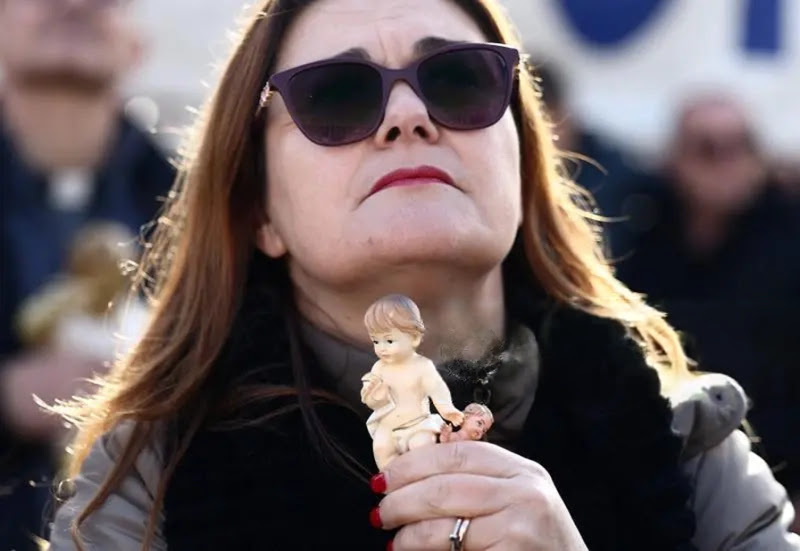
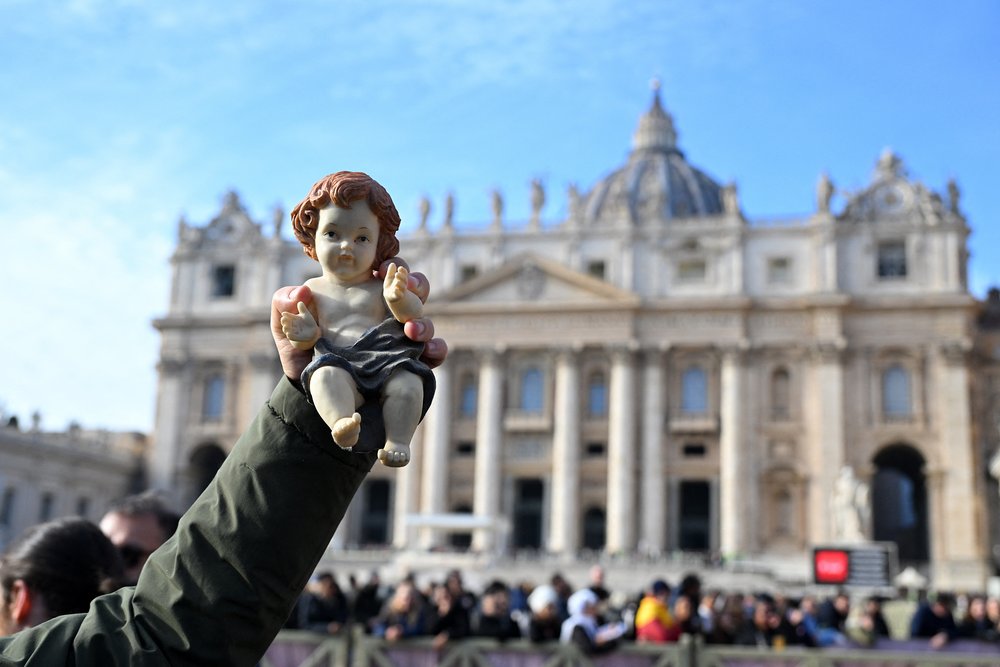
A person holds a Nativity Scene figurine of baby Jesus before the traditional blessing of figurines as part of the pope’s Sunday Angelus prayer before Christmas in Saint Peter’s Square in the Vatican on December 21, 2025. (Photo by Andreas SOLARO / AFP via Getty Images)

Publicaciones relacionadas:
 5 years after Pope’s letter to young people, Vatican’s online campaign arrives
 What does it mean to be pilgrims? The Pope’s message for the World Day of Vocations
 7 out of 10 Spanish citizens believe that Leo XIV’s papacy will be good or better than that of Pope Francis
 The encounter with the risen Christ that changes existence and illuminates affections, desires, and thoughts: Leo XIV’s homily to young people
