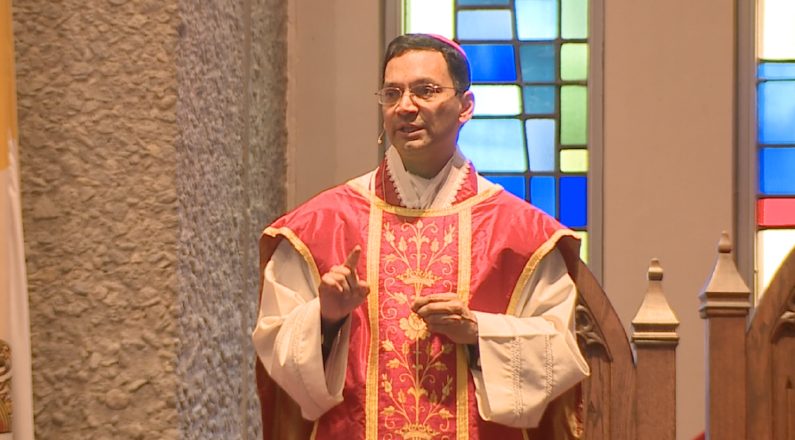
(ZENIT News / Columbus, 12.29.2025).- Christmas usually fills churches with lights, carols, and crowds. However, in large areas of Columbus, Ohio, the atmosphere in the weeks leading up to the Solemnity was very different, permeated as it was with fear, anxiety, and forced silence. Faced with this grim scene, the diocesan Bishop, Earl Fernandes, made an unusual decision, one born from direct contact with reality: to temporarily exempt from the obligation to attend Mass on Sundays and holy days of obligation those who reasonably fear being detained by the ongoing immigration operations.
The measure, in effect until the end of the Christmas season — January 11, 2026, the Feast of the Baptism of the Lord — arose from a specific pastoral diagnosis. In recent months, and more intensely around the Christmas celebrations, the activities of the Immigration Service and Customs Enforcement (ICE) increased in the diocesan territory. The result was immediate: entire communities, especially those of Latin American descent, began to empty the church pews for fear of being identified, detained, or separated from their families.
Bishop Fernandes, who listened firsthand to the parish priests most exposed to this reality, especially in Spanish-speaking parishes, concluded that insisting unequivocally on the Sunday’s obligation could end up damaging what the norm seeks to protect: the spiritual good of the faithful. Church law offers a diocesan Bishop the possibility of exempting from disciplinary laws when circumstances advise it, and the Bishop decided to exercise that faculty clearly and unambiguously
The exemption extends even to people with documentation in place who, nevertheless, feel vulnerable because of their ethnic background or the general climate of intimidation. It is not — the decree stresses –, a renunciation of the sacramental life, nor a relativization of the Eucharist, but an exceptional response to an exceptional situation. Therefore, along with the dispensation, the Bishop exhorts the faithful to keep up their spiritual life through other means: following Masses by live stream, responding through spiritual communion, praying in the family, contemplating the mystery of the manger and resorting to traditional expressions of popular piety.
Pastoral responsibility, in this logic, does not rest solely with the faithful. Bishop Fernandes explicitly asked priests and pastoral agents to extend proximity to those who cannot go to church, guaranteeing access to the Sacraments and spiritual care, especially for the sick and the most frail. The Church, he insisted, cannot become a space perceived as unsafe for those who already live daily in uncertainty.
The decision was not exempt from criticism. In a deeply polarized country, some sectors interpreted the exemption as a political concession or even as an incentive for lawlessness. The Bishop flatly rejected this reading. He recognized the right of States to protect their borders and valued the work of the security forces against organized crime, and drug and human trafficking. But, at the same time, he launched an appeal to the collective conscience, stating that neither churches nor schools should become scenarios of fear, and legitimate protection should not translate into the breakup of families, especially at a time when Christians celebrate peace and God’s closeness.
For many immigrant communities, the exemption was seen as a gesture of relief and recognition. Not a few faithful expressed that, for the first time in a long time, they felt truly heard. Others, including some not directly affected, expressed their solidarity and thanked the Church for speaking out, even at the risk of misunderstandings.
Paradoxically, fear, in fact , did not manage to extinguish liturgical life altogether. On Christmas day itself, the Bishop learned that many people, despite their anxiety and doubts, decided to go to Mass to worship the newborn Child. That testimony, he said, was a source of personal inspiration. Governing a diocese, he concluded, implies taking difficult decisions, which will not always be popular. But episcopal ministry does not consist in avoiding conflict but in exercising a prophetic word capable of guarding the life, dignity and hope of the most vulnerable.