(ZENIT News / Roma, 01.03.2026).- Answered by Legionary of Christ Father Edward McNamara, professor of liturgy and sacramental theology at the Pontifical Regina Apostolorum university.
Q: Is it necessary to bow down to the altar at the beginning of Mass when the tabernacle is in the sanctuary? I see priests doing it and it seems redundant. They do that before leaving, too. They bow down to the altar and then genuflect and then leave. — J.S., New York City
A: The General Instruction of the Roman Missal (GIRM) offers some general principles that are applicable in most situations but wisely refrains from entering into specific details given the great variety of possible tabernacle locations.
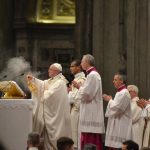
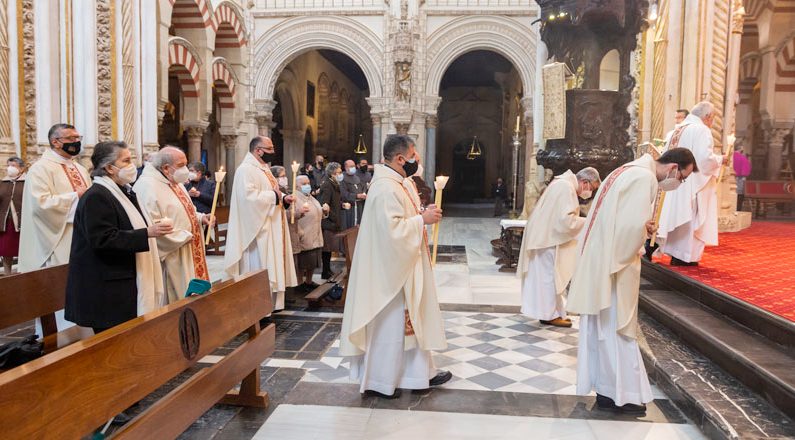
According to the GIRM, nos. 49 and 122: «When they reach the altar, the Priest and ministers make a profound bow.»
With respect to concelebrations GIRM 211 says: «On reaching the altar, the concelebrants and the principal celebrant, after making a profound bow, venerate the altar with a kiss, then go to their designated seats.»
This is also mentioned in the Ceremonial of Bishops 130: «On entering the sanctuary (chancel) all make a deep bow to the altar, two by two, Deacons and concelebrating presbyters go up to the altar, kiss it, then go to their places.»
The process would be reversed at the end of Mass as indicated in GIRM 90. The priest and deacon would first kiss the altar. This is followed by a profound bow toward the altar by the priest, deacon and other ministers.
What is not always clear is the moment in which concelebrants bow toward the altar at the end of Mass. GIRM 251 says: “Before leaving the altar, the concelebrants make a profound bow to the altar. For his part the principal celebrant, along with the Deacon, venerates the altar as usual with a kiss.”
The Ceremonial of Bishops 170 also describes this moment adding some details: «After the blessing, one of the deacons dismisses the people …. Then, as a rule, the bishop kisses the altar and makes the due reverence to it. The concelebrants also, and all in the sanctuary (chancel) reverence the altar, as at the beginning of Mass, and return to the vesting room (sacristy) in procession, following the order in which they entered.»
From these texts it also would appear that the liturgical books distinguish between the final kiss of the altar and the veneration of the altar.
In virtue of this distinction, while some places have interpreted venerating the altar as the concelebrants bowing toward the altar at the same time as the principal celebrant and deacon kisses the altar, it would appear to be more in line with the text that the veneration be a profound bow when priest and deacon bow toward the altar after coming to the front.
These norms would also seem to presuppose the absence of the tabernacle in the sanctuary. This topic is dealt with later in GIRM 274 which says:
“If, however, the tabernacle with the Most Blessed Sacrament is situated in the sanctuary, the Priest, the Deacon, and the other ministers genuflect when they approach the altar and when they depart from it, but not during the celebration itself.”
In order to interpret this section, let us first note that the title for the section that precedes GIRM 49 says: “Greeting of the Altar and of the People Gathered Together.” By using the word “greeting” (salutatio) for altar and people, the missal creates a certain parallelism that underlines the altar as the primary symbol of Christ in the church building and the role of the assembly as a mode of Christ’s presence in the liturgy.
GIRM 274, on the other hand, is dealing with the subject of genuflections and bows in general, and it is within this context that it presents the concrete case of the presence of the tabernacle in the sanctuary area during Mass.
The two norms are not contradictory, but it must be admitted that the number of possible locations of the tabernacle within the sanctuary area is so varied that it is difficult to offer a single solution.
In general terms, I think the norms do show preference for a separate veneration of altar and tabernacle as the altar is always subject to veneration in its own right. At no time does the missal suggest that the genuflection, as a sign of adoration toward the Real Presence of Christ at the beginning and end of Mass, substitutes the deep bow which is primarily a sign of veneration toward the altar as a symbol of Christ.
That said, however, I would suggest that in some cases the genuflection could render the bow unnecessary at the beginning and conclusion of Mass.
For example, if the tabernacle is directly behind the altar in such a way that the bow and the genuflection would be practically indistinguishable from the ritual point of view, then the genuflection alone could suffice. The altar will still be venerated by the kiss of the ministers and, possibly, by incense at least during the entrance procession.
If, on the other hand, the tabernacle is within the sanctuary but off to one side, I think both rites should be observed. The priest and the ministers would approach the altar, make a deep bow, then turn toward the tabernacle and genuflect, and then approach the altar to kiss it. The final procession would also follow similar criteria; the priest and ministers should bow toward the altar and then turn toward the tabernacle for the genuflection before leaving the sanctuary.
In the case of concelebrations, the situation can vary depending on the number of concelebrants and where they are located.
If numerous priests are present, in which duplicating the gestures at the beginning could excessively prolong the entrance procession. I think it would be legitimate to adopt a single gesture so as to avoid this. For example, only the genuflection for a centrally located tabernacle or only the bow if the tabernacle is off to one side of a large sanctuary area.
The dynamics of the final procession would also be subject to adaptation. For example, in some large concelebrations priests are located outside of the sanctuary area proper. In such situations, at the end of Mass, the concelebrants would simply stay at their places and make the same gesture as the presiding celebrant before leaving in an orderly procession.
There are also some exceptional situations in which concelebrating priests are so numerous that they are required to take their places before Mass begins and only a small group of concelebrants and ministers accompany the presiding celebrant in the processions.
In such cases the priests would make the bow toward the altar together with the presiding celebrant. They would not genuflect toward the tabernacle at the beginning of Mass as they would have already done so on entering the church.
* * *
Readers may send questions to zenit.liturgy@gmail.com. Please put the word «Liturgy» in the subject field. The text should include your initials, your city and your state, province or country. Father McNamara can only answer a small selection of the great number of questions that arrive.
Thank you for reading our content. If you would like to receive ZENIT’s daily e-mail news, you can subscribe for free through this link.