

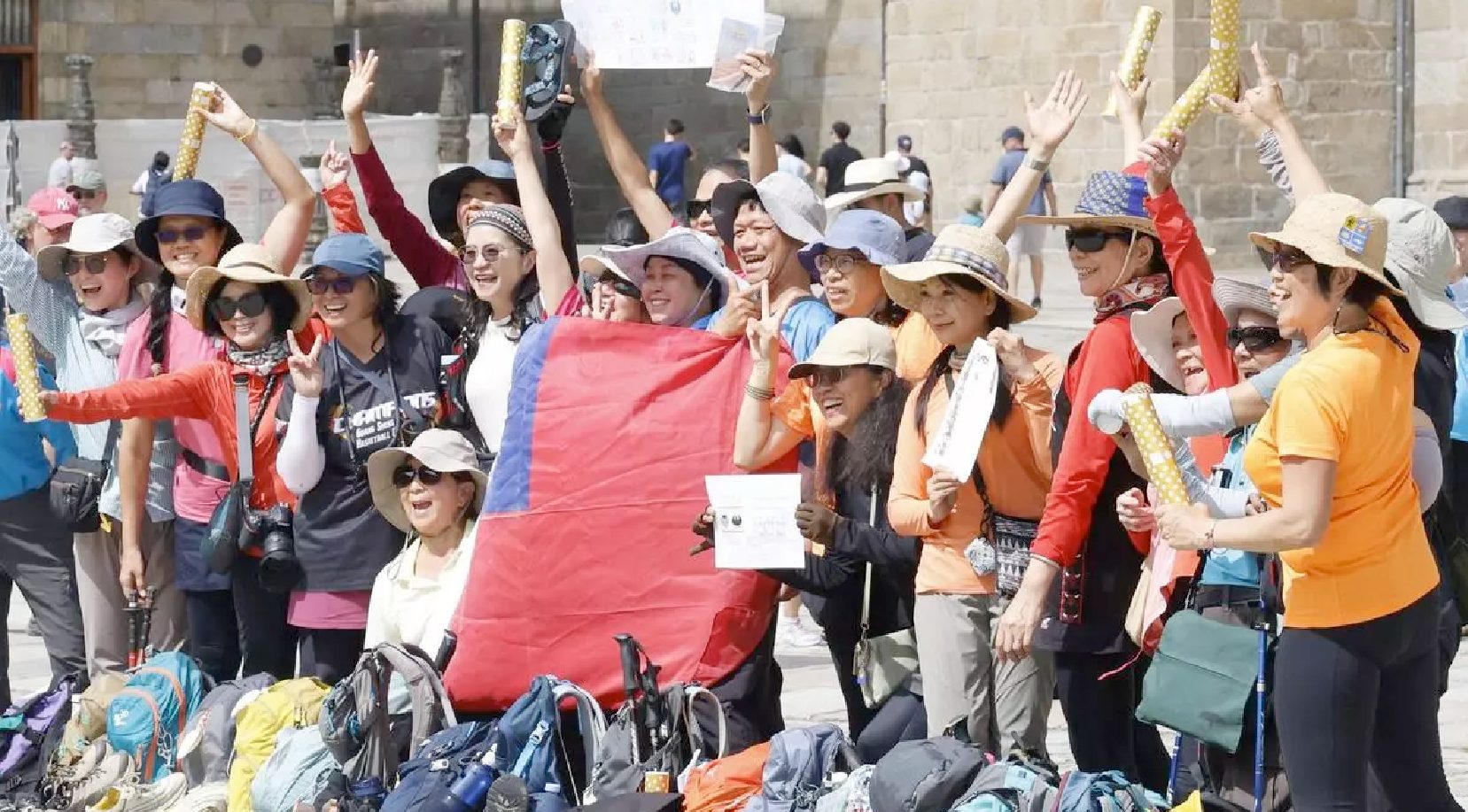
(ZENIT News / Santiago de Compostela, 01.05.2026).- Spain’s most emblematic pilgrimage route is no longer a seasonal phenomenon nor a niche religious practice. By the end of 2025, the Camino de Santiago had firmly established itself as one of Europe’s most dynamic cultural and spiritual corridors, drawing more than half a million people to Santiago de Compostela in a single year and confirming a trend that shows no sign of slowing.
According to official figures from the Pilgrims’ Office in Santiago, 530,987 people completed at least one of the recognised Jacobean routes during 2025. While Spanish pilgrims remain a substantial presence, accounting for 228,527 walkers, they now represent a minority overall. More than 297,000 pilgrims came from abroad, underlining the Camino’s transformation into a global point of reference that attracts walkers from every continent.
What is particularly striking is not only the scale of participation, but the diversity of motivations behind it. Nearly half of all pilgrims in 2025, some 233,000 people, declared that they undertook the Camino for explicitly religious reasons. A further 170,000 combined faith with cultural, personal or spiritual interests, suggesting that the pilgrimage continues to function as a space where belief, introspection and heritage intersect. Those who reported no religious motivation at all numbered just under 98,000, less than one fifth of the total, a figure that challenges the frequent assumption that the Camino has become merely a secular hiking experience.
To understand the significance of these numbers, it is worth recalling what the Camino de Santiago represents. At its core, it is a network of historic pilgrimage routes leading to the tomb of the Apostle James the Greater, traditionally believed to be buried in Santiago de Compostela. Since the Middle Ages, pilgrims have walked these paths as an act of devotion, penance or thanksgiving. Over centuries, monasteries, hospitals, bridges and towns emerged along the way, shaping a unique cultural landscape that today is recognised as a UNESCO World Heritage site. In the modern era, the Camino has retained its religious roots while opening itself to a broader public drawn by history, nature and the search for meaning.
The post-pandemic evolution of the Camino adds further context. In 2019, the last full year before COVID-19 disrupted travel worldwide, just over 347,000 pilgrims were registered. The rebound has been steady and pronounced: 438,000 in 2022, 446,000 in 2023, around half a million in 2024, and now more than 530,000 in 2025. Rather than a temporary surge, the data suggest a structural expansion of the pilgrimage’s appeal.
The distribution of pilgrims across routes also reveals clear preferences. The Camino Francés once again dominated, with 242,175 walkers, nearly 46 percent of the total. Its infrastructure, historical prestige and accessibility continue to make it the backbone of the Jacobean network. The Camino Portugués followed at some distance, attracting just over 100,000 pilgrims, while the Portuguese Coastal Route consolidated its position with close to 90,000 participants, reflecting growing interest in itineraries that combine pilgrimage with maritime landscapes.
Other routes maintain a significant, if more modest, presence. The Camino Inglés surpassed 30,000 pilgrims, benefitting from shorter distances and increasing international connections. The Camino Primitivo and the Camino del Norte, each with around 21,500 walkers, continue to appeal to those seeking demanding terrain and dramatic scenery. The Vía de la Plata, longer and more austere, drew fewer than 9,000 pilgrims, while lesser-known routes such as the Camino de Invierno or Muxía-Fisterra remain marginal but symbolically important within the broader network.
Seasonal patterns remain consistent. The Camino is quiet in the winter months, with January and February registering minimal traffic. Numbers begin to rise in March and surge from April onwards. May, June and September emerge as peak months, balancing favourable weather with manageable crowds. July and August remain extremely busy, driven largely by international tourism and school holidays, before a gradual decline sets in during the autumn.
Taken together, the 2025 figures point to a Camino de Santiago that is both ancient and remarkably contemporary. Rooted in a medieval devotion, it now operates as a global meeting place where faith, culture and personal transformation coexist. Far from losing its spiritual identity, the Camino appears to be redefining it for a new generation of pilgrims who continue to walk, for reasons both old and new, towards Compostela.
Thank you for reading our content. If you would like to receive ZENIT’s daily e-mail news, you can subscribe for free through this link.

Publicaciones relacionadas:
 Pope Gives Relics of the True Cross to King Charles III for His Coronation
 USA: Bishops Reduce Investments in Campaigns Against Abortion Before the 2024 Elections
 From Spain to Mexico: Cardinal Aguiar defends the Cause for Beatification of Queen Isabella the Catholic in Valladolid
 UK Bible Sales Are Up 134% Since 2019
