

Scott Ventureyra
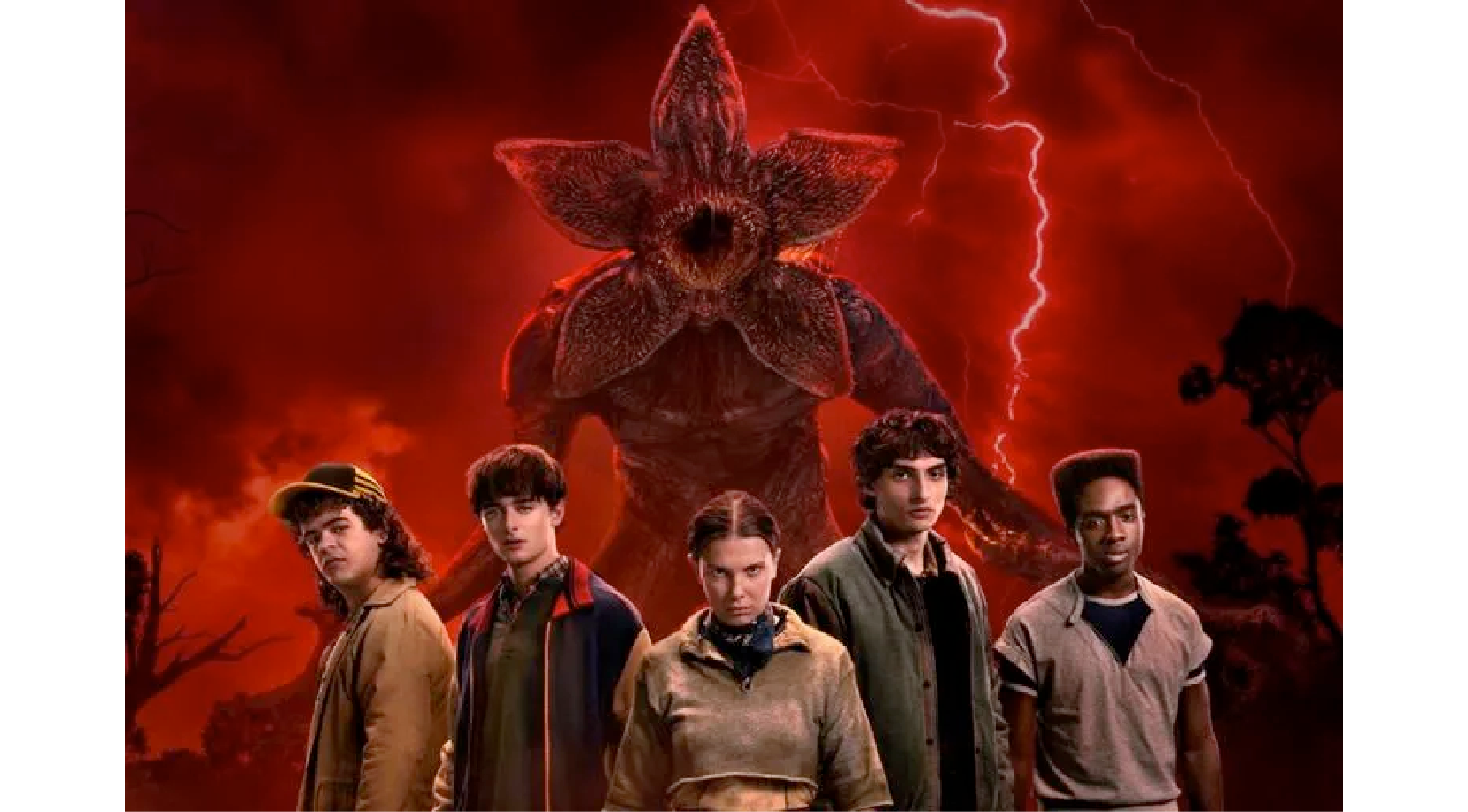
(ZENIT News – Crisis Magazine / Otawwa, 01.17.2026).- Stranger Things is a science fiction drama set in 1980s small-town America, where the disappearance of a child exposes secret government experiments, a shadow realm known as the Upside Down, and an emerging supernatural menace later personified in the figure of Vecna. Across its seasons, and especially in its later ones, the series blends Cold War anxiety, adolescent friendship, and supernatural horror to explore loss, fear, sacrifice, and responsibility. What begins as a story of childhood adventure gradually unfolds into a meditation on evil, innocence, and the fragile bonds that hold a community together.
Hawkins, where much of the story unfolds, is a fictional Midwestern town shaped by ordinary routines, neighborly trust, and familiar patterns of life, disrupted by hidden laboratories and supernatural intrusions that fracture its moral and social coherence. The series begins with the disappearance of Will Byers, a sensitive and imaginative child whose sudden absence exposes both the town’s hidden fractures and the presence of a deeper, encroaching evil.
At first encounter, Stranger Things appears to trade heavily on familiarity. Bicycles cutting through suburban streets at dusk, walkie-talkies crackling with urgency, basements filled with games and music, and the soft menace of synthesizers recall a cinematic world shaped by Steven Spielberg and Stephen King. The echoes of E.T. the Extra-Terrestrial and Close Encounters of the Third Kind are unmistakable. Children sense danger before adults know how to name it. A sense of wonder and fear often emerge simultaneously.
But I believe the story brings more to the table than merely borrowed imagery. It embodies an urgency about moral risk that much contemporary storytelling lacks. Childhood, in the narrative, is not meant to be solely sentimentalized, even though its appeal to those who grew up in the 1980s is undeniable. It is a period of heightened perception, where good and evil are intuited long before they are contemplated in any theological depth.
Unlike many modern genre narratives, Stranger Things refuses to soften evil into metaphor or to treat it as a psychological condition in need of analysis.
Throughout the series, evil intrudes, wounds, and seeks to wreak havoc rather than simply disorder emotions. The Upside Down is therefore not a morally neutral parallel universe but a realm of degeneration and imitation, incapable of generating life on its own. It feeds parasitically on what already exists. This reflects a classical Christian metaphysical insight: evil does not create but corrupts, mirroring Satan’s inability to create ex nihilo and his tendency instead to mock and distort what God has made.
As the narrative deepens, the series gradually personifies this corruption in a single, intelligible antagonist. Vecna gives this corruption a voice. Introduced through his earlier identity as Henry Creel, he is portrayed as a child who believes he sees through the world’s illusions. He observes weakness, suffering, and hypocrisy and concludes that reality itself is flawed. Time, memory, and moral obligation strike him not as gifts of creation but as chains to be broken.
The parallel with Lucifer is striking. In Christian theology, Lucifer’s fall is metaphysical before it is moral. Dependence is rejected and limits are perceived as tyranny. Freedom is redefined as unmitigated self-governance or autonomy. At the heart of this rebellion lies a disordered desire for what does not properly belong to the one who desires it: namely, the desire to be God himself.
Vecna follows this pattern closely. He does not seek chaos but control. He wants the world remade according to his own judgment and image, purged of vulnerability and hierarchy. His rebellion is not born of ignorance but of refusal, a willful rejection of creaturely limits and the givenness of the world.
Stranger Things, however, does not reduce evil to a single form. Alongside this ideological rebellion appears a more brute and embodied threat. The Demogorgons represent a different but complementary register of evil. Like the Xenomorph in Ridley Scott’s Alien, they are parasitic, invasive, and indifferent to human meaning. They do not persuade or manipulate. They hunt, gestate, and consume. Bodies become instruments. Homes become feeding grounds. Their horror lies precisely in their lack of reflection. There is no hidden innocence to recover and no trauma to resolve. They exist to devour.
The series also suggests that this predatory evil does not arise in isolation. The violence of the Demogorgons unfolds within a larger pattern shaped by resentful and intentional will. In this sense, brute evil operates under the shadow of a deeper, directing intelligence. What lacks ideology still serves one. The result is a layered account of evil that resists reducing all harm to a single explanatory framework.
This distinction matters. By placing Vecna and the Demogorgons side by side, the series resists the modern tendency to flatten evil into one category. Some evils rebel consciously and seek to impose their vision of reality. Others destroy without intention or moral reasoning. However, the latter can still be harnessed by the former. Confusing these levels leads either to naïve psychologizing, where disordered desire is reduced entirely to illness, or to misplaced moral blame that ignores genuine pathology. In both cases, moral discernment is sacrificed.
In this respect, the Demogorgons bear a limited resemblance to what theologians have often called natural evil. They function like destructive forces within creation that operate without malice or ideology but still inflict real harm. Whether one interprets this disorder through the lens of a historical Fall or within the complexities of creation and evolution, the point remains the same. Such evils are not moral agents, but they are no less real, and they require resistance rather than reinterpretation.
Seen together, Vecna and the Demogorgons offer a fuller picture of evil than most contemporary narratives are willing to admit. Evil can rebel, and it can consume. It can justify itself, and it can also remain indifferent. What unites these forms is their rejection of life as gift and their impulse to dominate rather than love.
Set against these figures of destruction, the series places a child, Eleven, who is shaped by the very experiments that opened the door to the Upside Down. If Vecna embodies metaphysical rebellion, Eleven embodies its opposite, learning to choose love and to follow her moral conscience over the desire to control. Weaponized through scientific experimentation, isolated and controlled, she begins as an instrument rather than a person. Known primarily for her psychic abilities and her escape from the laboratory that exploited her, she is ultimately defined not by psychic strength but by her recovery of love, trust, and human belonging.
The series’ depiction of such experiments clearly echoes the real MKUltra program, a Cold War-era CIA initiative that subjected unwitting subjects, including children, to psychological and neurological manipulation in the pursuit of mind control, driven by the belief that human consciousness could be mastered, weaponized, and subordinated to political and military power.
Eleven’s power fails when exercised through rage or isolation. It becomes effective only when ordered by love, memory, and belonging. Innocence, in Stranger Things, is not ignorance or fragility. It is a moral orientation toward reality, a refusal to dominate what should be received. Eleven’s strength grows not by severing dependence but by accepting it.
This is precisely what Vecna cannot tolerate. Innocence contradicts his account of the world. It testifies that vulnerability is not a defect and that love is not weakness. The failure to recognize evil at its deepest level does not remain abstract but reshapes how communities respond to fear. One of the series’ sharpest insights is its portrayal of what happens when a culture loses the ability to name evil accurately. While genuine metaphysical evil operates invisibly, the town of Hawkins reaches for substitutes. Fear demands explanation, and it turns to accusations.
The satanic panic depicted in the series follows a familiar pattern. Heavy metal music, Dungeons and Dragons, outsider youth, and imagined ritual practices become symbolic stand-ins for discernment. Demonology does not disappear; it mutates. Panic replaces wisdom and discernment, while symbolic guilt replaces truth. The irony is inescapable: those who are most convinced they are fighting evil become its instruments. In the end, evil is not denied but misidentified.
What resists the encroachment of the Upside Down is fidelity rather than mastery. Friendship, parental devotion, and self-sacrifice accomplish what power cannot. This reminds me of Spielberg’s E.T., where redemption arrives not through domination but through trust and love that cross boundaries without conquering them.
There is an unmistakable resonance with Stephen King’s moral world. As in The Stand, Stranger Things shows how communities fracture under fear and how evil tests loyalty no less than courage. And like Pet Sematary, it warns that violating boundaries in the name of love does not restore what is lost but distorts it. Beneath both lies a spiritual problem of demonic deception, where evil presents itself as something it is not, tempting characters toward necromancy and the transgression of limits that exist for a reason.
Against both metaphysical threat and social hysteria, the series retrieves older moral resources that resist isolation and despair. Thus, friendship in Stranger Things is not merely supportive but morally formative. It forms the backbone and resilience of human struggle and leads to the deliverance of Hawkins and the wider world, something unachievable through radical individualism.
Aristotle understood friendship—especially friendship grounded in virtue—as essential to moral life. It is where courage is sustained and truth is spoken. The children do not overcome evil because they are exceptional individuals. They overcome it because they refuse isolation.
This places the series firmly within the great tradition of moral fantasy. In The Lord of the Rings, evil is defeated not by raw strength but by fidelity within the Fellowship. In Star Wars, victory belongs not to the lone hero but to a community bound by love, trust, and sacrifice. Love triumphs not through domination but through communion.
By later seasons, Will is no longer merely the child who vanished but one whose lingering sensitivity to the Upside Down gives him a quiet, intuitive awareness of approaching evil. A work that takes moral formation seriously must also be attentive to where its vision becomes blurred. There are many genuine fruits in Stranger Things, yet it would be naïve to ignore moments where ideological priorities intrude upon the narrative. In later seasons, Will’s sexual identity is framed in ways that elevate personal disclosure into a quasi-redemptive moment, almost as though self-definition itself functions as a kind of power. This risks distracting from the deeper moral drama at the heart of the story.
It is commendable that Will’s friends and family respond with compassion and loyalty. Christians should do no less. Love of neighbor is not optional. Nevertheless, Christian charity does not exclude truth. Scripture distinguishes between persons, who are always to be loved, and desires, which can be disordered. When such distinctions are obscured, the moral vision of the story is thinned and younger audiences are subtly catechized in anthropology by sentiment rather than wisdom.
Several Christian commentators have explored these themes fruitfully, including Michael S. Heiser in The World Turned Upside Down: Finding the Gospel in Stranger Things, which rightly sees the series as gesturing toward biblical patterns of evil and redemption. Where Stranger Things succeeds is not in offering a covert Gospel but in reminding viewers that good and evil still matter, even when culture prefers to blur the distinction.
The series endures because it remembers what many stories forget. Evil is real. Innocence is not weakness. Friendship is not sentiment. And love that refuses mastery may be the only force capable of resisting both monsters and mobs.
Whether one is a fan of the fantasy genre or not, the series warrants careful attention not simply as an exercise in nostalgia or entertainment but because it insists that metaphysical questions still matter, even when a culture struggles to properly identify them.
Author: https://scottventureyra.com/
Thank you for reading our content. If you would like to receive ZENIT’s daily e-mail news, you can subscribe for free through this link.

Publicaciones relacionadas:
 Germany: research reveals that young clergy are conservative and opposed to ecclesiastical progressivism
 Germany: Study Shows That Young Muslims Believe More in God Than Catholics
 Faith on screen: Why is religion winning back American audiences, according to a study?
 Faith, Politics and Identity: New Survey Maps a Fragmented America on LGBTQ Issues
