

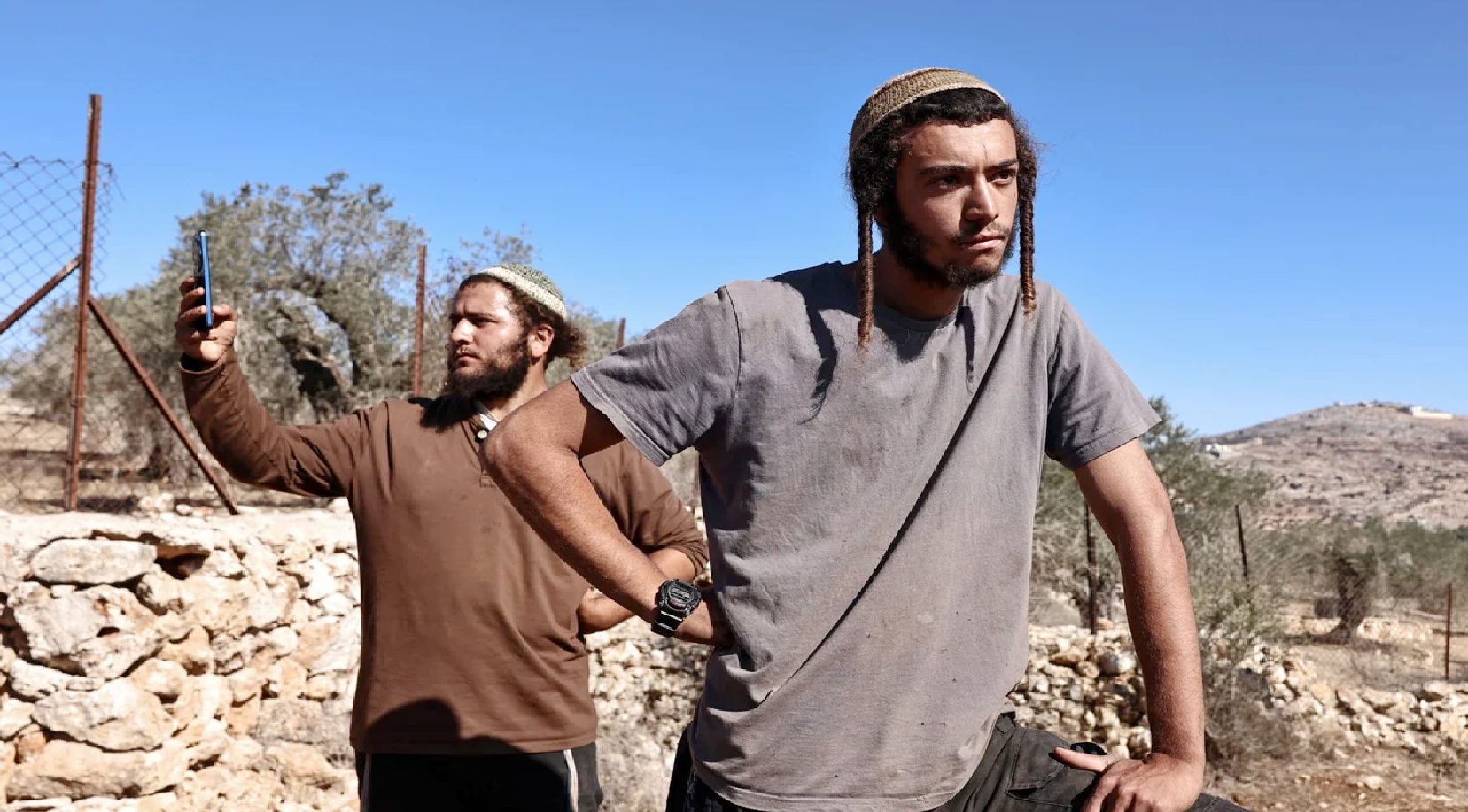
(ZENIT News / Jerusalem, 01.27.2026).- A quiet Saturday afternoon in Birzeit, a predominantly Palestinian town north of Ramallah, turned into a scene of terror when Israeli settlers attacked the home of a Christian family, leaving a 62-year-old woman fighting for her life and reigniting fears among local communities already living under relentless pressure.
The assault took place on January 24, near the Atara military barrier, where settlers reportedly brought livestock onto privately owned land at the edge of town. According to residents, this tactic—allowing sheep and cattle to graze on Palestinian fields—is increasingly used to damage crops and assert control over contested areas.
Nafiz Emeid told Middle East Eye that the settlers deliberately destroyed olive branches and other vegetation before suddenly pelting his family’s house with stones. His mother, Najat Jadallah Emeid, was struck in the head at close range and rushed to hospital, where doctors diagnosed a fractured skull and admitted her to intensive care.
“She was bleeding heavily on the ground,” Nafiz said. He himself suffered bruising to his hands, while his brother Eid sustained a broken hand and finger.
Family members say the violence escalated when Eid tried to push the attackers away after seeing his mother collapse. The settlers responded by stoning him. In desperation, Eid threw stones back, injuring one settler in the head. Moments later, Israeli soldiers arrived—not to detain the attackers, relatives say, but to arrest members of the Palestinian family.
Soldiers stormed the house and detained Eid, Nafiz, and two cousins, Saeb and Basem. Only Nafiz was later released.
“We did not attack them,” Nafiz insisted. “We defended ourselves, our home, and our land from a barbaric assault.”
Najat’s daughter, Nariman Koura, offered a harrowing account of the incident. She said her mother and brothers were sitting inside when they heard a dog barking outside. When Najat confronted the settlers for breaking olive branches to feed their animals, they ignored her. One struck her leg, knocking her to the ground. The other lifted a large stone and smashed it onto her head while she lay helpless.
As Eid tried to help his mother, another stone shattered his hand. He rushed Najat to hospital, but Koura says the Israeli army later phoned him with threats, warning that “something very bad” would happen if he did not return home. When he did, he was arrested.
“This is not the first attack,” Koura said. “They regularly bring their sheep here to harass us and force us to leave.” Despite fears of further violence, the family remains defiant. “No matter what they do, we will not abandon our land.”
After the incident, settlers reportedly began inciting violence online, calling for the demolition of the family’s home and urging attacks on Birzeit and nearby Atara—without mentioning the critically injured woman.
Wadie Abunassar, coordinator of the Holy Land Christian Forum, condemned both the attack and the subsequent arrests.
“I am almost at a loss for words,” he said in a video statement, adding that a senior foreign observer recently told him: “Sometimes we feel powerless in the face of ongoing settler violence, especially because of the lack of cooperation from Israeli authorities.”
Abunassar issued a blunt appeal: “Enough is enough. This terrorism must stop.”
The Birzeit assault is part of a wider pattern that Christian leaders say is accelerating. Taybeh, a largely Christian town east of Ramallah, has experienced repeated arson attacks on homes and vehicles. According to the Palestinian Presidential Higher Committee for Church Affairs, 41 attacks against Christians were recorded in the first quarter of 2025 alone. In the second quarter, that number rose to 69, including vandalism, spitting, physical assaults, and the desecration of holy sites.
International data paint an equally grim picture. Between December 23, 2025, and January 5, 2026, the UN Office for the Coordination of Humanitarian Affairs documented 44 settler attacks across the West Bank, injuring 33 Palestinians, including children. The violence forced around 100 Palestinian families to flee their homes under threats and intimidation.
Jamal Juma, coordinator of the Stop the Wall campaign, said the Birzeit incident reflects a growing boldness among settlers and an escalation in brutality. He described the attacks as part of a systematic strategy designed to drive Palestinians off their land.
“We have seen ethnic cleansing against Bedouin communities,” Juma told Middle East Eye. “But targeting towns like Birzeit and Turmusayya shows that there is now a broader plan aimed at villages as well.”
By the end of 2024, the settler population in the occupied West Bank, including East Jerusalem, had reached 770,420 people, spread across 180 settlements and 256 outposts—138 of them agricultural or pastoral, according to the Palestinian Commission for Colonization and Wall Resistance. Under international law, all Israeli settlements in occupied Palestinian territory are considered illegal.
The attack also struck close to home for local churches. Dr. Imad Haddad, bishop of the Evangelical Lutheran Church in Jordan and the Holy Land, revealed that Najat Emeid and her detained son are the mother and brother of a teacher at the Lutheran Hope School in Ramallah. He said settlers also uprooted trees belonging to families from the church community.
In a strongly worded statement, Bishop Haddad condemned the assault and expressed solidarity with the victims.
“We pray for the woman’s full and swift recovery and call for the immediate release of her son,” he said. “These violations of security and human rights must cease. Civilians must be protected, the culture of impunity must end, and there must be genuine accountability.”
For Christians in the West Bank—already a shrinking minority—such incidents deepen a sense of vulnerability. Yet church leaders insist they will continue to stand with affected families and raise their voices.
“As a church,” Haddad concluded, “we reaffirm our commitment to justice, peace, and the dignity of every human being.”
In Birzeit, amid shattered branches and blood-stained stones, that commitment is being tested once again.
Thank you for reading our content. If you would like to receive ZENIT’s daily e-mail news, you can subscribe for free through this link.

Publicaciones relacionadas:
 How Does the Conflict Between Israel and Palestine Affect Christians?
 Situation in Israel and Gaza raises fears of migration wave also in Iraq
 Jews attack Armenian neighborhood in Jerusalem but police arrest Christians
 The Jewish State of Israel Bombs Catholic Church in Gaza: Parish Priest Wounded, Pope Leo XIV Speaks Out
