

(ZENIT News / Havana, 02.03.2026).- On January 23, Cuba’s security apparatus moved against four figures whose only common denominator is their public insistence on dignity, freedom, and civic responsibility: two Catholic priests and two lay. They were summoned, detained, and interrogated for hours—an episode that observers describe not as bureaucratic routine, but as a calculated act of political intimidation.
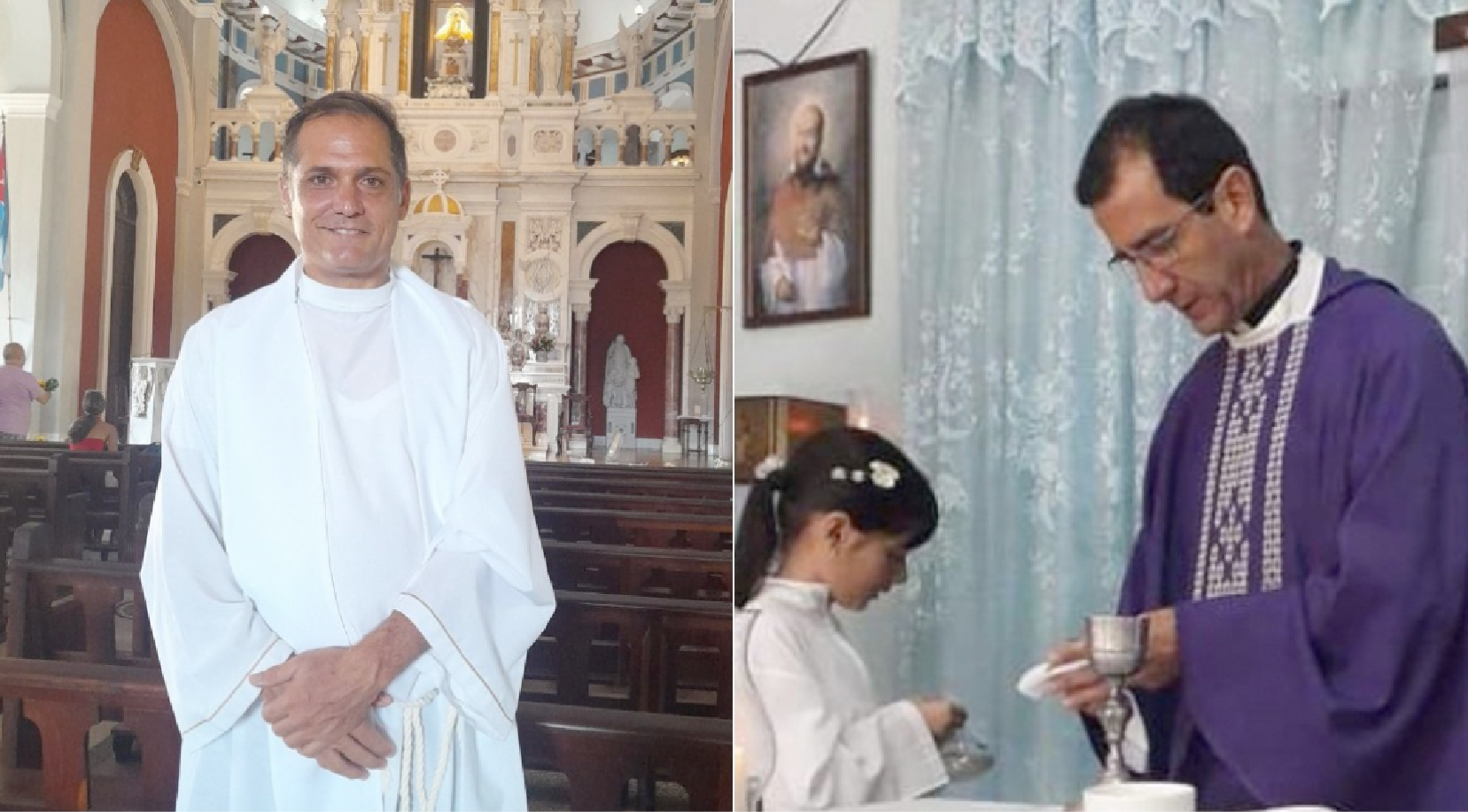
According to the digital platform Cuba Trendings, Fathers Castor Álvarez Devesa and Alberto Reyes, both from the Archdiocese of Camagüey, were called in by State Security without formal explanation. The timing was striking. The priests were in the middle of a spiritual retreat with fellow clergy when the summons arrived.
That same day, in the western province of Pinar del Río, Dagoberto Valdés Hernández and Yoandy Izquierdo Toledo—Catholic laymen and members of the Centro de Estudios de Convivencia (Center for Coexistence Studies, CEC)—were taken in for questioning. The CEC is a nonpartisan, nonprofit think tank focused on promoting civic culture and peaceful social change in Cuba.
All four are known for speaking openly about the island’s lack of freedoms and its deepening economic crisis.
Pressure disguised as procedure
Osvaldo Gallardo, a Cuban writer and religious freedom advocate, argues that these actions were anything but accidental. He notes that the interrogations coincided with the 28th anniversary of Saint John Paul II’s historic Mass in Camagüey, where the Polish pope urged Cubans to “not postpone the building of a new society” and to become “protagonists of their own history.”
For Gallardo, the symbolism is unmistakable. Writing on Facebook, he said these were not isolated or administrative acts, but “political intimidation” aimed at priests and laypeople who, guided by faith and conscience, have defended human dignity and the right to a better society.
Father Álvarez was questioned for roughly three hours. His interrogation followed a recent trip to Miami and public remarks published by Diario Las Américas, in which he reiterated the hardships facing ordinary Cubans and suggested that the arrest of Nicolás Maduro had weakened Havana’s grip on Venezuela—long a crucial ally and economic lifeline for the Cuban regime.
Reflecting on the July 11, 2021 protests, during which he was beaten and arrested, Álvarez recalled how many Cubans felt abandoned by the international community. “Back then, people said the United States had not supported the Cuban people,” he said. “Today the perception is different. Still, it’s cautious hope—a people who have suffered so much that they struggle to believe in change. Many think nothing will happen. But despite everything, I believe there is hope.”
A priest’s Facebook post, a state response
Father Alberto Reyes, meanwhile, has built a following through weekly Facebook reflections on Cuba’s reality. On January 16, he wrote that recent developments in Venezuela had sparked renewed expectations of a “radical change in Cuba that would end the dictatorship and usher in an era of democracy and prosperity.”
On the morning of January 23—the very day he was summoned—Reyes also criticized the sentencing of journalist José Gabriel Barrenechea, who had been convicted for shouting slogans during protests against the island’s relentless blackouts.
In Pinar del Río, the treatment of the two CEC members revealed even more explicitly how Havana conflates civic dialogue with subversion.
The organization reported that a patrol from the National Revolutionary Police arrived at Valdés’s home early that Friday and took him to State Security headquarters. Izquierdo was detained shortly afterward when he and other CEC members went to inquire about Valdés’s whereabouts.
Authorities claimed the arrest stemmed from Valdés’s recent meeting with Mike Hammer, the U.S. chargé d’affaires in Havana. Izquierdo, they added, would also be summoned for allegedly participating in that visit—despite not having attended.
According to the CEC, Valdés was accused of terrorism and of collaborating with a foreign power supposedly threatening Cuba with military intervention. Officers even read aloud passages from his January 19 column, “The Future Is Here,” in which he advocated a peaceful transition to democracy.
Both men were released later that same day.
A familiar tactic, a chilling message
Gallardo condemned what he described as a recurring tactic of the communist government: forcing citizens to accept so-called “warning notices” with no legal foundation. Such practices, he said, amount to systematic state harassment and violate Cuba’s international human rights commitments.
Perhaps most alarming was the implicit message delivered during the interrogations—that merely sharing ideas could constitute a crime.
“This directly contradicts universal democratic principles,” Gallardo argued, “which protect pluralism and freedom of thought.”
Faith under surveillance
For years, Cuba’s Catholic Church has walked a delicate line, seeking space for pastoral work while avoiding direct confrontation with the state. Yet priests like Álvarez and Reyes—and lay leaders like Valdés and Izquierdo—represent a growing current within Cuban Catholicism: one that insists faith cannot be separated from civic responsibility.
Their detention sends a clear signal. In today’s Cuba, even sermons, Facebook posts, and policy essays can trigger the machinery of repression.
And yet, as Father Álvarez suggested, something else is also stirring beneath the surface: a cautious hope among a battered population. The regime’s heavy-handed response may succeed in silencing individuals temporarily. Whether it can suppress that deeper longing for change is another matter entirely.
Thank you for reading our content. If you would like to receive ZENIT’s daily e-mail news, you can subscribe for free through this link.

Publicaciones relacionadas:
 USA: Court rejects Biden admin’s attempt to force religious employers to violate their beliefs
 WV female athlete, Christian teachers join lawsuit against Biden admin’s attempted Title IX rewrite
 United States Restricts Visas to Chinese Officials for “Repression” of Religious and Ethnic Minorities
 Israeli Jesuit David Neuhaus: the plan to remove Palestinians from Gaza feels like a kick in the stomach
