

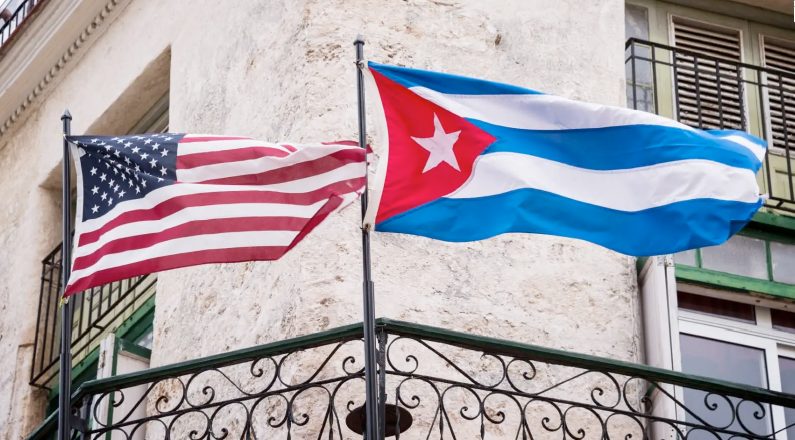
(ZENIT News / Havana, 02.09.2026).- For the first time in modern Cuban history, international humanitarian aid is reaching the population without passing through the hands of the state. That unprecedented shift is unfolding through the Catholic Church, which has become the sole distributor of a new package of U.S. assistance to the island at a moment of heightened political tension and renewed Vatican attention to Cuba.
On February 5, the U.S. State Department announced a second humanitarian shipment to Cuba valued at 6 million dollars, following what it described as the successful delivery of an initial 3 million dollars in aid. As with the first tranche, the assistance will be transported from Miami in pre-packaged goods and distributed directly by local parish representatives across the island. The stated objective is explicit: to prevent any interference or diversion by the Cuban government and to ensure that aid reaches families in need without political conditions.
The decision reflects a significant level of trust in the Catholic Church’s nationwide parish network. According to Washington, the method has proven “highly effective,” precisely because it bypasses state structures that have historically controlled or filtered humanitarian relief. Secretary of State Marco Rubio, himself the son of Cuban immigrants, underlined that the U.S. will closely monitor the process and hold the Cuban authorities accountable should they attempt to obstruct the deliveries. He also signaled that additional support could follow, provided the regime does not block it.
Havana’s reaction was swift and dismissive. Deputy Foreign Minister Carlos Fernández de Cossío accused Washington of hypocrisy, criticizing U.S. sanctions and tariffs on countries supplying oil to Cuba while offering what he described as “soup and canned food for a few.” The criticism points to a broader geopolitical standoff, but it also highlights how unusual this humanitarian channel is: the Cuban state is not managing it, approving it, or even formally coordinating it.
That anomaly became evident on January 14, when Cáritas Cuba, the charitable arm of the Catholic Church, received the first shipment intended for victims of Hurricane Melissa, which struck the island on October 29, 2025. On the same day, Cuba’s Ministry of Foreign Affairs claimed there had been no official communication between the two governments regarding the aid. Instead, according to a statement published in the official newspaper Granma, it was the Cuban Catholic Church that informed authorities that the U.S. Conference of Catholic Bishops would act as the channel for assistance provided by the U.S. government.
Cáritas Cuba confirmed that the Church would oversee distribution, working in coordination with Catholic Relief Services and with technical support from Cáritas Germany. U.S. chargé d’affaires Mike Hammer later reported meetings with the president of the Cuban Bishops’ Conference, Bishop Arturo González Amador, and with the Archbishop of Havana, Cardinal Juan de la Caridad García, to review the progress of the distribution.
Human rights groups have long warned that the Cuban government restricts independent aid initiatives, especially those linked to churches. The Cuban Observatory of Human Rights reported that in late October 2025, authorities set up checkpoints between provinces to block the transport of food and supplies, particularly those organized by Christian groups, to areas affected by Hurricane Melissa. Against that backdrop, the current arrangement marks a break with decades of practice in which all international aid required state approval and oversight.
For the Movimiento Cristiano Liberación, a Catholic-inspired opposition group, the significance is not merely logistical but moral and political. In a public statement, the movement praised the initiative as a concrete step toward dismantling what it calls the regime’s “forced dependency” model. For the first time, it argued, Cubans can receive help without pledging loyalty, expressing gratitude to the government, or submitting to ideological conditions. The group recalled that after the July 2021 protests, it had urged the international community to establish a humanitarian corridor that would isolate the regime while supporting the population directly. It now sees that proposal partially realized.
This delicate moment coincides with a major ecclesial event. From February 16 to 20, Cuba’s bishops are scheduled to travel to Rome for their ad limina visit, the quinquennial pilgrimage and reporting obligation that diocesan bishops owe to the Pope and the Holy See. During the pontificate of Pope Francis, these visits were often delayed or rescheduled; under Pope Leo XIV, they are resuming with renewed regularity.
The bishops explained that they will meet with Vatican dicasteries, and present the Pope with a comprehensive report on the pastoral, social, and material conditions of their dioceses. Their private audience with Leo XIV is scheduled for the morning of February 20.
The encounter carries particular weight. The bishops have noted that Leo XIV is not unfamiliar with Cuba, having visited the country twice in the past as superior general of the Augustinian order. That personal knowledge, they suggest, gives rise to cautious expectation at a time when the Church in Cuba finds itself navigating humanitarian responsibility, political pressure, and social fragility.
On February 1, Pope Leo XIV publicly expressed concern over reports of rising tensions between Cuba and the United States. Echoing a statement issued by the Cuban bishops on January 31, he urged all parties to pursue sincere and effective dialogue and to avoid actions that would further increase the suffering of the Cuban people.
Thank you for reading our content. If you would like to receive ZENIT’s daily e-mail news, you can subscribe for free through this link.

