

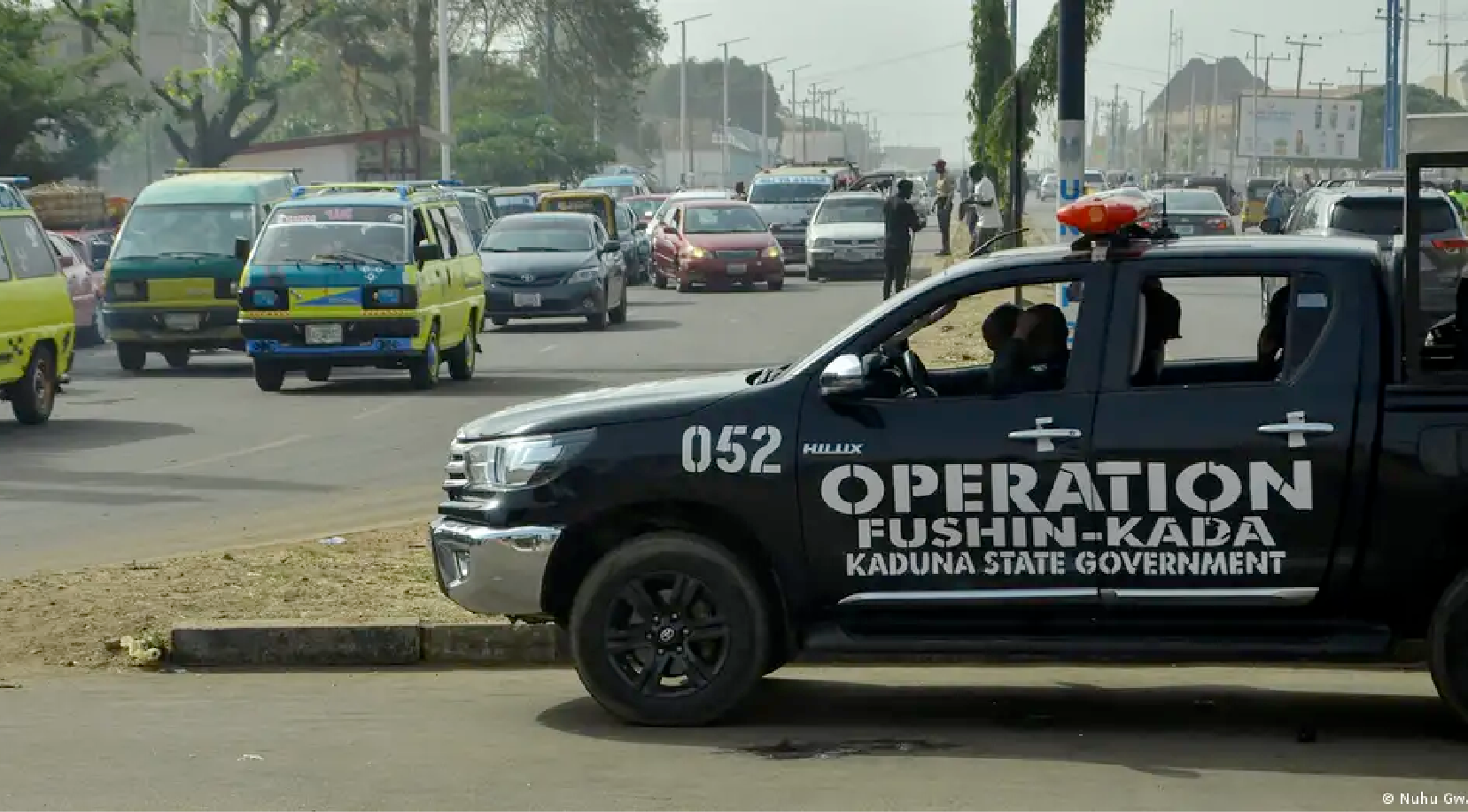
(ZENIT News / Nigeria, 02.13.2026).- At around 2:00 a.m. on February 10, the silence of Kadarko, in Kagarko Local Government Area of Kaduna State, was shattered by gunfire and forced entry. By dawn, 32 people had been taken away by armed men. Among them: a Catholic catechist serving at St. Joseph’s parish, his pregnant wife and their child.
The attack unfolded in two nearby communities. According to Father Linus Matthew Bobai, parish priest of St. Joseph’s, the gunmen first struck Kutaho, seizing 16 residents. Initially, 20 had been rounded up, but elderly people and those with serious health conditions were later released. The catechist and his family remained in captivity.
The assailants then moved on to Kugir, storming a mission station residence and abducting another 16 people, including children. Some captives managed to escape during the forced transfer. The village head was attacked with a machete and survived with difficulty.
In total, 32 hostages were taken between the two locations.
Father Bobai disclosed that, prior to the raid, one of his parishioners had received a phone call from the bandits demanding 10 million naira—approximately €6,211.95—with threats of kidnapping if the ransom was not paid. The extortion attempt foreshadowed what would become a coordinated mass abduction.
The aftermath has been one of near-total displacement. “More than 98 percent” of Kadarko’s inhabitants have fled to a neighboring settlement, according to the priest, spending consecutive nights away from their homes. A small military unit reportedly arrived from a nearby town but left shortly thereafter. “We are in a situation of vulnerability,” he said, describing a community that feels unprotected and exposed to renewed assault.
Yet some have chosen to stay. Pastors and a handful of residents have remained behind, convinced that abandoning the village entirely would mean surrendering not only territory but hope. “We cannot run,” Father Bobai explained. “We must encourage the community and trust in God’s fidelity.”
Kadarko is not an isolated case. In the span of just a few days—between the end of the first week and the beginning of the second week of February 2026—at least two other mass kidnappings targeting Catholic communities were recorded.
On February 6, nine Catholics were abducted from St. John of the Cross mission station in Ojije-Utonkon, part of St. Paul’s parish in Ado Local Government Area. The following day, February 7, armed men attacked Holy Trinity parish in Karku, also in Kaduna State. Three people were killed and 11 others kidnapped, including the parish priest, Father Nathaniel Asuwaye.
At least three Nigerian priests are currently in captivity. In addition to Father Asuwaye, Father Emmanuel Ezema of Zaria Diocese was kidnapped on December 2, 2025, in Kaduna State. Father Joseph Igweagu of Aguleri Diocese in Anambra State has been held since October 12, 2022.
The pattern reveals a grim arithmetic: extortion calls, night raids, selective releases, ransom negotiations, prolonged captivity. Religious leaders are not the only targets, but they are symbolically potent ones. In rural Nigeria, catechists and priests are not merely liturgical functionaries; they are community organizers, educators and moral authorities. Their abduction destabilizes entire villages.
The violence unfolds within a broader and increasingly entangled security crisis across northern Nigeria. Dozens of armed groups operate in overlapping zones of influence. Some are ideologically driven Islamist factions such as Boko Haram and its splinter group, the Islamic State West Africa Province. Others, like Lakurawa—linked to the Islamic State—or Jama’at Nusrat al-Islam wal-Muslimin from the Sahel, have expanded cross-border operations. Alongside them are criminal networks focused on ransom kidnapping, cattle rustling and illegal mining.
The result is a conflict ecosystem rather than a single insurgency. According to United Nations data, thousands have died over the years in Nigeria’s protracted violence. Analysts argue that the government has struggled to assert durable territorial control in rural areas where state presence is thin and response times slow.
This complexity has also entered international politics. On February 11, Nigerian authorities confirmed that the United States would deploy approximately 200 military personnel to the country. Major General Samaila Uba, spokesman for Nigeria’s Defence Headquarters, clarified that the U.S. contingent would serve in a technical and training capacity. They will not engage in combat, and Nigerian forces will retain full operational command.
The move builds on an existing security partnership. In December 2025, U.S. forces conducted airstrikes against militants affiliated with the Islamic State in northwestern Nigeria. Last month, the head of U.S. Africa Command acknowledged that a small American team was already present, providing intelligence support.
Washington’s renewed focus on Nigeria follows comments by U.S. President Donald Trump alleging that Christians were facing genocide. The Nigerian government rejected that characterization, and many analysts caution that the violence cannot be reduced to a single religious narrative. While Christians are frequently attacked, particularly in parts of the Middle Belt, the majority of victims in the Muslim-majority north are themselves Muslims. Armed groups often target communities irrespective of faith, driven by territorial ambitions, ideological coercion or economic predation.
For villages like Kadarko, however, geopolitical nuance offers little immediate comfort. The essential question remains whether security forces—domestic or foreign-trained—can prevent the next 2:00 a.m. knock on the door.
As families wait for word of the 32 abducted in Kagarko, including a catechist and his pregnant wife, the broader crisis continues to mutate. Training missions, intelligence sharing and air operations may reshape the strategic map. But in the meantime, entire communities are emptying out overnight, their churches standing silent, their pastors urging courage in the face of fear.
Nigeria’s security emergency is often described in abstract terms: insurgency, extremism, instability. In Kadarko, it is experienced as a village 98 percent deserted and a list of names that grows longer with each passing week.
Thank you for reading our content. If you would like to receive ZENIT’s daily e-mail news, you can subscribe for free through this link.

Publicaciones relacionadas:
 Police intentionally kill two girls at Catholic school in Pakistan. Bishops raise their voices
 Killings of Nigeriani Christians on the rise
 USA: After Supreme Court’s landmark free speech ruling, photographers in KY, NY seek to also create freely
 10 Years On: Recognition of ISIS Genocide Must Lead to Renewed Action to Protect Religious Minorities
