

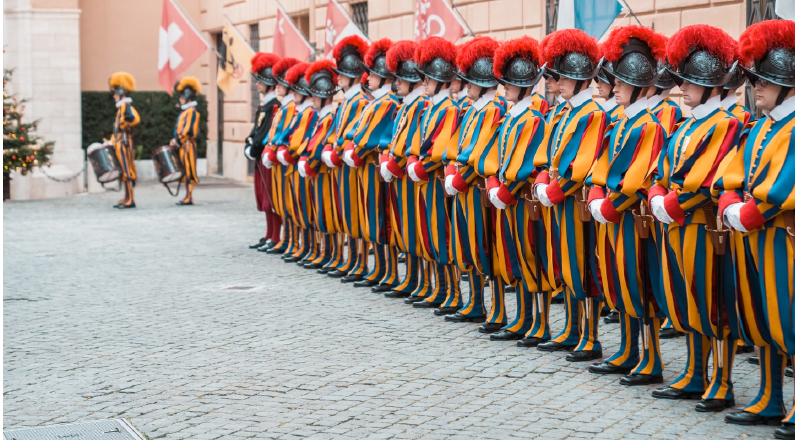
(ZENIT News / Vatican City, 02.26.2026).- The Vatican is preparing one of its most ambitious infrastructure projects in decades: the complete reconstruction of the barracks of the Pontifical Swiss Guard. The initiative, promoted by the Foundation for the Reconstruction of the Swiss Guard Barracks, has received a positive assessment from UNESCO, whose final approval is expected in the near future. Once that green light is granted and funding secured, the project will move from planning to execution, reshaping a strategic corner of the Vatican for generations to come.
The plan envisions a near-total demolition of the existing complex, with a significant exception: the Italian-facing façade of the current barracks will be preserved. This decision, taken after revised consultations with heritage authorities, represents a compromise between architectural continuity and functional renewal. It also explains part of the rising costs and delays that now define the project’s timeline.
Swiss expertise, Vatican coordination
The reconstruction will be entrusted entirely to Swiss institutions, underscoring the historical and symbolic bond between Switzerland and the Vatican’s oldest military corps. The architectural design has been developed by the Lugano-based firm Durisch + Nolli, while engineering responsibilities are shared between Schnetzer Puskas of Basel and IFEC of Bellinzona. These teams are working in close coordination with the technical services of the Vatican City State, ensuring that modern construction standards align with the complex constraints of a UNESCO-protected site.
Work will not begin immediately. According to the Foundation, construction can only start once the full budget is covered. Even under optimistic assumptions, the earliest possible start date is 2027, with completion expected in 2029.
More space, fewer buildings
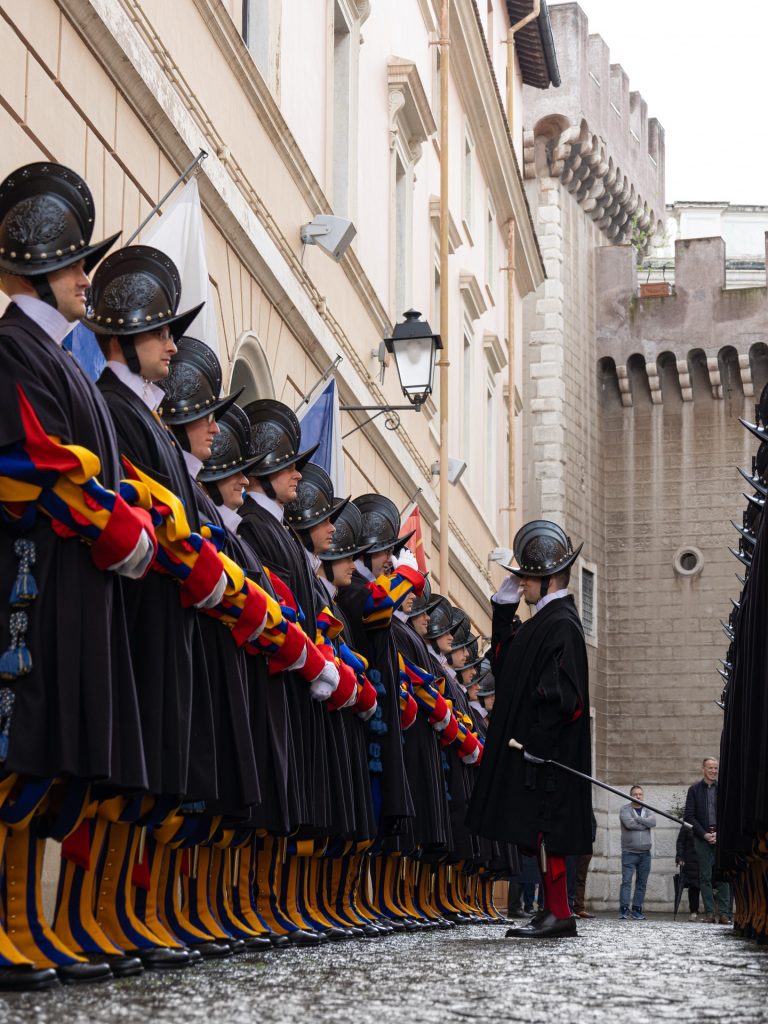
Functionality, rather than monumentality, has guided the redesign from the outset. The new barracks will rise to five floors, replacing the current three-storey structure, and will finally allow the entire Swiss Guard to live within a single building inside Vatican walls. At present, some guards are housed elsewhere in Rome, a logistical arrangement the Vatican considers increasingly impractical.
The new complex will include 81 single rooms, 18 double rooms, 11 studio apartments for unmarried non-commissioned officers, and 21 family apartments. In a cost-saving measure that also reflects communal military life, recruits will be assigned to double rooms rather than individual ones. Materials have also been chosen with austerity in mind: cement flooring will replace the travertine traditionally favored in Vatican buildings, significantly reducing expenses without compromising durability.
The project will also transform what insiders refer to as the “Swiss quarter” of the Vatican. Architecturally undistinguished buildings currently occupying the area will be replaced by modern structures designed to blend harmoniously with their historic surroundings.
Recovering hidden history
Beyond housing, the reconstruction carries important heritage implications. The works will free and restore views of the Passetto di Borgo, the 11th-century elevated passage that once served as an escape route for popes. Over time, this corridor had become partially obscured by later constructions. The project aims to remove many of these visual obstacles, allowing the Passetto to be seen in its full length.
Another symbolic change concerns the memorial fountain erected in 1927, which currently blocks access from Via Santa Anna to the Courtyard of Honor. The fountain will be relocated and integrated into the new barracks building near the Passetto, restoring historical sightlines while preserving the monument itself.
The redesign will also reinstate the traditional route of pilgrims arriving from Switzerland and northern Europe along the Via Francigena. This path, which historically passed between the two Swiss Guard barracks before reaching St. Peter’s Square through the San Pietro Gate, will once again become a visible and accessible axis for pilgrims.
Rising costs, revised ambitions
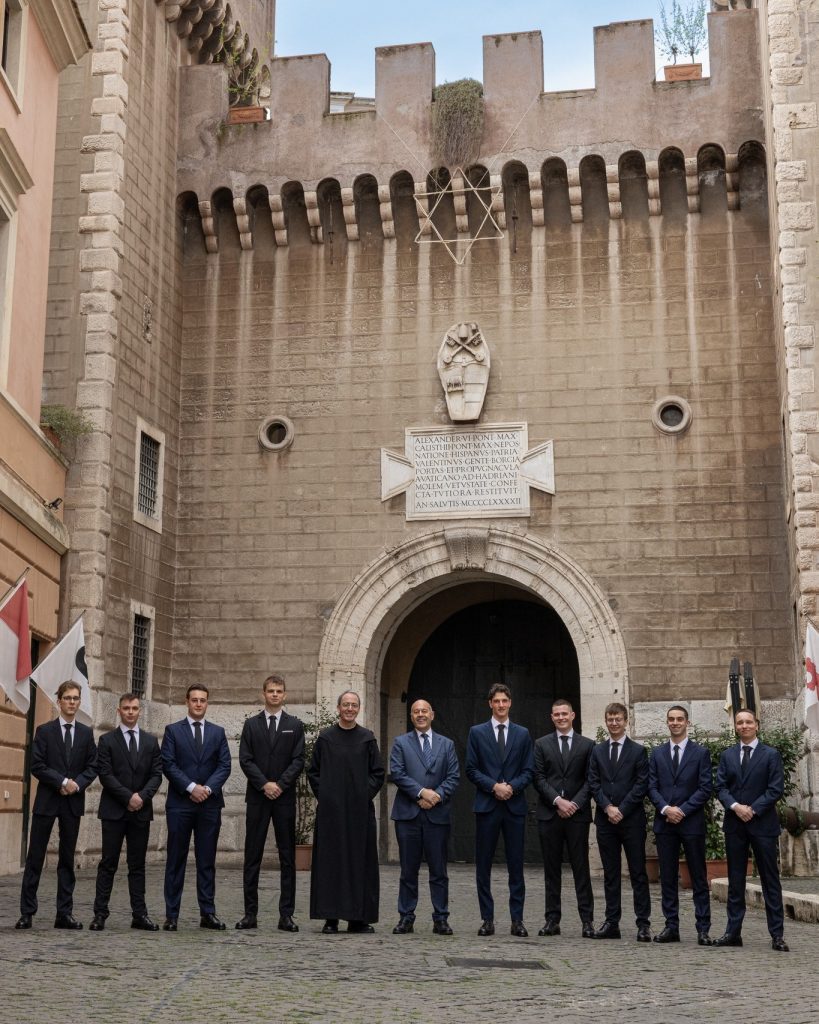
When the project was first presented in 2019, the estimated cost stood at 45 million Swiss francs. That figure has now risen to approximately 70 million francs, a substantial increase driven by multiple factors. Construction costs in Italy have risen by about 30 percent over the period. Additional expenses stem from changes to the original plans, particularly the decision to preserve the Italian façade, which alone adds around 4 million francs and introduces construction delays.
Further costs include 2 million francs for foundation reinforcement and seismic protection, 1.25 million francs for the restoration of the Passetto, and 5 million francs set aside as a contingency reserve against further price increases. Newly identified works—such as replacing the sewage system, relocating the fountain, and installing advanced ventilation and drying systems—were not foreseen in the original budget and have added to the financial burden.
A pragmatic vision of service
Despite the scale and cost, Vatican officials and the Foundation insist the project is not about luxury. The guiding principle remains serviceability: providing the Swiss Guard with safe, adequate, and sustainable living conditions that meet present and future needs. In that sense, the reconstruction is as much about institutional continuity as it is about bricks and mortar.
If completed as planned, the new barracks will stand as a rare example of contemporary architecture embedded within one of the world’s most historically dense environments—an effort to reconcile heritage preservation, fiscal restraint, and the practical realities of guarding the Pope in the 21st century.
Thank you for reading our content. If you would like to receive ZENIT’s daily e-mail news, you can subscribe for free through this link.

Publicaciones relacionadas:
 UNESCO Approves Plan for Swiss Guard’s New Barracks in the Vatican
 Vatican hosts Arab League, Israel attacks Catholic parish in Gaza
 Vatican releases report on current status of preventing and combating money laundering and terrorist financing
 Reimagining Aging: Vatican’s First Longevity Summit Charts a Path for Life with Meaning, Not Just Years
