

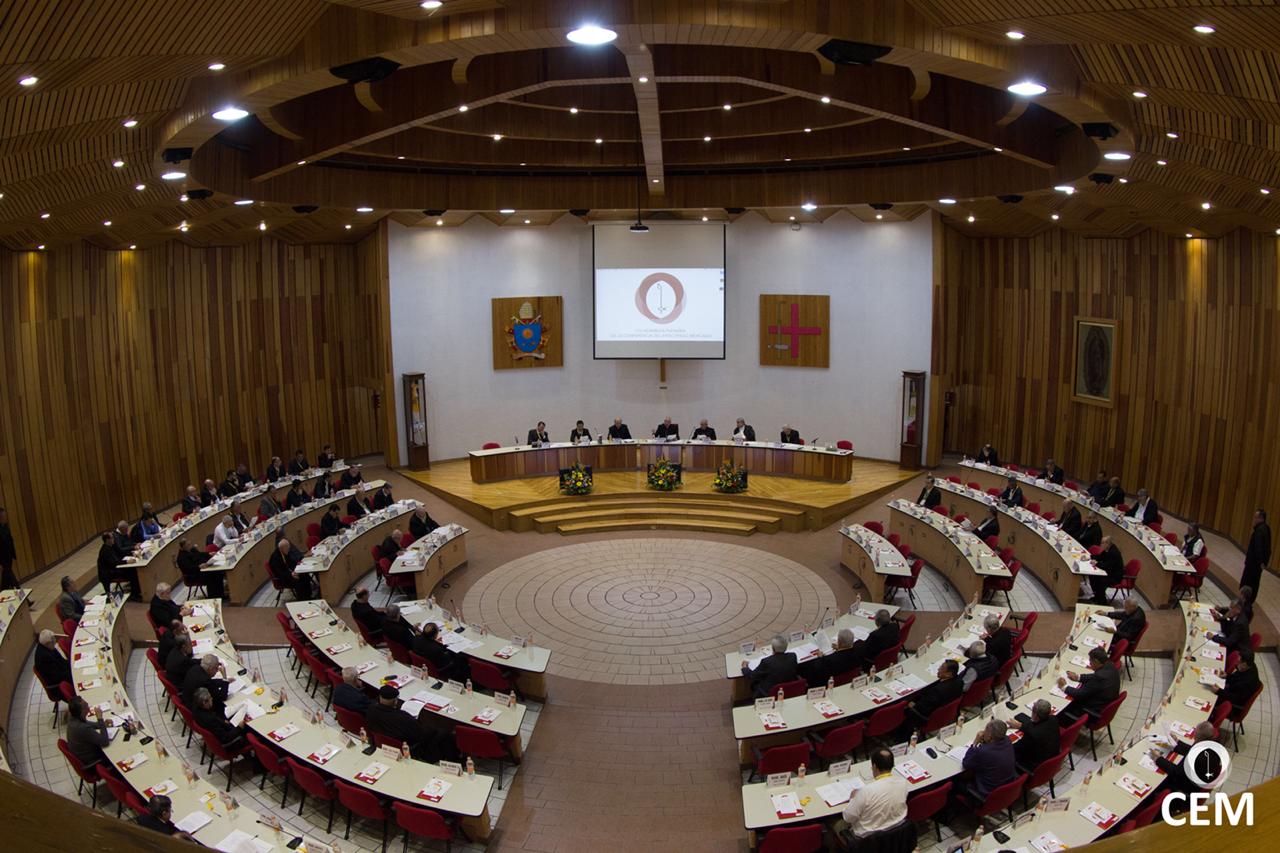
(ZENIT News / México City, 02.28.2026).- Mexico’s Catholic episcopate is approaching a moment of structural transition that will redefine its leadership map well beyond the end of the decade. Demography, canon law and a growing list of vacant dioceses are converging to force a substantial renewal of the country’s hierarchy, placing Pope Leo XIV at the center of one of the most consequential appointment cycles the Mexican Church has seen in years.
By early 2026, more than a third of Mexico’s bishops and archbishops have reached — or are about to reach — the canonical retirement age of 75. Under canon 401 of the Code of Canon Law, all diocesan bishops, including cardinals who govern dioceses, are required to submit their resignation to the Pope upon turning 75. Acceptance is discretionary: Rome may act immediately or ask the prelate to remain in office until a successor is chosen. The rule, reaffirmed personally by Leo XIV in November during a meeting of the Italian bishops in Assisi, is not merely symbolic. It is the legal mechanism now driving a broad reshaping of Mexico’s episcopal leadership.
Numbers that matter
According to data compiled by the statistical portal Catholic Hierarchy, 34 percent of Mexico’s high-ranking prelates are already at, or within months of, the retirement threshold. As a result, Leo XIV will need to appoint at least 24 new bishops and archbishops between 2026 and 2027 to replace those stepping down. In parallel, roughly ten dioceses and archdioceses currently lack a residential bishop, adding urgency to the process.
Mexico’s ecclesiastical territory is divided into 99 jurisdictions, including archdioceses, dioceses and prelatures. When the pending retirements and vacancies are combined, the Pope’s decisions over the next two years will affect well over one third of those sees. Once completed, Leo XIV will personally have named a proportion of the Mexican hierarchy unmatched by any pontiff since the long tenure of John Paul II.
The generational shift is also visible in the provenance of current appointments. As of the beginning of 2026, 52.5 percent of Mexico’s bishops and archbishops were appointed by Pope Francis, 27.6 percent by Benedict XVI, 17.2 percent by John Paul II, and just 2.6 percent by Leo XIV himself. That last figure is set to rise sharply.
Cardinals at the crossroads
Among those who have already submitted their resignation letters — originally addressed to the late Pope Francis — are Mexico’s only two cardinal-archbishops: Carlos Aguiar Retes, the Primate of Mexico, and Francisco Robles Ortega. Both turned 76 this year and now await a decision from Rome. Their replacements will be among the most closely watched episcopal appointments in Latin America, given the symbolic and pastoral weight of Mexico City and Guadalajara.
They are not alone. A long list of metropolitan archbishops is approaching the same threshold, including those of Antequera–Oaxaca, Acapulco, Puebla, Morelia and Monterrey, with others — such as Chihuahua and Tlalnepantla — following closely behind. At the diocesan level, sees ranging from Mazatlán and Querétaro to Valle de Chalco and Puerto Escondido are led by bishops who have already reached 75, while several more will do so within months.
Vacant sees and Eastern rites
Beyond retirements, Leo XIV must also fill posts that are currently vacant. The Archdiocese of Tijuana remains without an archbishop, and dioceses such as Atlacomulco, Campeche, Ciudad Altamirano, Ecatepec, El Salto (Durango) and Tampico are likewise awaiting permanent shepherds. Each vacancy requires not only pastoral sensitivity but also careful navigation of local ecclesial dynamics and, in some cases, complex social contexts marked by migration, violence or secularization.
The Pope’s task extends further. He is also responsible for naming bishops for several Eastern Catholic jurisdictions based in Mexico, including the Apostolic Exarchate for Armenian Catholics in Latin America and Mexico, the Maronite Eparchy of Our Lady of Lebanon in Mexico, and the Melkite Greek Catholic Eparchy of Our Lady of Paradise. Though smaller in number, these communities fall under the same papal prerogative and add another layer to the appointment process.
How bishops are chosen
For readers less familiar with the mechanics of episcopal appointments, the process is both discreet and highly structured. The apostolic nuncio in each country gathers information, consults widely and compiles a shortlist — typically a terna of three names — for each vacant see. These dossiers are sent to the Vatican’s Dicastery for Bishops, which evaluates the candidates and presents its recommendations to the Pope. The final decision rests exclusively with him.
Canon law also allows flexibility. Some bishops submit their resignation before turning 75 so that it can take effect immediately upon reaching the canonical age. Others remain in office beyond it, particularly if the Pope judges that continuity is pastorally advantageous or if a successor has not yet been identified.
Age, service and continuity
Retirement does not end episcopal service. Emeritus bishops often continue celebrating Mass, administering sacraments and assisting their successors. They may also be called upon by the Pope for specific missions, such as serving as apostolic administrators or conducting sensitive investigations involving other bishops.
The Mexican Church offers a striking symbol of longevity. The oldest bishop emeritus in the world is Mexican: José de Jesús Sahagún de la Parra, who turned 104 on January 1, 2026. Retired from active governance for more than 25 years, he continued to celebrate Mass on special occasions well into his centenarian years. Ordained a priest in 1946 and appointed bishop by Pope John XXIII, he is one of the last living bishops to have participated in the Second Vatican Council. Another Mexican prelate, Juan Caballero Reyes, is among the world’s oldest bishops at 94.
A defining moment
The coming two years will therefore mark more than a routine administrative cycle. They represent a generational handover that will shape pastoral priorities, ecclesial style and the public presence of Catholicism in Mexico for decades. By the time the process is complete, Leo XIV will have left an unmistakable imprint on the Mexican episcopate.
Thank you for reading our content. If you would like to receive ZENIT’s daily e-mail news, you can subscribe for free through this link.

Publicaciones relacionadas:
 Leo XIV, China and attention to communities suffering for their faith
 Pope Leo XIV, Germany’s silent believers, and unexpected signs of a spiritual awakening opposed to the German synod
 The Middle East, the spread of war, and the position of the Pope and the Catholic Church
 USA: New Data Reveal a Nation Less Religiously Anchored, but Not Uniformly Secular
