

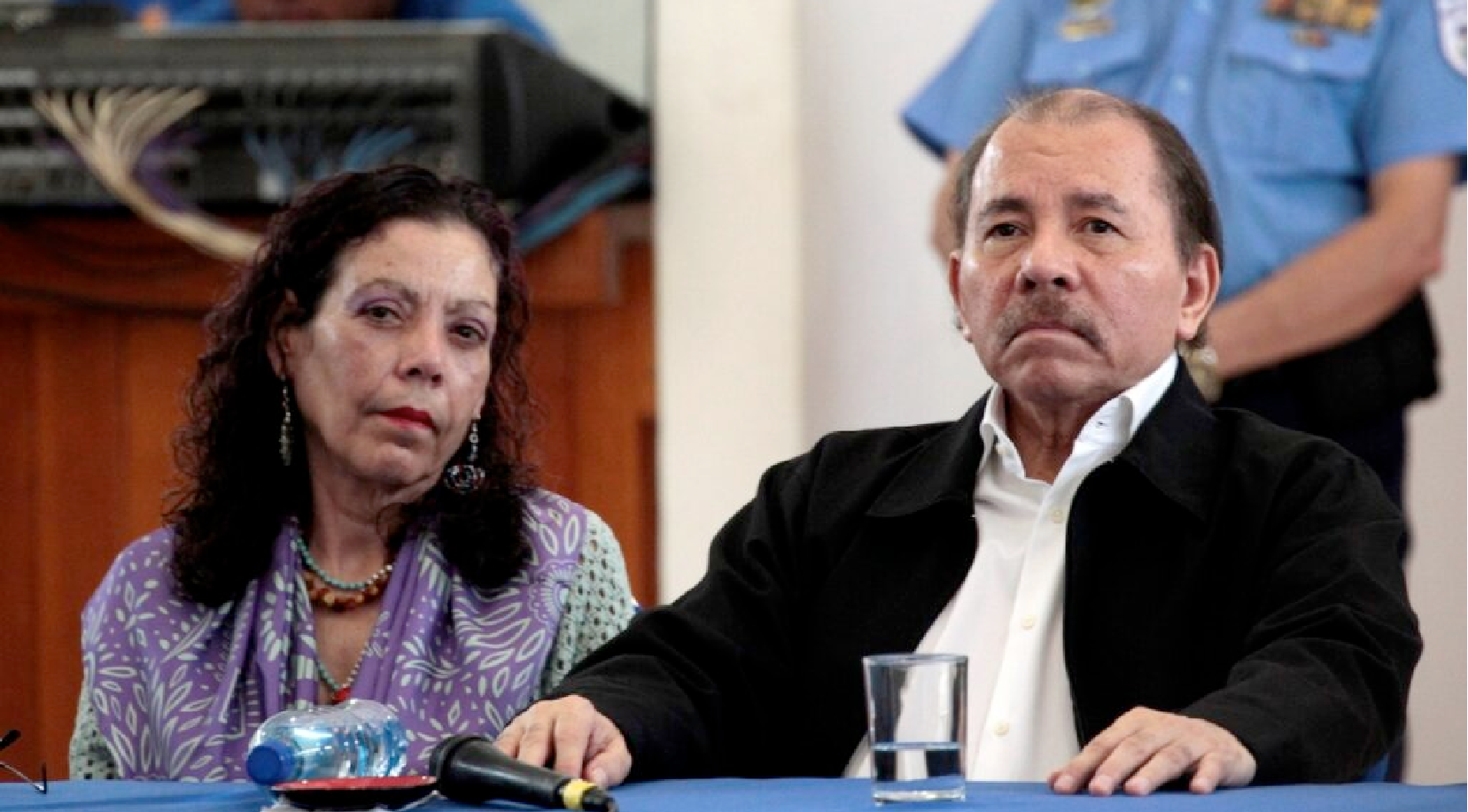
(ZENIT News / Managua, 03.13.2026).- The long-running confrontation between Nicaragua’s government and the Catholic Church has entered a new and particularly sensitive stage. Authorities under President Daniel Ortega and Vice President Rosario Murillo have effectively banned priestly and diaconal ordinations in four dioceses whose bishops have been forced into exile, a measure that strikes directly at the sacramental life and future leadership of the Church.
The restriction affects the dioceses of Jinotega, Siuna, Matagalpa and Estelí. In practical terms, it means that seminarians who have already completed their formation cannot receive Holy Orders, leaving them in an unprecedented canonical and pastoral limbo.
For a Church already weakened by years of repression, the measure appears designed not merely to punish current leadership but to obstruct the formation of the next generation of clergy.
A conflict years in the making
Relations between Nicaragua’s government and the Catholic hierarchy were not always openly hostile. During the 2000s, Ortega—a Marxist revolutionary leader—sought to cultivate ties with church figures and frequently adopted religious rhetoric in public appearances.
That uneasy coexistence collapsed after nationwide protests erupted in 2018. When demonstrations against the government spread across the country, many Catholic churches became places of refuge for protesters, while bishops and priests called for dialogue and an end to violence.
From that moment onward, the relationship deteriorated rapidly. Clergy were detained, expelled or prevented from returning to the country. Religious processions and public expressions of faith were restricted. Catholic institutions were closed or placed under pressure.
Researchers monitoring the situation have documented more than 1,000 incidents targeting Catholic institutions and tens of thousands of religious events—particularly traditional processions—blocked by the authorities.
A Church without its bishops
The latest measure focuses specifically on dioceses whose bishops no longer reside in Nicaragua.
Among them is Bishop Carlos Enrique Herrera Gutiérrez of Jinotega, who also serves as president of the Nicaraguan Bishops’ Conference. He was expelled from the country in November 2024 after publicly criticizing a local government official.
Even more internationally known is Bishop Rolando José Álvarez Lagos of Matagalpa, whose refusal to accept exile made him a symbol of religious persecution in Nicaragua. After resisting pressure to leave the country in 2023, Álvarez was sentenced to more than twenty years in prison before eventually being expelled to the Vatican in early 2024.
Another affected prelate is Bishop Isidoro Mora, also forced to leave the country amid the escalating crackdown.
Without resident bishops, these dioceses operate under extraordinary conditions. According to testimonies from exiled priests, government authorities closely monitor Church activities and exert pressure on internal ecclesiastical decisions. Surveillance is reportedly even stricter in territories lacking a bishop, with security forces attempting to prevent prelates from other dioceses from entering to perform ordinations.
In effect, the state has placed itself as a gatekeeper over a sacrament that, in Catholic theology, belongs exclusively to the authority of the Church.
Parishes running out of priests
The consequences for pastoral life are already visible.
The Diocese of Matagalpa, once one of the most vibrant Catholic regions in the country, now operates with only about 30 percent of its clergy. Seven out of ten priests from that territory have reportedly been forced into exile.
In Estelí and Jinotega, the Church’s pastoral capacity has been reduced by as much as half. Entire communities now lack regular access to the Eucharist or to the presence of a resident priest.
Such shortages have long-term implications for parish life. In Catholic practice, priests are essential not only for celebrating Mass but also for administering sacraments such as reconciliation, anointing of the sick and pastoral accompaniment.
Martha Patricia Molina, a Nicaraguan researcher and author of the report “Nicaragua: A Persecuted Church,” warns that without new ordinations the country’s Catholic network could face a gradual closure of parishes. The loss would not be merely administrative: it would affect the sacramental rhythm that structures the daily life of believers.
Seminarians in limbo
The ban on ordinations is especially visible in dioceses like Siuna, where groups of seminarians who completed their formation in 2024 and 2025 remain unable to take the final step toward priesthood.
They have completed years of philosophical and theological training and have been deemed suitable for ministry. Yet their ordination depends on episcopal ceremonies that the government now prevents from taking place.
For some observers, this strategy represents a more subtle but equally damaging form of pressure on the Church: weakening it not only by removing its leaders but by interrupting the pipeline that produces future clergy.
Creative responses amid repression
Despite the restrictions, the Church has shown signs of resilience.
Sources within the Nicaraguan clergy note that vocations to the priesthood have not disappeared despite the hostile climate. Young men continue entering seminaries, even as the possibility of ordination remains uncertain.
In some cases, solutions have been found beyond the country’s borders. In February 2026, two Nicaraguan seminarians were ordained priests in the Diocese of Limón in neighboring Costa Rica, in a ceremony that reportedly took place under discreet conditions to avoid political repercussions.
Such episodes illustrate how the Church is attempting to preserve its sacramental life even when domestic conditions make it nearly impossible.
A wider struggle
The dispute between the Nicaraguan state and the Catholic Church has become one of the most serious church–state conflicts in Latin America in recent decades.
According to reports from Church sources and human rights observers, more than 300 religious figures have been expelled from the country in recent years. At the same time, authorities have banned more than 27,000 religious processions and public devotional events.
The new prohibition on ordinations touches a particularly sensitive nerve. Unlike restrictions on public gatherings or property, it interferes directly with the internal sacramental structure of the Church.
For many Nicaraguan Catholics, the situation now raises a deeper question about the future of their Church. With bishops governing dioceses from exile, priests scattered abroad and seminarians waiting indefinitely for ordination, the Catholic community continues to function under conditions that only a few years ago would have seemed unimaginable.
Thank you for reading our content. If you would like to receive ZENIT’s daily e-mail news, you can subscribe for free through this link.

Publicaciones relacionadas:
 Proliferation of false accusations of blasphemy by Muslims against Christians, Catholic bishop calls for help from other countries
 Half of Polish Clergy Claims to Have Been Victimized Just for Being Priests
 Statement by Christian leaders on the latest attack by Jewish settlers against Christians in the Holy Land
 Wave of Church Attacks in 2024 Sparks Concern Over Religious Freedom in the United States
