

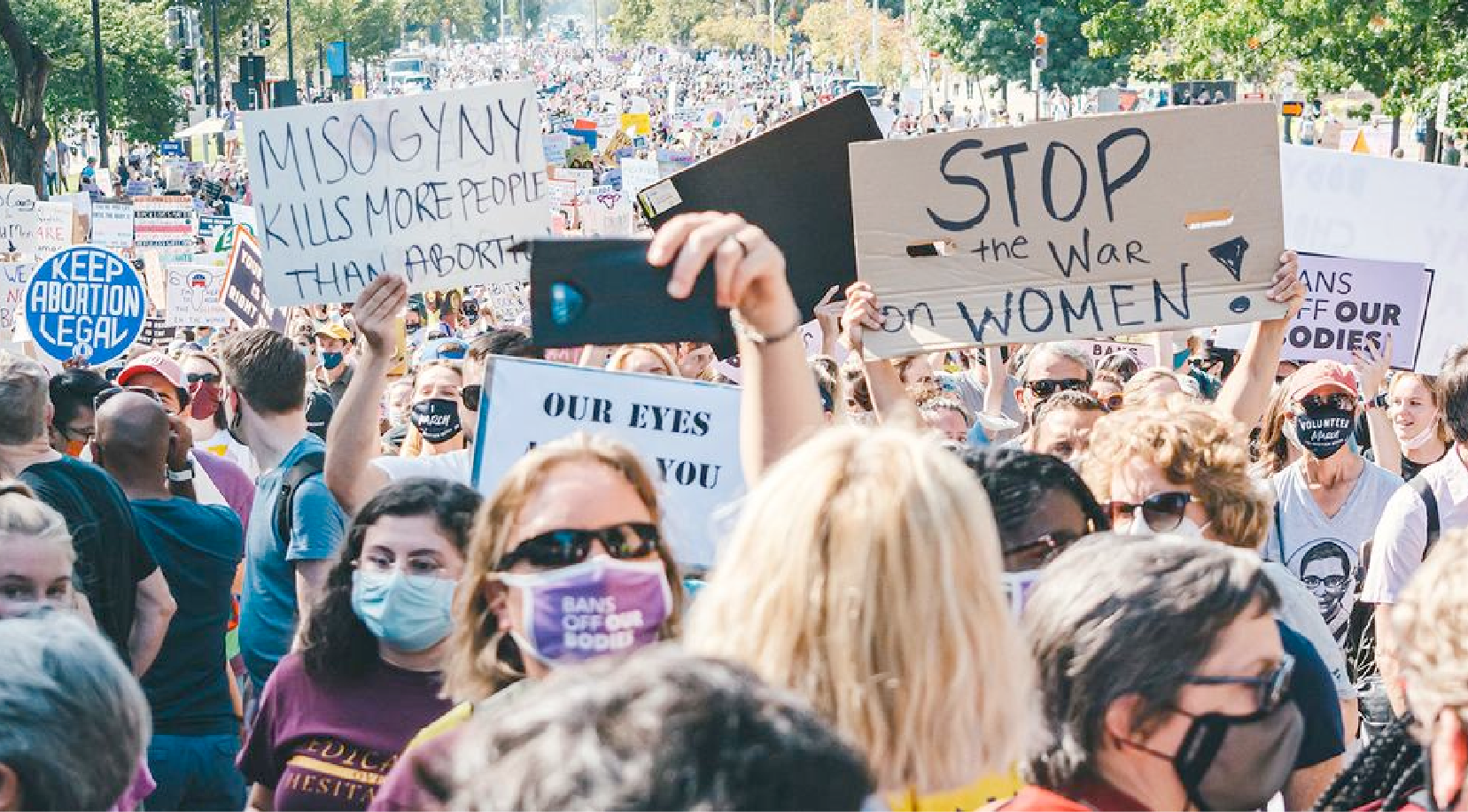
(ZENIT News / Washington, 03.17.2026).- A new national survey by the Pew Research Center offers a sobering snapshot of the United States: far from converging on a shared position, Americans remain deeply divided on abortion, with moral intuitions, legal preferences and scientific perceptions continuing to pull in different directions.
At the heart of the findings lies a tension that has long defined the debate. While public discourse often frames abortion as a question of rights—legal access versus restriction—the data suggest that many Americans approach it as a more complex ethical issue. According to the survey, 39 percent of respondents say the statement “human life begins at conception, so an embryo is a person with rights” describes their views very or extremely well. That figure signals a substantial portion of the population grounding its position in a moral anthropology rather than solely in legal reasoning.
This ethical dimension helps explain another key result: only 23 percent of Americans support abortion being legal in all circumstances. By contrast, 38 percent believe it should be illegal in all or most cases. The gap between these positions underscores a persistent resistance to the idea of unrestricted access, even as broader support for some form of legal abortion remains present in the country.
The debate becomes even more nuanced when shifting from surgical procedures to chemical abortion. The Pew data indicate that more than a quarter of Americans believe abortion pills should be illegal in their state, while nearly one in five remain uncertain. This level of ambivalence is particularly striking given the increasing role of medication abortion in the United States, especially through mail distribution channels that have expanded in recent years.
Among Republican and Republican-leaning voters, opposition to abortion pills is even more pronounced, reflecting how technological developments in abortion provision are reshaping political alignments as much as ethical arguments.
For pro-life advocates, these findings confirm that the national conversation is far from settled. Carol Tobias, president of National Right to Life, argues that public opinion is frequently portrayed as more unified than it actually is. In her reading, the data reveal a country still grappling with the moral status of the unborn and the appropriate legal framework to reflect that concern.
At the same time, the survey points to a broader cultural dynamic that often escapes binary categorizations. Many Americans appear to hold what might be described as internally mixed positions: recognizing, to varying degrees, the humanity of the fetus while also expressing concern for women facing difficult pregnancies. This dual awareness complicates attempts—on either side of the debate—to frame the issue in purely ideological terms.
The prominence of uncertainty in the data, particularly regarding abortion pills, also highlights a knowledge gap. Chemical abortion involves a medical regimen that differs significantly from surgical procedures, yet public understanding of its mechanisms and risks remains uneven. Analysts suggest that this lack of clarity may contribute to the hesitancy reflected in the survey.
Beyond the numbers, the findings reinforce a broader conclusion: abortion in the United States continues to function not merely as a policy dispute but as a defining moral question. Decades after it first emerged as a central issue in American public life, it still resists resolution, shaped by evolving medical practices, shifting legal frameworks and enduring ethical disagreements.
In that sense, the Pew survey does not so much settle the debate as illuminate its complexity. It portrays a society in which consensus remains elusive—not because the issue lacks clarity, but because it touches on fundamental questions about life, autonomy and the role of law in mediating between them.
Thank you for reading our content. If you would like to receive ZENIT’s daily e-mail news, you can subscribe for free through this link.

Publicaciones relacionadas:
 More than 65 million babies have been aborted in the U.S. since 1973, according to a new report
 Idaho attorney general asks US Supreme Court to stop feds from forcing ER doctors to perform abortions
 Canada: Courageous Bishop Challenges Law in Favour of Euthanasia
 Revealing finding never before published: the real impact of the abortion pill on women’s health
