

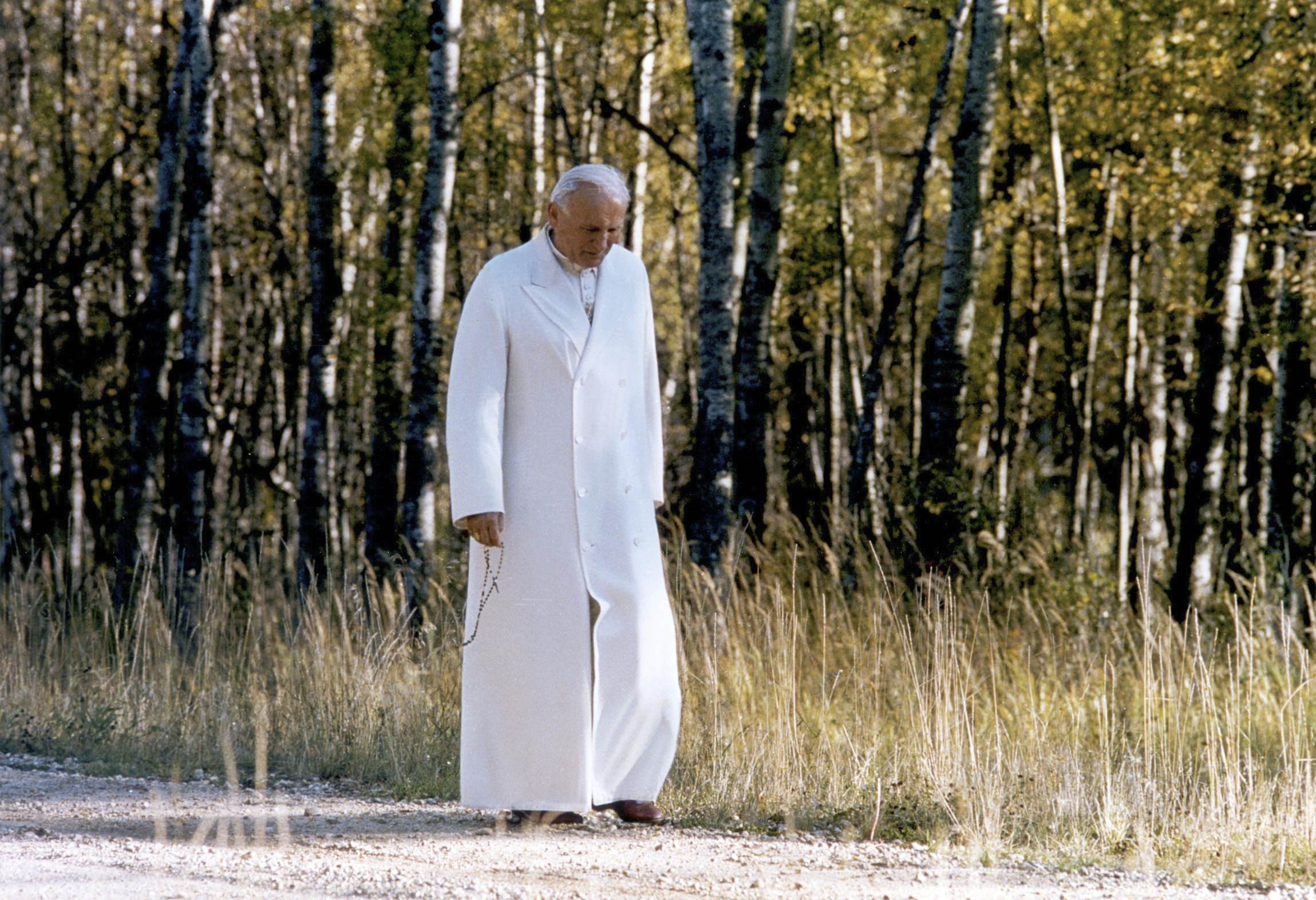
(ZENIT News / Krakow, 03.17.2026).- The reopening of long-sealed ecclesiastical archives in Kraków has reignited one of the most sensitive historical debates in contemporary Poland: what did Karol Wojtyła—later Pope John Paul II—know about cases of clerical sexual abuse, and how did he respond?
A recent investigation by the Polish daily Rzeczpospolita, often regarded as editorially independent and at times critical of the Church, has added a significant new layer to that question. After gaining access to previously unavailable documents from the Metropolitan Curia of Kraków, journalists conducted a detailed review of cases involving priests accused and, in some instances, convicted of abusing minors during Wojtyła’s tenure as archbishop between 1962 and 1978.
Their conclusion is unequivocal in one respect: no documentary evidence has emerged indicating that Wojtyła deliberately covered up sexual abuse. On the contrary, the material suggests that in several cases he acted promptly within the canonical and legal frameworks of his time—sometimes with a degree of rigor that the investigators themselves describe as atypical for that era.
The archival corpus examined is substantial. It includes nine densely compiled volumes related to specific priests—among them Eugeniusz Surgent, Józef Loranc and Bolesław Saduś—alongside hundreds of supplementary documents drawn from parish records and other repositories. These files contain personal statements, correspondence from parishioners, official transfer decrees, disciplinary measures and restrictions imposed on clerical ministry.
In the cases of Surgent and Loranc, both later sentenced to prison in the 1970s, the records indicate that Wojtyła ordered their suspension from ministry, removed them from their parishes and imposed restrictions on their movements even before civil authorities completed their investigations. After serving their sentences, neither priest was reinstated to active ministry; instead, they were sent to monasteries under conditions that excluded the exercise of priestly functions such as celebrating Mass or hearing confessions.
Such measures, while consistent with canonical discipline, were not universally applied across the Church at the time. According to the investigation, one particularly notable decision dates back to 1969, when Wojtyła ordered a psychiatric evaluation for a priest suspected of abusing minors—an action described as unusual in the historical context.
The case of Bolesław Saduś, often cited in earlier accusations, appears more ambiguous but ultimately less incriminating than previously suggested. While it is documented that the priest was transferred to Austria, the newly examined materials do not support the claim that Wojtyła was aware of alleged abuses at the time of the transfer. Parallel research conducted in the archives of the Institute of National Remembrance—which holds extensive records from both the Nazi occupation and the communist era—reached the same conclusion.
These findings directly engage with a controversy that intensified in 2023, when media reports and investigative claims suggested that Wojtyła had knowingly reassigned abusive priests to avoid scandal. The allegations, amplified by televised reporting and publications, contributed to a rare moment of public uncertainty in Poland, where John Paul II remains a towering national and religious figure.
The debate has not been merely historical. It has intersected with broader questions about accountability in the Church and the credibility of its response to abuse. In this context, the decision by Cardinal Grzegorz Ryś to reopen the curial archives in early February marks a turning point. Considered by many in Poland to be a proponent of transparency, Ryś authorized full access to the relevant documentation, enabling the investigation that now challenges earlier narratives.
At the same time, the Polish episcopate has announced the creation of an independent commission of experts to examine abuse cases from the communist period, including the role of ecclesiastical authorities. This move suggests that, despite the new findings, the Church recognizes the need for continued scrutiny and historical clarification.
Any assessment of Wojtyła’s record must also take into account his later actions as pope. As John Paul II, he introduced significant reforms to the Church’s legal framework regarding sexual abuse. The 1983 Code of Canon Law codified severe penalties for offenses against minors, including dismissal from the clerical state. In 1992, the Catechism of the Catholic Church explicitly identified sexual abuse of minors as a grave crime and sin. A further step came in 2001 with the motu proprio Sacramentorum sanctitatis tutela, which centralized the handling of the most serious cases—known as delicta graviora—under the authority of the Vatican, requiring bishops worldwide to report them to Rome.
These measures marked a shift from localized disciplinary practices toward a more unified and stringent system. While critics argue that they came too late, supporters contend that they laid the groundwork for subsequent reforms.
The reopening of the Kraków archives does not close the debate; rather, it reframes it. The evidence now available complicates earlier accusations of systematic concealment, pointing instead to a pattern of responses shaped by the legal, cultural and institutional constraints of the time.
For Poland, where John Paul II is not only a religious leader but a symbol of national identity and resistance against totalitarianism, the stakes remain high. The question is no longer simply whether he acted, but how his actions should be judged within their historical context.
What emerges from the latest investigation is not a definitive verdict, but yes a textured portrait—one that resists both condemnation, and invites a deeper examination of responsibility, memory and truth in the life of the Church.
Thank you for reading our content. If you would like to receive ZENIT’s daily e-mail news, you can subscribe for free through this link.

Publicaciones relacionadas:
 Schism in the Anglican Communion: 75% Break with England Over Gay Blessings and Putting in Doubt God’s Gender
 United Kingdom: praying outside abortion clinic (even in silence) is forbidden by law
 USA: Transexual Woman Kills Three Children and Three Adults in a Christian School
 Communion in the Hand or in the Mouth? Results Are Published of the Largest Survey in the U.S. on the Eucharist
