

(ZENIT News / Rhode Island, 03.24.2026).- A long-awaited investigation into clergy sexual abuse in the U.S. state of Rhode Island has concluded with a complex and, for some, unexpected picture: one in which the overwhelming weight of abuse cases lies decades in the past, and where no currently active priest faces credible accusations.
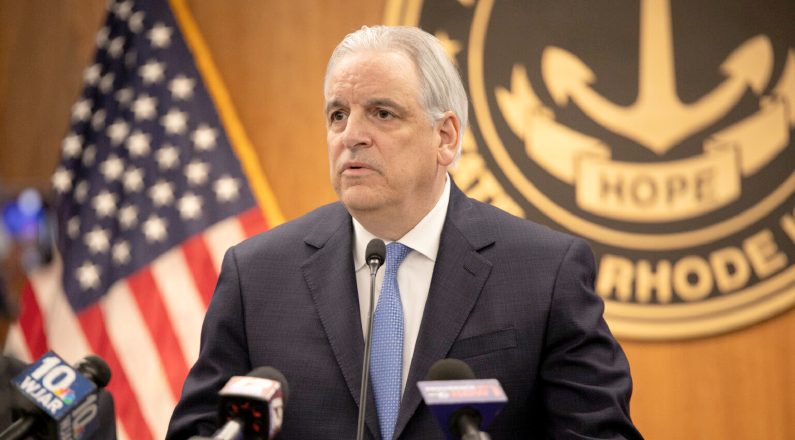
The nearly 300-page report, released in the penultimate week of March 2026 by Attorney General Peter Neronha, is the result of an inquiry launched in 2019 with the stated aim of examining abuse within the Catholic Diocese of Providence. The investigation stretched back as far as the 1950s, assembling a historical record that, while extensive, ultimately underscores the legal and temporal limits of such efforts.
At the center of the findings is a statistical reality difficult to ignore. According to the report itself, 97 percent of the alleged abuse cases occurred between 1950 and 1997, with 42 percent predating 1972. Moreover, of the 75 priests identified in connection with accusations, 64—approximately 85 percent—are deceased. The implication is twofold: not only are the vast majority of cases well beyond the statute of limitations, but most of the accused are no longer alive to respond to the allegations.
Neronha acknowledges a key conclusion that shapes the entire report: abuse by clergy in Rhode Island appears to have peaked in the 1960s and 1970s and declined significantly thereafter. That admission, embedded in the document, effectively shifts the report from the realm of judicial action to that of historical accounting.
Perhaps the most consequential finding, however, concerns the present. The report states unequivocally that no priest currently in active ministry within the Diocese of Providence faces a credible accusation of sexual abuse. Nor does it identify failures by the diocese to comply with existing legal obligations regarding the reporting of abuse in recent years.
For Bishop Bruce Lewandowski, who now leads the diocese, these conclusions are central. In his response, he emphasized that diocesan authorities had voluntarily handed over personnel files to investigators in a gesture of transparency. He also pointed to the seven-year duration of the inquiry as evidence against the existence of an ongoing crisis requiring urgent intervention.
The report arrives within a broader American context shaped by the landmark 2018 grand jury report in Pennsylvania, which catalyzed a wave of similar investigations across multiple states. That earlier case, widely publicized—including by outlets such as The Boston Globe—set a precedent both juridical and media-driven, encouraging prosecutors elsewhere to undertake comparable reviews of diocesan records.
Rhode Island’s case, however, illustrates the limits of that model when applied to dioceses where earlier waves of reform and accountability measures have already taken root. While the report documents past failures and suffering, it stops short of uncovering systemic, ongoing abuse in the present day.
Media coverage has reflected this ambiguity. The Boston Globe, which played a historic role in exposing clerical abuse in the early 2000s, has devoted significant attention to the report, publishing multiple articles and a profile of Neronha. Yet the substance of the findings—particularly the absence of recent cases—has tempered expectations of a new watershed moment.
The Rhode Island investigation thus occupies an uneasy space between revelation and closure. It contributes to the historical record of abuse within the Catholic Church in the United States, reaffirming patterns already documented elsewhere: a concentration of cases in the mid-20th century, followed by a sharp decline as awareness, reporting mechanisms and safeguarding protocols evolved.
At the same time, it raises questions about the purpose and scope of such inquiries when they are conducted decades after the fact. For victims, the acknowledgment of past wrongs may carry its own form of justice, even in the absence of prosecutions. For Church authorities, the report offers a measure of vindication regarding current practices, while still binding them to a legacy they cannot disown.
What emerges, ultimately, is neither exoneration nor indictment in the conventional sense, but a layered narrative: one that confirms the gravity of past abuses while suggesting that, at least in this particular diocese, the structures that enabled them no longer define its present reality.
Thank you for reading our content. If you would like to receive ZENIT’s daily e-mail news, you can subscribe for free through this link.

