

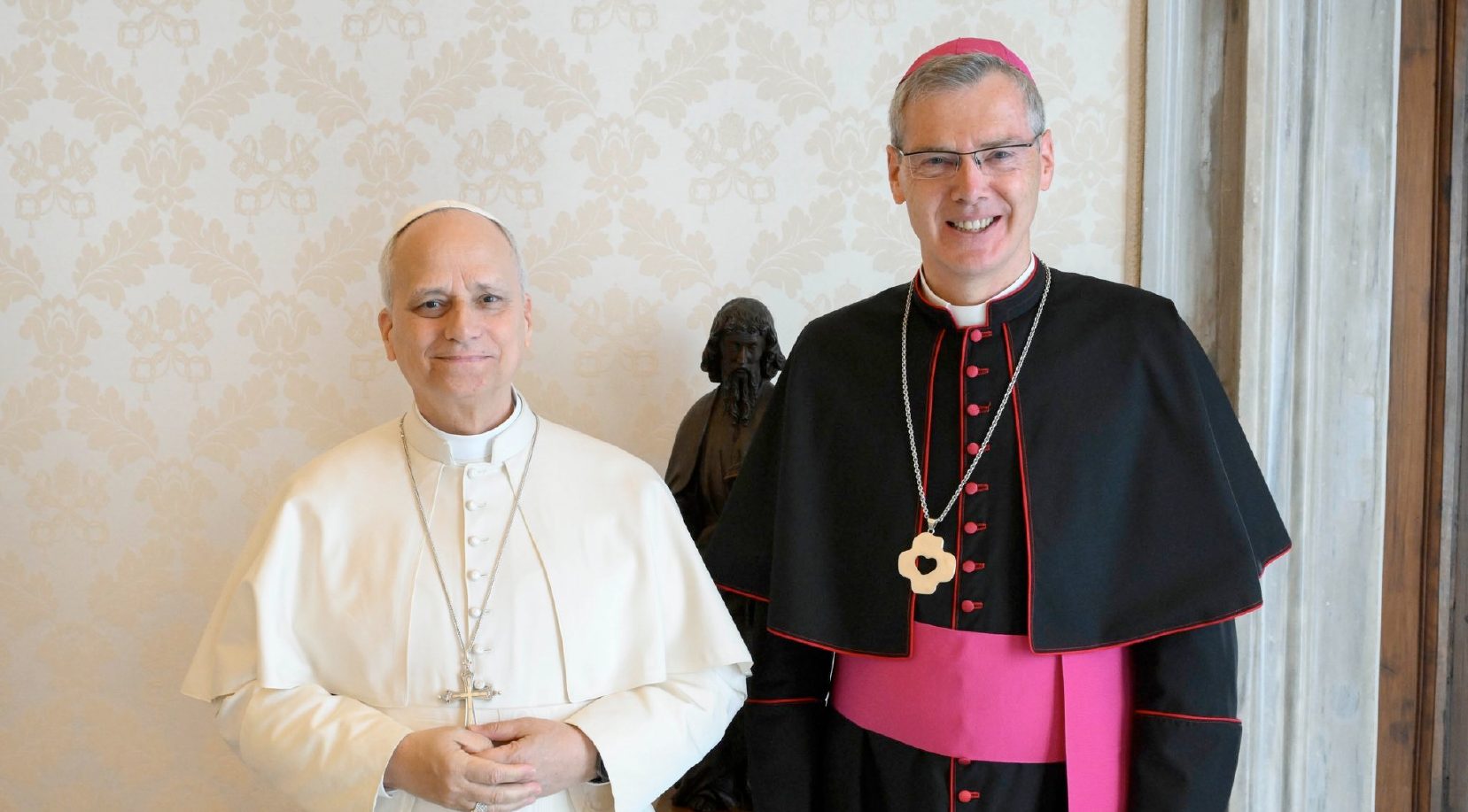
(ZENIT News / Vatican City, 03.31.2026).- The long and often contentious German “Synodal Way” has now entered a ruling phase in Rome, where its future will be judged not by debate but by ecclesial law. On March 31, Heiner Wilmer, recently elected president of the German Bishops’ Conference, formally submitted to the Vatican the statutes of a proposed national Synodal Conference—an unprecedented body that would bring bishops and lay representatives together to deliberate and take decisions on key issues facing the Church in Germany.
The move represents the most concrete institutional outcome of a reform process that, for years, has sought to rethink structures of authority, moral teaching and participation within the Church. Yet it also places the German initiative at the center of a delicate ecclesiological question: how far can synodality go without altering the fundamental constitution of the Catholic Church, in which each diocesan bishop exercises authority in communion with the Pope?
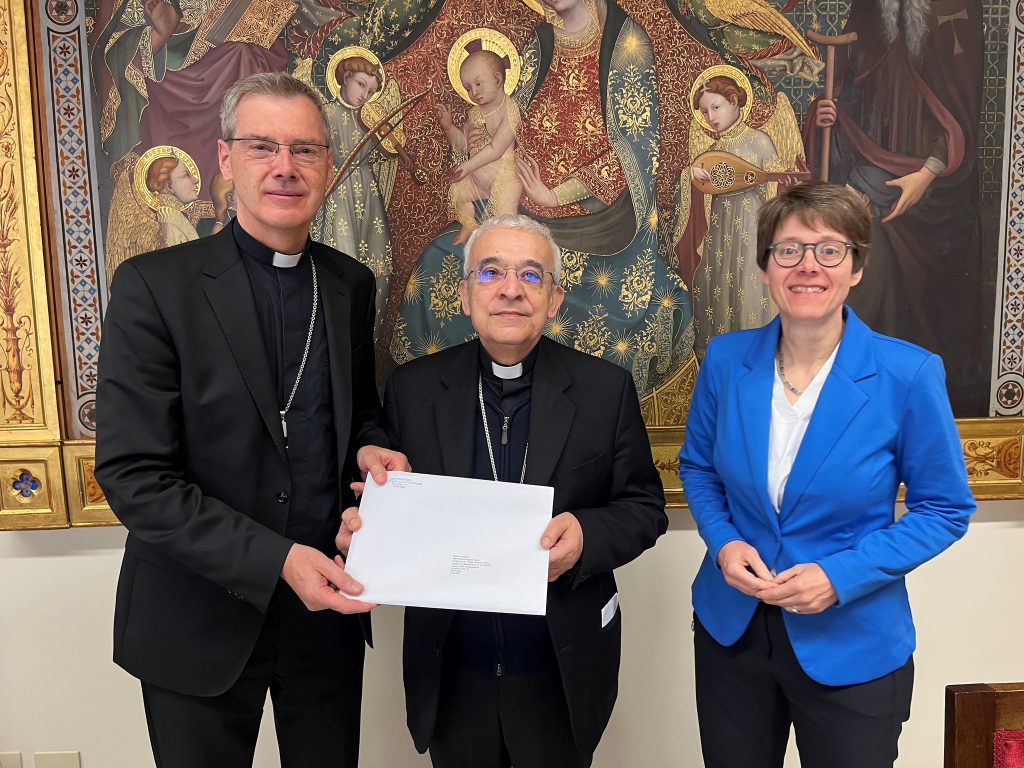
The proposed Synodal Conference would function as a permanent body at the national level, where bishops and lay members jointly discuss and decide on matters ranging from governance and accountability to sexual ethics and the role of women in the Church. Its statutes were approved by the German bishops in February 2026, following earlier endorsement by the Central Committee of German Catholics in November 2025. If approved by Rome, the body is expected to hold its inaugural meeting on November 6–7 in Stuttgart.
For Wilmer, who only days ago was appointed bishop of Münster and took office as head of the episcopal conference on February 24, the submission marks a continuation rather than a rupture. He has framed the initiative as being in continuity with previous leadership under Georg Bätzing and the preparatory work carried out in dialogue with Roman authorities, including discussions involving Bishop Franz-Josef Overbeck. In presenting the statutes, Wilmer emphasized their integration into the broader global synodal process encouraged by the Vatican in recent years.
That emphasis is not accidental. The German project has long raised concerns in Rome, where officials have repeatedly warned against any structure that could undermine the authority of individual bishops within their dioceses. The Vatican’s position has been consistent: while synodality—understood as shared discernment—is encouraged, it cannot evolve into a parallel decision-making authority “above” the episcopate. In Catholic ecclesiology, only the Pope occupies that level.
This tension explains why the German initiative has already encountered internal resistance. The episcopal conference itself has not spoken with one voice: four bishops withdrew from the Synodal Way during its development, citing concerns over doctrinal fidelity and canonical limits. At the same time, proponents argue that the credibility crisis facing the Church in Germany—marked by declining participation and loss of trust—demands structural innovation, not merely pastoral adjustment.
The lay leadership has been particularly vocal. Irme Stetter-Karp, head of the Central Committee of German Catholics, described the Synodal Conference as the fruit of sustained commitment and expressed hope that Rome would grant recognition in time for its planned launch later this year. For her and others, the project is not simply administrative but symbolic: a model of shared responsibility intended to reshape how authority is exercised.
Yet the symbolism cuts both ways. Critics within the universal Church see in the proposal a potential precedent that could fragment ecclesial unity if replicated elsewhere without clear doctrinal and canonical safeguards. The fact that such a structure has no direct equivalent in the Church’s existing framework underscores the stakes involved.
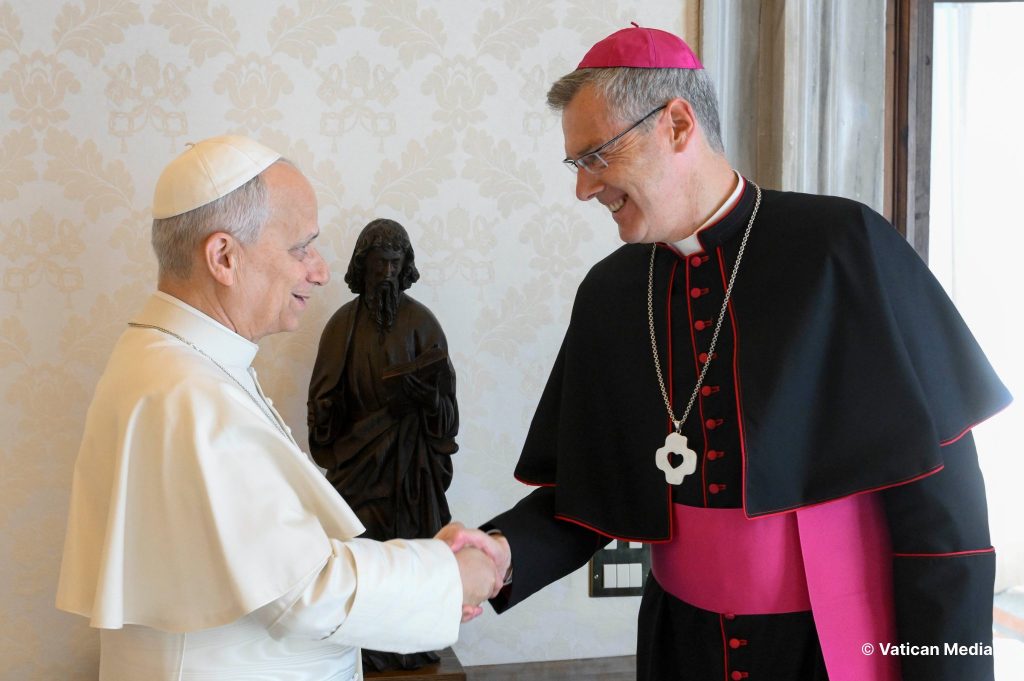
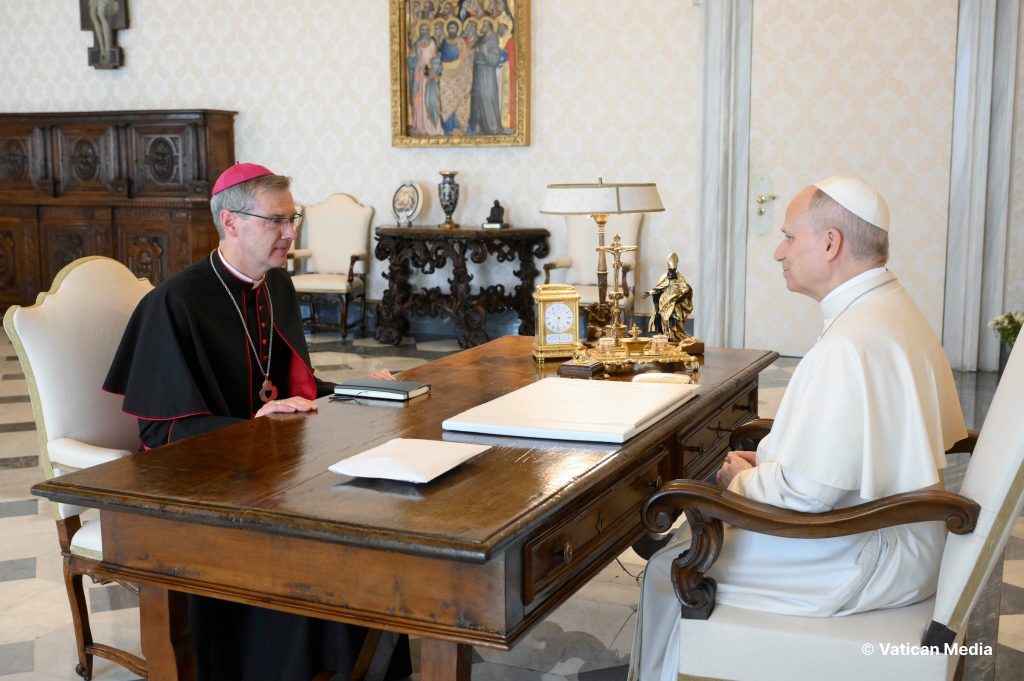 The timing of the submission adds another layer of significance. Just one day earlier, Wilmer was received in private audience by Pope Leo XIV. According to official statements, their conversation focused on the proclamation of the Gospel and the situation of the Church in Germany—phrasing that, while diplomatically restrained, suggests that the broader context of reform was very much in view.
What now lies ahead is a process of discernment within the Roman Curia, where the statutes will be examined not only for their practical implications but for their theological coherence. The involvement of dicasteries responsible for bishops and for doctrine is expected, reflecting the multidimensional nature of the issue.
In many ways, the German Synodal Conference has become a test case for the global Church. It probes the limits of synodality at a moment when the concept is being promoted worldwide, yet still lacks a fully defined canonical shape. It also forces a confrontation between two legitimate concerns: the need for greater participation and accountability, and the preservation of a hierarchical structure that the Church understands as divinely instituted.
Whether Rome ultimately approves, modifies or rejects the statutes, the outcome will resonate far beyond Germany. It will help determine not only the future of one national Church, but the contours of Catholic governance in the decades to come.
Thank you for reading our content. If you would like to receive ZENIT’s daily e-mail news, you can subscribe for free through this link.

Publicaciones relacionadas:
 Ireland: After 500 years, Pope Leo XIV could solve the problem of Dublin’s lack of a cathedral
 Pope Leo XIV reverses Pope Francis’ decision regarding the organization of the Diocese of Rome
 This is the new Catholic bishop appointed by Pope Leo XIV for London: he is from Africa, enjoys horse riding, and was a soldier
 Pope Leo XIV, Germany’s silent believers, and unexpected signs of a spiritual awakening opposed to the German synod
