

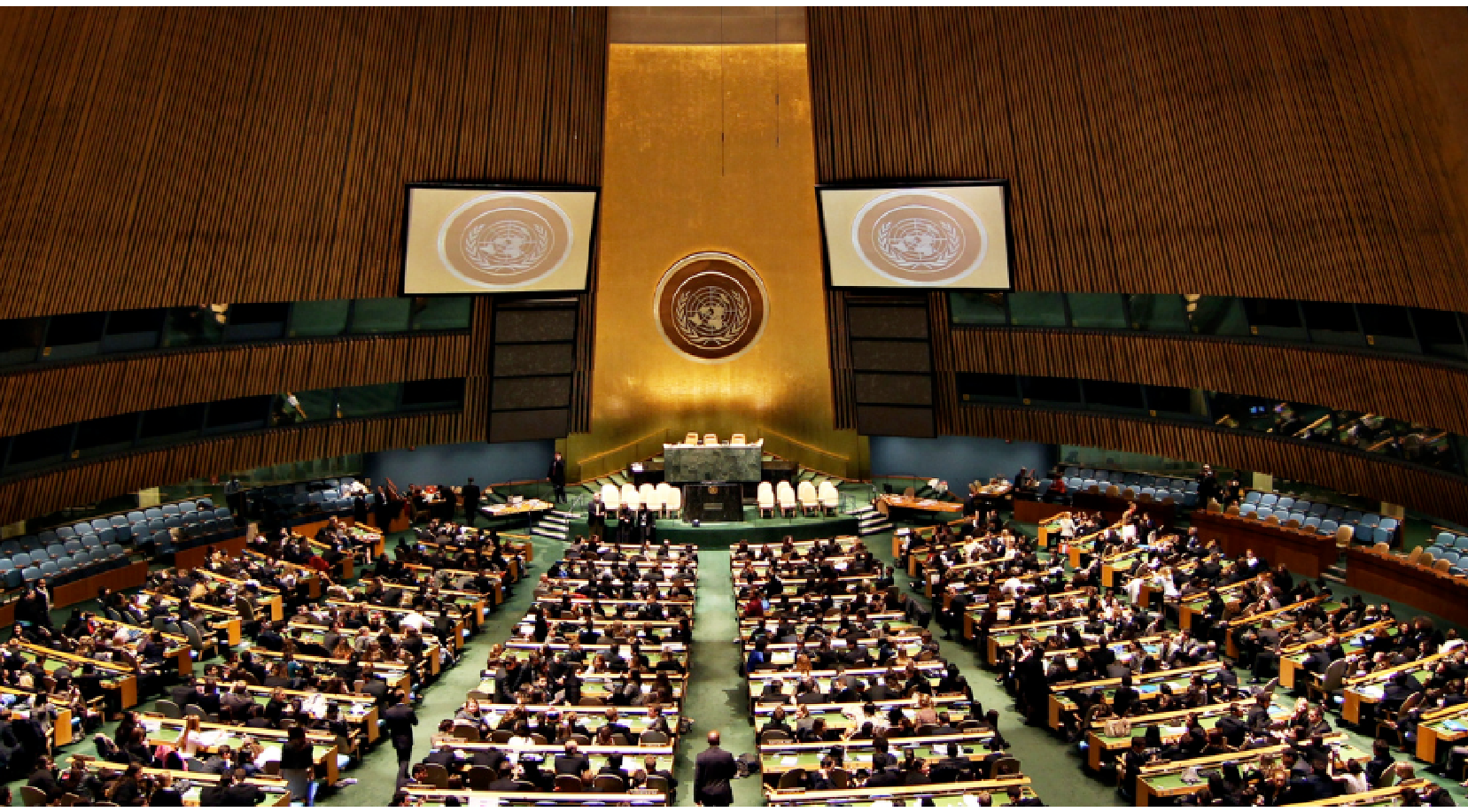
(ZENIT News – Center for Family and Human Rights / New York, 04.06.2026).- Member states are about to grant more power to the Secretary-General, and a group of governments has criticized the lack of negotiations on what will be a monumental change in the way the UN does business. They are also criticizing the growing trend to silence differing viewpoints and “hastily” adopt resolutions that do not reflect the consensus of member states.
The last week of March, governments adopted a UN resolution aimed at improving the creation, implementation, and review of UN mandates, which are the formal authority and instructions for UN bodies to carry out their work. This comes amid a broader UN reform process known as UN80.
The Russian Federation, which voted against the resolution, criticized it for reducing the rights and prerogatives of UN member states and expanding the power of the Secretary General.
“Under the UN Charter, the Secretary General does not have that role and that function,” the Russian delegate said.
Nicaragua was also unhappy. “It is concerning that the Secretariat is used as a filter or evaluator of the relevant mandates, a function that belongs exclusively to intergovernmental bodies,” their delegates said.
The third week of March, Russia introduced several amendments to the text, including one clarifying that “initiating the process of mandate reviews should lie with the states, not the Secretary General.”
Norway blocked consideration of the amendments through a “no action motion,” which is a hitherto little used parliamentary maneuver to avoid the essential task of the General Assembly, which is debate and negotiation.
In response, Egypt spoke against “the growing trend of silencing member states through no action motions” and said it is “to say the least deeply concerning” and “an undemocratic process often politically motivated and used selectively to target certain ideas and delegations.”
The European Union used the same “no action” procedure during the Commission on the Status of Women, blocking any debate or action on the United States resolution seeking to define gender as rooted in biology.
Several governments also criticized the adoption process more broadly, noting that the UN80 resolution bypassed the usual negotiation process, in which countries carefully debate the text, also known as “line-by-line negotiation.”
Russia said, “…it will always be an enigma why, during six months, there was no time assigned for line-by-line negotiations.”
“The discussion of such a sensitive and systemic subject should have taken place in the traditional, transparent, and truly inclusive format of conducting line-by-line negotiations on the next. We are, in other words, in favor of diplomacy.”
The Russian delegate charged that some of the UN80 meetings felt more like “lectures” by the UN and that governments “do not need lectures…what they need is negotiations of the text line-by-line.”
Belarus expressed similar concerns, saying, “Simplifying procedure and efficiency [of the UN] does not mean that we need to do away with fully fledged transparent consultations on the text of a document with involvement of all interested states.”
During the adoption, Argentina said the UN needs “realistic diagnoses” and the acknowledgment “that in recent years certain agendas have been overstretched, generating inefficiencies, duplications, and overlaps in functions, distancing the UN from its original mandates and the real needs of peace, security, and development of member states.”
The elaboration of the resolution was led by an Ad Hoc Working Group co-chaired by Zambia and New Zealand. A new Ad Hoc Group will be established on May 1st, 2026, to “guide the creation of new mandates” and “objectively review the existing stock of thousands of mandates.”
Thank you for reading our content. If you would like to receive ZENIT’s daily e-mail news, you can subscribe for free through this link.

Publicaciones relacionadas:
 ‘Heightening Tensions Between US & Iran Risk Rebuilding in Iraq,’ Pope Warns in Annual Address to Diplomats
 Sister Nabila: Trump’s (and Netanyahu’s) plan for Gaza is ‘unimaginable’
 Trump Begins Shock and Awe Overhaul at USAID
 US faith organisations file lawsuit to stop ICE raids on places of worship
