

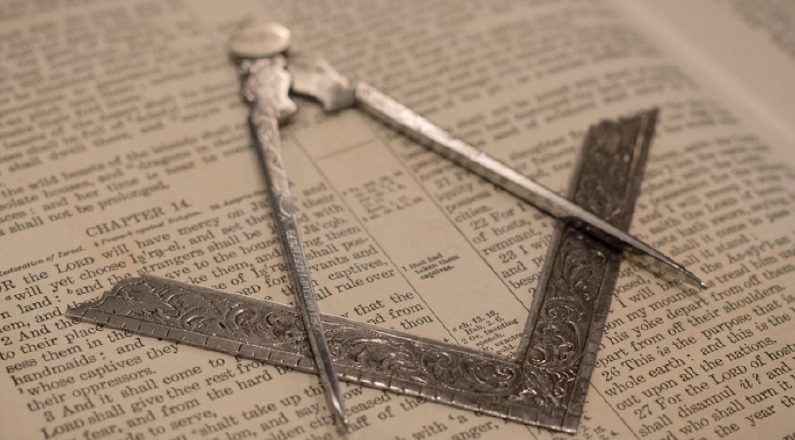
(ZENIT News / Oslo, 07.02.2026).- After years of uncertainty among some Catholics in Scandinavia, the Catholic bishops of the Nordic countries have issued one of the clearest recent reaffirmations of the Church’s longstanding teaching on Freemasonry: there are no regional exceptions, and membership in a Masonic lodge remains incompatible with the Catholic faith.
In a pastoral letter dated June 29, the Nordic Bishops’ Conference—covering Denmark, Finland, Iceland, Norway and Sweden—addressed what it described as decades of speculation over whether the distinctive character of Scandinavian Freemasonry justified a different pastoral approach. The bishops concluded that it does not.
Their clarification follows consultations with the Dicastery for the Doctrine of the Faith during the bishops’ plenary assembly in Rome in September 2025. According to the letter, the Vatican’s response was unequivocal: the universal discipline of the Church applies fully throughout the Nordic countries, without exception.
The statement was prompted by a persistent belief, particularly in Norway, that the Scandinavian branches of Freemasonry differed so substantially from those in other countries that Catholics could belong to them without contradicting Church teaching. The bishops explicitly rejected that interpretation, stressing that the theological and philosophical principles underlying Freemasonry remain incompatible with the profession of the Catholic faith.
To underline that point, the bishops also issued practical pastoral directives. Catholics who belong to Masonic lodges are urged to renounce their membership and refrain from receiving the sacraments until they do so. Likewise, anyone seeking to enter the Catholic Church must first withdraw from any Masonic affiliation. The letter further instructs Catholic parishes, religious institutes and Church organizations not to establish formal cooperation with Masonic lodges or make use of their facilities.
The bishops were careful to distinguish between judging ideas and judging individuals. Their letter explicitly states that the Church does not question the personal goodwill or charitable works of individual Freemasons. Rather, the incompatibility concerns doctrine. In the bishops’ view, Freemasonry proposes a philosophical and spiritual framework that cannot be reconciled with the Christian understanding of divine revelation and the unique saving role of Jesus Christ.
The clarification also addresses a historical misunderstanding that has persisted for more than four decades.
When the 1983 Code of Canon Law replaced the 1917 Code, it no longer mentioned Freemasonry by name. Some interpreted that omission as evidence that the Church had relaxed its position. In reality, the reference was removed because legislators wanted the canon to encompass all organizations whose principles are incompatible with the faith, rather than appearing to prohibit only Masonic associations. The Vatican moved quickly to dispel any ambiguity. Shortly before the new Code entered into force, Cardinal Joseph Ratzinger, then Prefect of the Congregation for the Doctrine of the Faith, issued a declaration stating that Catholics who enroll in Masonic associations are in a state of grave sin and may not receive Holy Communion. That doctrinal judgment has never been revoked and has been reaffirmed repeatedly, including by the Dicastery for the Doctrine of the Faith in 2023.
The Nordic bishops also recalled that the idea of a Scandinavian exception had already been formally rejected decades ago. In 1966, local bishops suggested that individual dioceses could determine which lodges might be tolerated. That interpretation was explicitly corrected in 1981 by Cardinal Franjo Šeper, who described the premise that Freemasonry differed substantially from one country to another as a false interpretation of Church law.
To explain why the Church has maintained this position for nearly three centuries, the bishops point to the philosophical foundations of Freemasonry itself.
Modern Freemasonry emerged in London in 1717, evolving from medieval stonemasons’ guilds into a fraternity combining ritual, moral philosophy and symbolic initiation. Pope Clement XII condemned it in 1738, principally because it promoted religious indifferentism—the notion that adherence to any particular revealed religion is ultimately secondary, provided one embraces a common ethical ideal. Between Clement XII and the promulgation of the first universal Code of Canon Law in 1917, eight popes issued bulls or encyclicals reaffirming that condemnation.
One of the Church’s most comprehensive critiques came from Pope Leo XIII, who argued that Freemasonry advanced a secular worldview in which religion became a matter of personal preference rather than divine revelation. He also criticized Masonic concepts of the State, marriage and morality, warning that they displaced Christianity with an alternative vision of human fulfillment.
The bishops also drew attention to the spiritual dimension of Masonic ritual. While Freemasonry frequently presents itself as a fraternal organization dedicated to charity and moral improvement, the Church has long observed that its ceremonies, symbolism and initiation rites possess a distinctly religious character. Some higher-degree rituals have historically included explicitly anti-Catholic symbolism, reinforcing the Church’s conclusion that Freemasonry is more than a purely social association.
That perspective is echoed by Pål Nes, editor-in-chief of EWTN Norway, who belonged to a Masonic lodge before entering the Catholic Church. Nes credits a priest’s clear guidance with helping him understand that conversion to Catholicism required leaving Freemasonry behind. Although he recalls appreciating the fraternity’s sense of brotherhood, ritual and symbolism, he ultimately concluded that those elements pointed toward a fuller reality found in Catholic worship rather than an alternative spiritual path. In recent years, he has publicly argued that Catholicism and Freemasonry represent two distinct and ultimately irreconcilable systems of belief.
The Nordic bishops close their letter on a pastoral rather than polemical note. Their purpose, they insist, is not to condemn individuals but to provide clarity where confusion has persisted for generations.
Thank you for reading our content. If you would like to receive ZENIT’s daily e-mail news, you can subscribe for free through this link.

Publicaciones relacionadas:
 Basilica of the Sagrada Familia in Barcelona reaches 4.7 million visitors by 2023
 Ireland: after vocational winter, 15 new seminarians in the country by 2024
 Ireland: survey reveals not encouraging attitudes of the population towards the Catholic Church and the clergy
 Reliquary of St. Therese of Lisieux to tour USA: here’s what you need to know
