

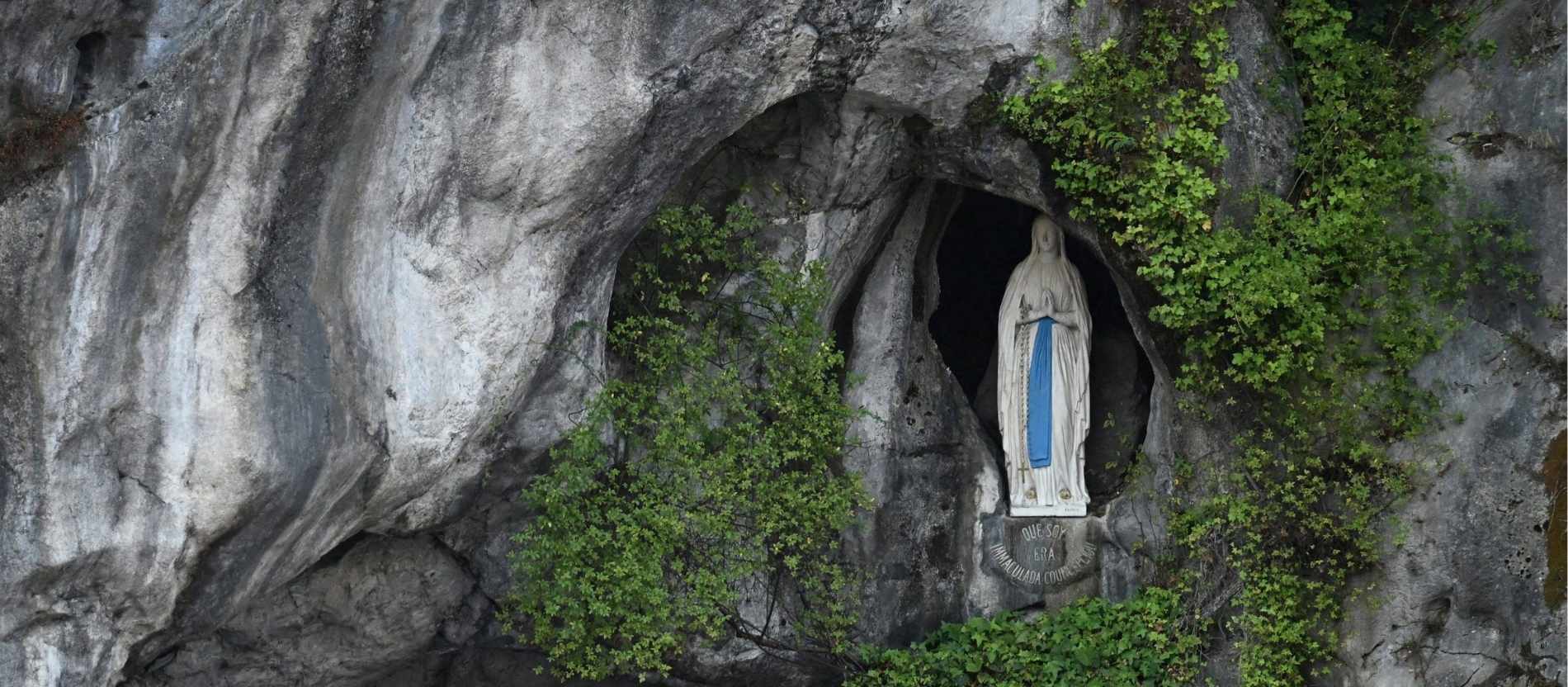
(ZENIT News / Lourdes, 08.20.2026).- The sanctuary of Lourdes has drawn a new canonical boundary around one of the Catholic Church’s most persistent internal disputes. Bishop Jean-Marc Micas of Tarbes and Lourdes has withdrawn the permission previously granted to the Society of St. Pius X to celebrate Mass, administer the sacraments and conduct public prayers within the shrine.
The decision, dated August 13, follows the episcopal consecrations carried out by the Society at Écône on July 1 without a pontifical mandate and the subsequent action by the Holy See declaring the canonical consequences of those acts. For Lourdes, a place whose appeal extends far beyond the boundaries of particular Catholic movements, the decision marks a significant change in how the Society will be able to conduct its pilgrimages.
Micas presents the measure not as a prohibition on individuals, but as a consequence of the Society’s changed canonical position. In his assessment, the events at Écône have created a «new situation» in relations between the Society and the Catholic Church, making it impossible for him to continue authorizing its public liturgical activities at the shrine.
That distinction is important. Members of the Society and Catholics associated with it remain free to enter Lourdes, visit the Grotto of Massabielle and pray privately. The bishop has therefore stopped short of excluding them from the sanctuary itself. What has been withdrawn is institutional permission to exercise public worship there under the Society’s name.
The practical consequences could nevertheless be considerable. The Society’s annual international pilgrimage for the Feast of Christ the King, scheduled for October, has traditionally brought large numbers of priests, religious and lay faithful from different countries to Lourdes. Its public celebrations will now have to be reconsidered in light of the bishop’s decision.
At the heart of the dispute is a question that has long complicated the Church’s relationship with the Society of St. Pius X: the difference between participation in Catholic life and full canonical communion. The Society was founded by Archbishop Marcel Lefebvre and has remained attached to a traditionalist understanding of Catholic worship and doctrine while maintaining an irregular canonical status. The latest episcopal consecrations have sharpened that conflict once again.
Micas acknowledges that his decision will cause «pain and perhaps incomprehension.» His language is strikingly pastoral rather than triumphalist. He describes the divisions within the Church as a wound to Christ’s unity and warns that they weaken the Church’s evangelical witness.
That emphasis may prove particularly significant when Pope Leo XIV arrives in Lourdes in September. During his September 26-27 visit, the Pope is expected to meet the French bishops, celebrate Mass and take part in the candlelight Rosary procession at the shrine. His presence will inevitably place Lourdes at the center of attention not only as a Marian pilgrimage site, but also as a place where questions about communion, authority and ecclesial unity remain unresolved.
For the bishop of Lourdes, however, the immediate message is deliberately narrower: the sanctuary remains open. What has changed is who may officially conduct public worship there.
The distinction reflects a broader principle in Catholic life. A sanctuary can welcome people even when serious disagreements separate them from the institution responsible for it. Prayer at the Grotto remains possible.
Thank you for reading our content. If you would like to receive ZENIT’s daily e-mail news, you can subscribe for free through this link.

Publicaciones relacionadas:
 President of the World Council of Churches Calls for Inter-Communion Between Catholics and Protestants
 Pope Decides to Ban the Sodalitium of Christian Life and Entrusts Its Execution to a Controversial Priest
 Trump new president: a telegram from the pope, an end to gender ideology and a Catholic priest at the ceremony
 Controversial Antwerp bishop expands on his idea of ordaining married men and shares his thoughts on women
