

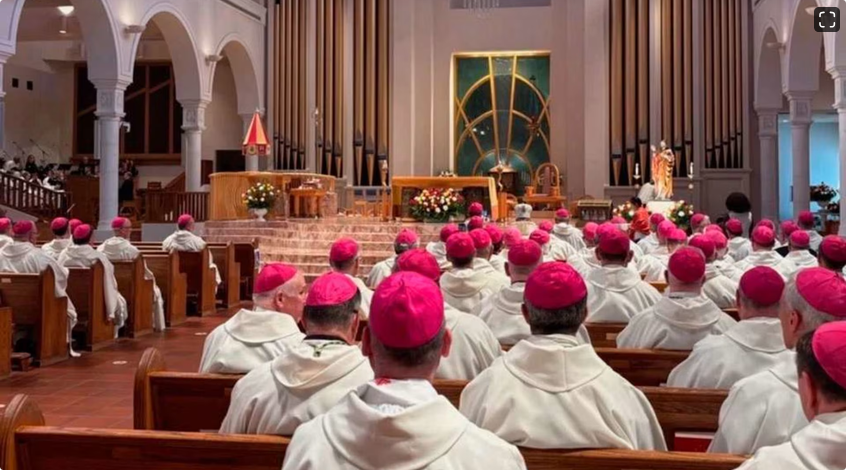
(ZENIT News / Washington, 11.11.2026).- A new report from the Lepanto Institute has raised fresh questions about the oversight of the Catholic Campaign for Human Development (CCHD), the United States bishops’ principal anti-poverty programme, alleging that it has awarded $805,000 in grants to an organisation involved in coalitions advocating policies contrary to Catholic teaching on abortion.
In a statement released on November 9, the Virginia-based institute identified the recipient as the United Workers Association (UWA), a Baltimore-based organisation which, according to its findings, helped establish a healthcare coalition campaigning for public funding of abortion. The report says the UWA has received 17 CCHD grants since 2004, including a further $45,000 for the 2025–2026 period.
The central issue is not simply the amount of money involved, but whether the bishops’ funding programme has adequately examined the political activities and institutional relationships of the organisations it supports. The CCHD describes itself as committed to tackling poverty and promoting human dignity, while maintaining that its grants are subject to a rigorous screening process. The Lepanto Institute argues that the UWA’s record raises serious doubts about how consistently those safeguards are applied.
One of the report’s principal allegations concerns Healthcare is a Human Right – Maryland (HHR-MD), a coalition that the UWA helped found in 2012. The institute cites the coalition’s public statements in support of including abortion coverage in proposals for Medicare for All, as well as its endorsement of efforts to repeal the Hyde Amendment. That federal provision, in place since 1976, generally bars the use of federal funds to pay for abortion, subject to limited exceptions.
Michael Hichborn, president of the Lepanto Institute, argues that the distinction between merely supporting a coalition and creating one is particularly significant. He maintains that the CCHD’s own rules prohibit grant recipients from participating in coalitions whose activities conflict with Catholic moral teaching, and says the UWA went further by helping establish and finance the Maryland organisation.
The report also examines the UWA’s relationship with Put People First – Pennsylvania (PPF-PA), for which the Baltimore organisation serves as fiscal sponsor. According to the institute, UWA tax filings record transfers totalling $584,307 to PPF-PA between 2020 and 2022. The report attributes to the Pennsylvania group a series of activities and public positions, including participation in a march supporting Planned Parenthood, publication of an article defending abortion, and expressions of support for the decriminalisation of abortion in Argentina. It also cites the group’s criticism of the exclusion of abortion from the expansion of Medicaid.
These financial transfers are relevant to the debate over the CCHD’s grant oversight, although the figures cited do not, by themselves, establish that CCHD money was directly transferred to PPF-PA. They do, however, raise questions about whether the bishops’ programme adequately considers the wider activities and affiliations of organisations receiving its grants.
The Lepanto Institute’s report extends beyond abortion. It says the UWA urged its members in March 2025 to oppose Medicaid cuts affecting so-called gender-affirming care, and notes that the organisation had previously appeared as a supporter of same-sex marriage. PPF-PA, meanwhile, co-organised a 2023 event entitled “Trans Healthcare is a Human Right”. The report also recalls the UWA’s 2020 call to defund the Baltimore police.
For Hichborn, these positions are incompatible with the assurances given by the CCHD about the moral and social commitments expected of its grant recipients. He has accused the bishops’ programme either of failing to conduct the due diligence it claims to undertake or of disregarding information that should have prompted closer scrutiny.
The institute is now urging bishops to withdraw from the CCHD collection and close the programme in their dioceses. Its latest findings follow earlier reports criticising the campaign’s funding decisions, including allegations published last year concerning grants to organisations involved in promoting abortion and gender-transition procedures.
The allegations deserve a serious response, particularly because the CCHD relies on the generosity of Catholics who contribute to a collection presented as an expression of the Church’s commitment to the poor. That commitment is an essential part of Catholic social teaching: defending the dignity of vulnerable people, opposing poverty and ensuring that public institutions serve the common good. But charitable objectives cannot be separated from the moral principles that give Catholic initiatives their identity.
At the same time, the claims made by the Lepanto Institute remain allegations presented by an advocacy organisation and should be assessed alongside the relevant financial records, grant criteria and any response from the US bishops or the CCHD. The decisive question is whether the programme’s oversight mechanisms can demonstrate that Catholic donations are being used in ways consistent with the Church’s teaching, rather than supporting organisations whose wider campaigns contradict it.
Thank you for reading our content. If you would like to receive ZENIT’s daily e-mail news, you can subscribe for free through this link.

Publicaciones relacionadas:
 Controversial Antwerp bishop expands on his idea of ordaining married men and shares his thoughts on women
 UFOs, Demons, and Ecclesial Boundaries: Why Washington’s Archbishop Removed a High-Profile Exorcist
 An African Detective Story: Who Killed Bishop Osório Citora Afonso?
 Italian Bishops Defend Islamic Studies Initiative Amid Dispute Over the Identity of Catholic Religious Education
