

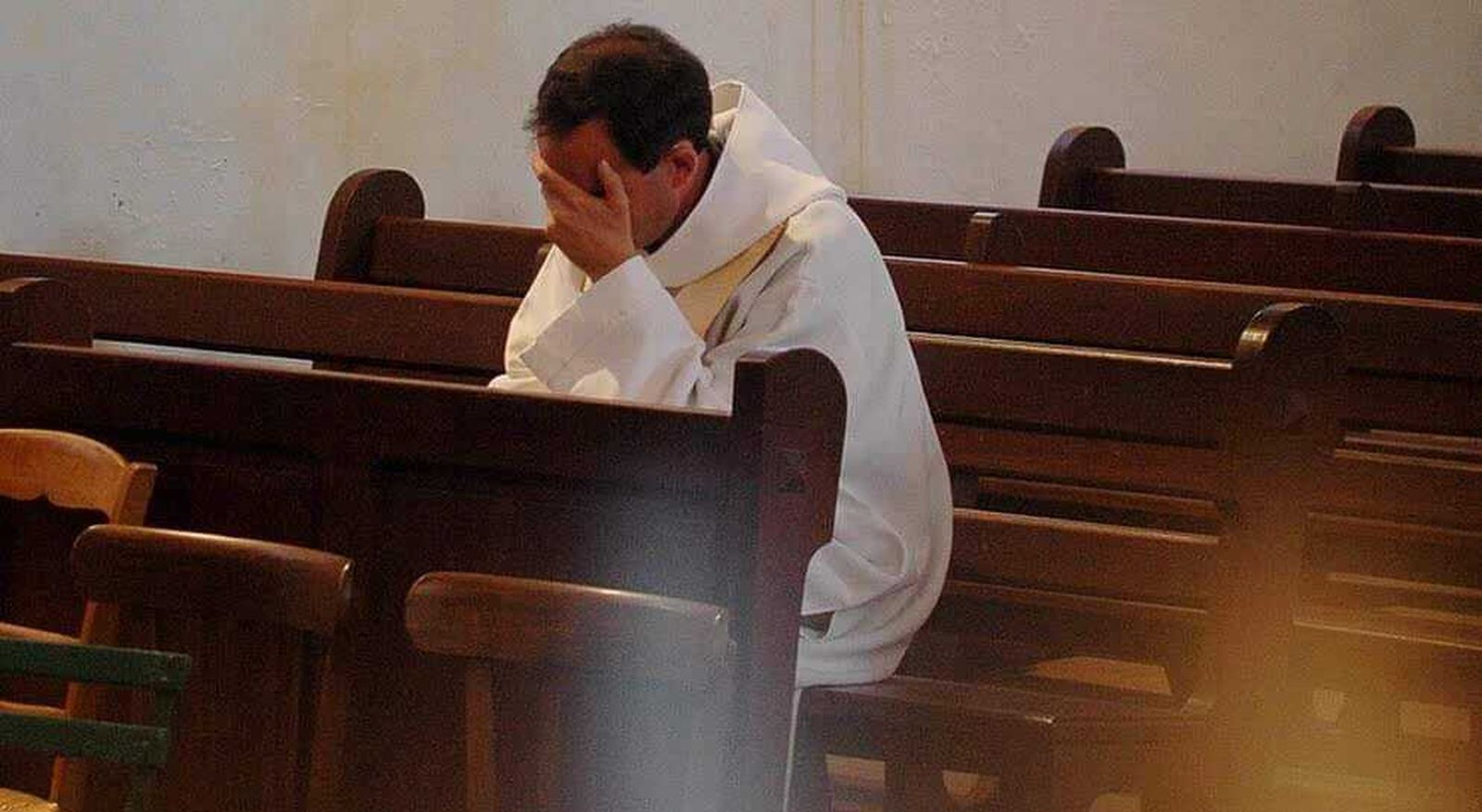
(ZENIT News / Rome, 08.24.2026).- When a priest leaves the ministry, the explanation is often reduced to two familiar possibilities: a crisis of faith or the emergence of a romantic relationship. Research into priestly departures, however, points to a more complicated picture. In many cases, leaving appears less like the consequence of a single dramatic decision than the final stage of a prolonged process in which loneliness, exhaustion, inadequate support and the weight of pastoral administration gradually erode a priest’s capacity to sustain his vocation.
One of the less visible problems is what sociological research has described as “functional loneliness.” A priest may spend almost every day surrounded by people — celebrating Mass, hearing confessions, visiting families, attending meetings and managing parish activities — and yet have remarkably few relationships in which he can speak honestly about his own fears, fatigue or doubts.
Research by American sociologist Dean R. Hoge found that 46 percent of priests who had left the ministry in the population he studied referred to this form of loneliness. The paradox is striking: the priest can be socially surrounded while remaining personally isolated.
That distinction matters because priestly life is not simply a demanding occupation. It places a man in a position in which others routinely approach him with their deepest problems while he is expected to remain a source of stability, guidance and spiritual strength. Without trustworthy relationships in which the priest himself can be supported, that asymmetry can become corrosive.
The same pattern emerges in research by Yulius Sunardi, whose work suggests that prolonged isolation can contribute to a deeper crisis over time. This also complicates the common assumption that a romantic relationship is necessarily what causes a priest to abandon ministry.
In some cases, an emotional relationship may instead appear after a long period of unmet human and affective needs. The relationship can become an expression of a crisis that was already developing rather than the event that originally created it.
That does not make the relationship irrelevant, nor does it remove personal responsibility. It does, however, suggest that preventing priestly departures requires attention to the conditions in which priests actually live, rather than concentrating exclusively on the moment when a crisis becomes visible.
Another pressure comes from the transformation of parish life itself.
A man who enters the seminary hoping primarily to preach, celebrate the sacraments and accompany people spiritually can discover that much of his working week is consumed by budgets, personnel, buildings, paperwork, compliance requirements, scheduling and organizational decisions. Sociologists have described this growing administrative dimension as an “administration of the sacred.”
The problem is not that administration is unnecessary. Parishes need competent management, and priests cannot simply ignore the material responsibilities attached to their communities. The danger arises when managerial demands progressively displace the pastoral and spiritual work that originally gave meaning to the vocation.
Vivencio Ballano has identified another element: priests may receive insufficient support and guidance from ecclesiastical superiors. A demanding ministry becomes considerably harder when a priest feels that those responsible for his welfare are interested primarily in whether the parish is functioning, rather than in whether the priest himself is coping.
This raises a question about priestly formation. Seminary preparation can be academically rigorous and spiritually serious while still leaving future priests insufficiently prepared for the psychological realities of decades of ministry. The difficulties may not become apparent during formation or even in the first years after ordination. They can emerge much later, when the initial enthusiasm has encountered the accumulated weight of routine, responsibility and isolation.
That is why fraternity among priests deserves to be treated not as an optional pastoral luxury but as part of the infrastructure of a sustainable priestly life.
Pope Leo XIV addressed precisely this issue in February 2026, drawing attention to the danger of priestly isolation and encouraging priests to cultivate friendship and genuine interpersonal relationships with one another. His emphasis on fraternity points toward a relatively simple principle with potentially profound consequences: priests need other people with whom they can be priests, rather than always remaining the people to whom everyone else turns.
The implication is also important for bishops and diocesan structures. If a priest is expected to carry the spiritual, emotional and administrative burdens of an increasingly complex parish largely on his own, personal resilience can eventually become an inadequate substitute for institutional support.
The Catholic Church has legitimate reasons to defend priestly celibacy and the distinctive character of the priesthood. But defending a vocation does not mean ignoring the human conditions necessary for it to flourish. Celibacy is not a denial of the need for friendship, affection or community; precisely because it involves renouncing marriage and family life, it makes strong forms of spiritual and human fraternity particularly important.
The lesson from the research is therefore broader than the question of why some priests leave. It concerns how the Church can help priests remain capable of living their vocation with freedom, maturity and joy.
The most effective response may begin long before a priest considers leaving: better preparation for the realities of ministry, attentive episcopal leadership, meaningful friendships among clergy, protection against chronic isolation and a healthier distribution of administrative responsibilities.
A priest does not need to be surrounded by people merely because he works among them. He needs relationships in which he can be known, supported and challenged.
For a vocation built around communion, that may be one of its most easily overlooked necessities.
Thank you for reading our content. If you would like to receive ZENIT’s daily e-mail news, you can subscribe for free through this link.

Publicaciones relacionadas:
 Sexuality and Mental Health in Seminaries: What a Major U.S. Study on Psychology and Sex Reveals
 Francis: The Pope Who Wept before the Virgin (and Before the Eyes of All)
 The US Department of State Yearly Report on Religious Freedom: Exemplary on China, Timid on Japan
 Artificial Intelligence and the Mission of the Church. An analytical contribution
