

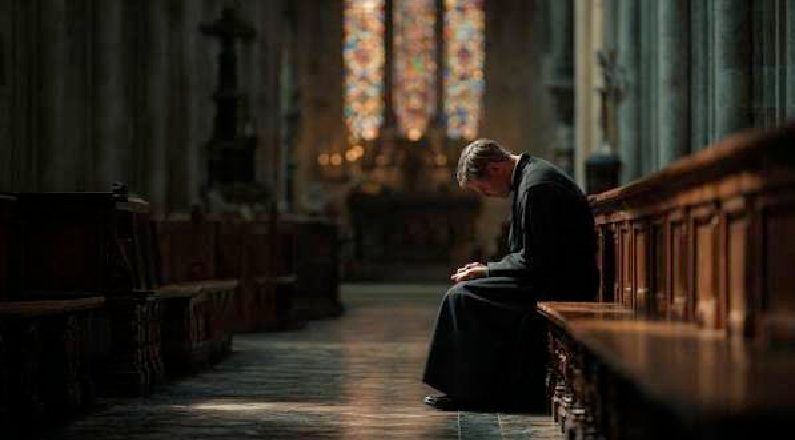
(ZENIT News / Rome, 07.19.2026).- The future of the Catholic priesthood may depend less on how many men enter American seminaries than on how honestly the Church discerns which of them are truly prepared for ordination.
That is the central challenge of a new report from the McGrath Institute for Church Life at the University of Notre Dame, which calls for a more rigorous and integrated approach to psychological assessment, human formation and the discernment of candidates for the priesthood.
The report, titled «Do You Know Them to Be Worthy?», takes its name from the question posed during the ordination rite when a bishop asks whether a candidate has been judged worthy. Its authors, Father Thomas Berg, a former seminary formator and moral theologian, and Timothy Lock, a clinical psychologist, argue that answering that question responsibly requires more than a formal psychological examination or a successful academic record.
It requires the Church to know the man being considered for ordination.
The report is based largely on research conducted by the Center for Applied Research in the Apostolate at Georgetown University and on discussions held during a 2025 conference on seminary psychological services. Its recommendations arrive against the background of the clergy sexual-abuse crisis, but the authors do not portray the American seminary system as fundamentally broken.

Their diagnosis is more nuanced—and potentially more demanding
Most men currently preparing for the priesthood are likely to be strong candidates, Father Berg said. The challenge, he and Lock argue, is to ensure that those men receive the help they need while identifying, with equal honesty, those whose difficulties make ordination inadvisable.
That means resisting what the report describes as an excessive concern with numbers.
The pressure to maintain or increase the number of seminarians can create a dangerous temptation: to interpret the successful admission of a candidate, or his progress through formation, as evidence that he should eventually be ordained. The authors argue that the Church must instead be willing to accept the painful conclusion that some men should not become priests.
For the sake of the seminarian, the Church and the people he might one day serve, quality must come before quantity.
One of the report’s strongest criticisms concerns the way psychological evaluations are used. Psychological testing has long formed part of seminary admission, but the authors say it is too often treated as a simple pass-or-fail requirement rather than as one element of a continuing process of formation.
They recommend more deliberate psychological care, including regular counselling and comprehensive evaluations at least twice during seminary formation. They also call for greater cooperation between psychologists and seminary formators.
The need is not theoretical. The report cites wider social data indicating that 54 percent of adults experience loneliness, 66 percent report a physical symptom of stress and 69 percent say they need more emotional support than they have received.
Seminarians, the authors argue, do not enter formation untouched by the culture around them.
The report also identifies a striking gap between the confidence of those responsible for formation and that of mental-health professionals regarding the preparation of seminarians for sexual maturity. While 85 percent of bishops, 84 percent of seminary rectors and 72 percent of vocation directors expressed strong confidence or certainty that seminaries were preparing men adequately in this area, only 35 percent of mental-health professionals said the same. Just 14 percent expressed a high level of confidence.
That divergence is one of the report’s most important findings. It suggests that the Church’s internal assessment of its formation programmes may be considerably more optimistic than the assessment of the professionals most directly involved in psychological care.
The authors therefore recommend that every seminary have access to a psychologist on staff and that psychological professionals work more closely with the rest of the formation team.
They also argue that the psychological evaluation of a candidate should not remain an isolated document filed away at the beginning of formation. It should contribute to a continuing understanding of the seminarian’s development, strengths and vulnerabilities.
This does not mean treating every psychological difficulty as a reason to exclude a man from the priesthood. On the contrary, the report stresses that appropriate treatment can promote genuine human freedom and lasting growth.
The distinction is especially important in the case of candidates with conditions such as attention-deficit hyperactivity disorder, obsessive-compulsive disorder or autism spectrum disorder.
The report notes that some bishops remain concerned about ordaining men with autism, while others may regard autism itself as a disqualifying factor. The authors argue that more research and better resources are needed rather than blanket assumptions.
They also state that taking medication for attention-deficit hyperactivity disorder or obsessive-compulsive disorder should not, by itself, be considered an impediment to ordination.
The discussion of sexual maturity is more direct
The report argues that seminaries must confront pornography, masturbation, compulsive sexual behaviour and other difficulties with greater honesty. Its authors warn against a formation culture in which problems are hidden, rationalized or treated merely as private failures that can be managed without deeper examination.
The objective, they insist, is not simply to count relapses or demand an appearance of perfection. It is to help a man achieve an integrated and mature understanding of chastity and to understand why he may turn to sexual behaviour as a response to loneliness, stress or the difficulties of celibate life.
The report recommends sustained continence, increasing stability, rapid recovery after setbacks, stronger theological and psychological education about chastity, internet safeguards and forms of accountability involving peers or groups.
Its underlying principle is that the priesthood requires more than the external suppression of behaviour. A future priest must be capable of relating to others with freedom, self-command and genuine charity.
The authors describe the goal, in strikingly pastoral terms, as forming spiritual fathers: mature men capable of looking upon their people with pure love.
The report also addresses one of the most sensitive questions in contemporary Catholic seminary formation: the discernment of candidates who experience same-sex attraction. It notes disagreements among bishops, formators and mental-health professionals regarding the application and usefulness of the Vatican’s 2005 instruction on the subject.
The authors call for greater clarity and consistency in the definitions used in discernment and recommend closer collaboration between qualified psychological professionals and those responsible for priestly formation.
Here, as elsewhere, the report’s broader argument is that ambiguity and concealment are dangerous substitutes for honest discernment.
The study also examines the growing number of candidates with autism spectrum disorder. It cites research showing a dramatic rise in reported autism prevalence, from approximately 0.5 cases per 1,000 children in the 1960s and 1970s to 32.2 per 1,000 in 2022. The authors caution that this does not automatically determine suitability for priesthood and argue instead for better assessment and long-term support.
The question facing the American Church is therefore not whether psychological science should replace spiritual formation. The report argues for the opposite: psychology should serve a fuller process of human, spiritual and pastoral formation.
Nor is its message that seminaries are failing wholesale. Timothy Lock described the report not as an alarm bell but as a call to excellence.
That distinction matters. A Church that treats every concern as proof of systemic collapse risks discouraging good candidates and undermining trust in institutions that have made genuine progress. But a Church that assumes its systems are already sufficient risks failing to identify weaknesses until they become crises.
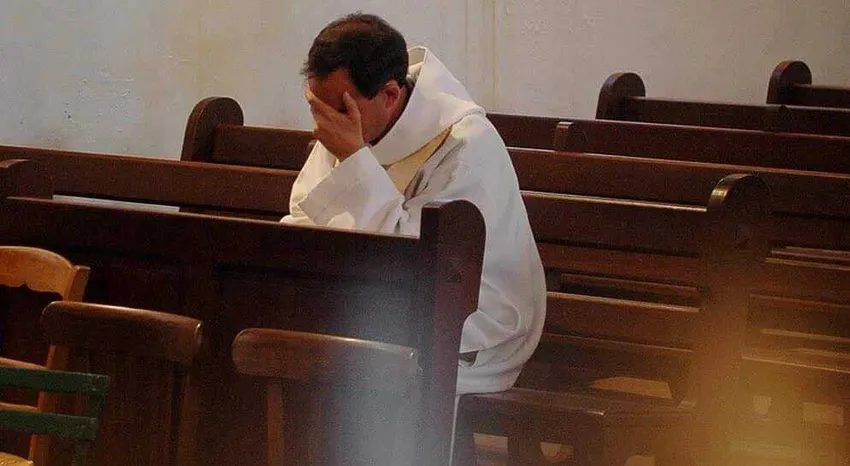
The report’s challenge is ultimately one of courage
A bishop must be willing to say that a man is not ready for ordination. A seminarian must be willing to reveal aspects of his life that may be uncomfortable or embarrassing. A formator must be willing to listen to a psychologist whose assessment is less reassuring than his own. And the Church must be willing to recognize that helping a man leave the seminary may sometimes be an act of charity rather than a failure.
The question asked during the ordination rite—whether a candidate is worthy—cannot be answered by numbers alone.
It demands a Church willing to know its future priests deeply enough to welcome those who can serve with freedom and maturity, and to stop those who cannot.
That may be the most demanding form of vocational discernment: not simply finding men willing to become priests, but having the wisdom to determine which men truly should.
Thank you for reading our content. If you would like to receive ZENIT’s daily e-mail news, you can subscribe for free through this link.

Publicaciones relacionadas:
 A Priest’s 3 Secrets: Leo XIV’s Beautiful Homily (and Task) at His Second Mass for Priestly Ordinations as Pope
 The Ten Countries That Made the Most Financial Contributions to the Pope in 2023
 UNICEF spends hundreds of millions of dollars promoting sexually explicit content, according to research
 On the Exhortation Dilexi te: when Peter reminds us that the poor are at the heart of the Gospel
