

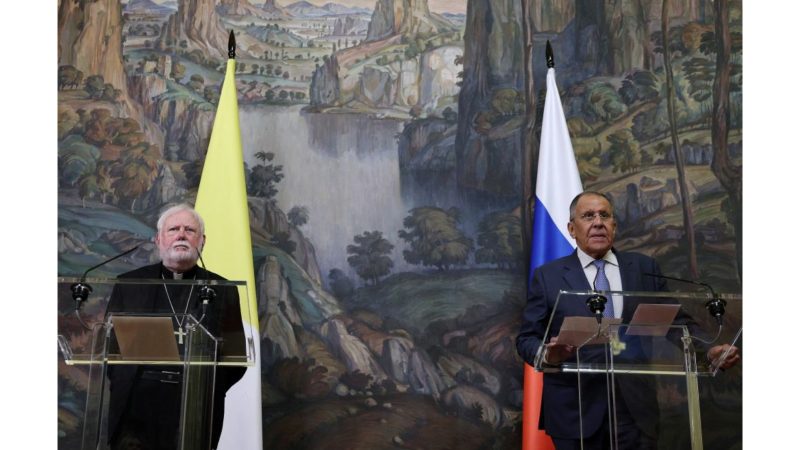
(ZENIT News / Moscow, 08.26.2026).- The Vatican has reopened one of the most delicate diplomatic channels in Europe at a moment when the war in Ukraine remains stubbornly unresolved. Archbishop Paul Richard Gallagher’s four-day mission to Moscow has not produced a peace agreement, but it has demonstrated something the Holy See considers indispensable to any eventual settlement: the possibility of continuing to speak when political relations are deeply fractured.
Gallagher, the Vatican secretary for relations with states and international organizations, met Russian Foreign Minister Sergey Lavrov in Moscow on August 25, in their first meeting in five years. Their conversation lasted more than an hour and was also attended by Archbishop Giovanni d’Aniello, the apostolic nuncio to Russia. The two sides subsequently described the discussion as substantial and useful, while agreeing on the importance of maintaining communication and expanding humanitarian cooperation.
Yet the Vatican did not soften its central position on the war.
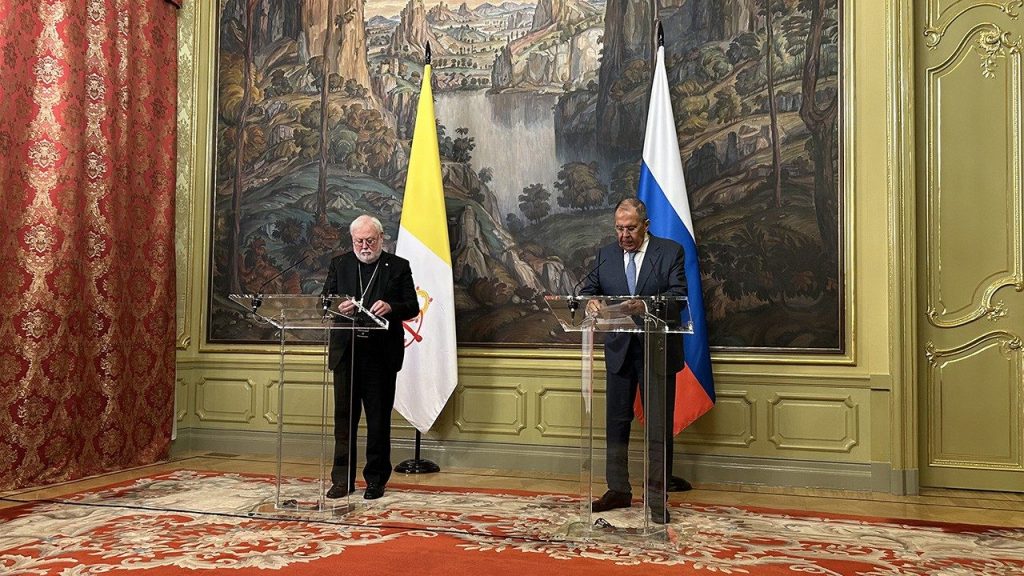
“The conflict cannot be resolved by military means,” Gallagher told journalists after the meeting, reiterating Pope Leo XIV’s call for an end to the hostilities and for genuine negotiations supported by the international community. He urged both Russia and Ukraine to demonstrate openness and goodwill and to respect international and humanitarian law, particularly regarding civilians, wounded people and prisoners of war.
“Let us be clear: this war must end,” Gallagher said.
That sentence captures the distinctive character of the Holy See’s approach. The Vatican is not presenting itself as a military or political power capable of imposing a settlement. Its leverage is different: keeping channels open, supporting humanitarian initiatives and offering its diplomatic good offices when the principal parties are unable or unwilling to communicate directly.
For the Holy See, diplomacy is not an endorsement of the positions of the government with which it speaks. It is a means of preventing dialogue itself from becoming another casualty of war.
Gallagher made precisely that argument after his meeting with Lavrov, saying that dialogue does not eliminate differences but prevents suspicion and misunderstanding from becoming the only language available to the parties. The discussions also covered conflicts and international questions beyond Ukraine, including developments in the Middle East, Asia, Latin America and Africa.
The humanitarian dimension was particularly prominent.
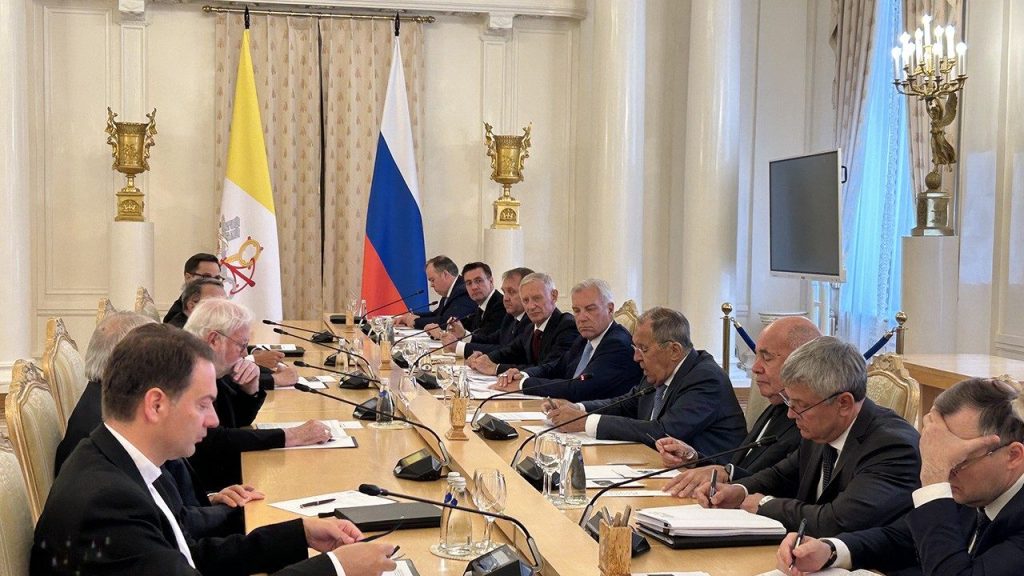
Gallagher warned that more than four years of hostilities have left millions affected by the conflict, with families divided and the material and psychological consequences continuing to accumulate. In the Vatican’s view, even limited humanitarian achievements can help reduce suffering and establish the minimum degree of trust necessary for more ambitious negotiations.
He also referred to the possibility of further Vatican involvement, including the importance of a forthcoming mission to Russia by Cardinal Matteo Zuppi. The Holy See says it remains prepared to help create spaces for dialogue, reinforce humanitarian efforts and offer its good offices in the search for peace.
That work extends beyond the Kremlin.
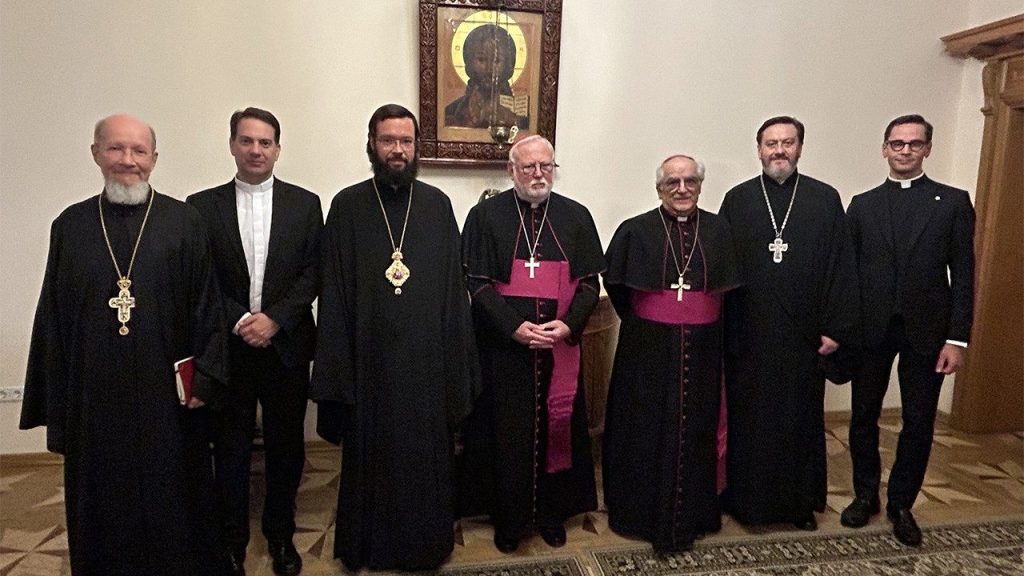
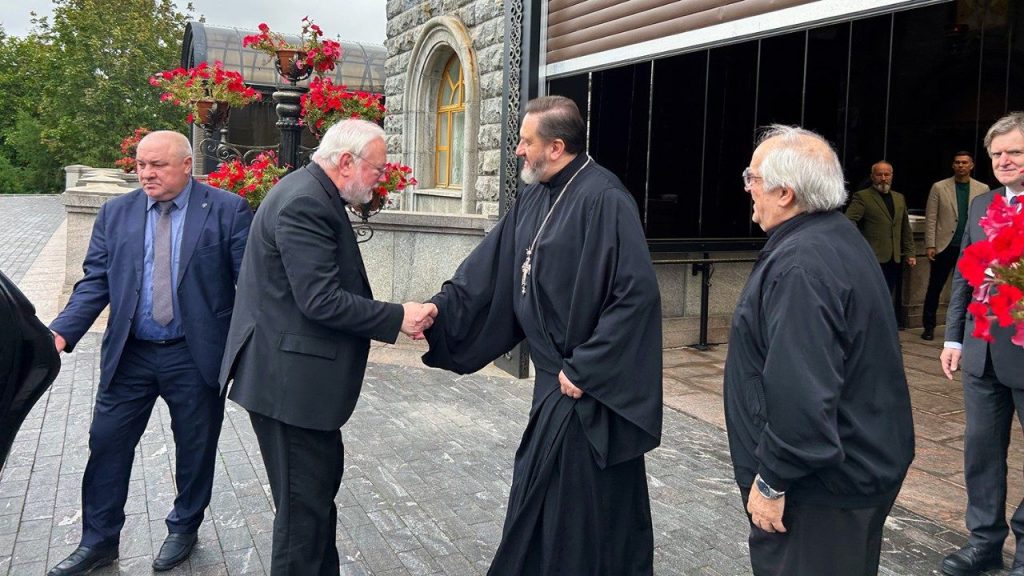
During his visit, Gallagher met Metropolitan Anthony of Volokolamsk, head of the Moscow Patriarchate’s external relations department. Their discussions focused on matters of common interest and the regional situation, with both sides emphasizing the cordial contacts maintained between their Churches and the Holy See. Gallagher also addressed the situation of Catholics in Russia, including their pastoral and charitable activities.
His visit to the Cathedral of Christ the Savior added a symbolic dimension to the mission.
The enormous Moscow cathedral, rebuilt after its destruction during the Soviet period, stands as a powerful reminder of the dramatic transformation experienced by Christianity in Russia. Originally conceived after Napoleon’s invasion, construction began in 1839 and the cathedral was consecrated in 1883. The Soviet government demolished it in 1931 and replaced it with a huge swimming pool. Reconstruction began after the collapse of Soviet rule, with permission granted in 1990 and funding subsequently provided through contributions from believers across Russia.
During his visit, Gallagher saw the cathedral’s historical and religious treasures and prayed before the Vladimir Icon of the Mother of God, one of the most important objects of devotion in Russian Orthodoxy. The cathedral contains some 22,000 square meters of frescoes and preserves or recreates numerous liturgical and historical objects.
The encounter between the Catholic diplomat and the Russian Orthodox world therefore carried meaning beyond protocol. At a time when the war has deepened divisions across Europe and within the Christian world, maintaining ecclesial contacts can provide another, quieter channel through which humanitarian and reconciliation efforts might operate.
Lavrov, for his part, welcomed what he described as the Vatican’s openness to dialogue and its commitment to peace, and agreed on the need to strengthen humanitarian cooperation. At the same time, the Russian foreign minister used the occasion to criticize European support for Ukraine, demonstrating that diplomatic engagement has not erased the fundamental political disagreements surrounding the war.
That tension is precisely why the Vatican considers dialogue necessary.
Pope Leo XIV has described peace as both a gift and a responsibility. Gallagher presented that vision in diplomatic terms: reducing tensions, creating confidence-building measures, promoting dialogue and pursuing arms control. The objective is not merely to stop gunfire temporarily, but to create conditions in which a durable political settlement becomes possible.
The Moscow mission therefore should not be measured by whether it immediately changed the course of the war. It did not.
Its significance lies elsewhere. While armies continue to fight and governments remain divided over the terms of peace, the Holy See is attempting to preserve a space in which negotiation remains conceivable.
For a war that has already inflicted enormous suffering on civilians and reshaped Europe’s security landscape, keeping that space alive may be one of the few forms of diplomacy that can begin before a peace agreement is politically possible.
Thank you for reading our content. If you would like to receive ZENIT’s daily e-mail news, you can subscribe for free through this link.

Publicaciones relacionadas:
 Cuba responds to the Pope by releasing half a thousand prisoners in the context of Jubilee 2025
 Vatican questions “preventive” war in Iran as Leo XIV intensifies diplomatic calls for peace
 Lebanon requests diplomatic mediation from the Vatican to prevent Israel from attacking or displacing Catholic communities in the south of the country
 Trump Attacks the Pope for the Second Day, and Meloni Defends Him. The World Reacts While the Catholic Vice-President of the USA Supports Him
