

(ZENIT News / Rome, 08.27.2026).- The Pope has made an unexpected appearance on one of the most secular stages of contemporary culture: Vanity Fair’s annual list of the best dressed. Yet the inclusion of Leo XIV is about more than fashion. It highlights the curious visual language of a pontificate that combines traditional papal symbolism with unmistakably American touches.
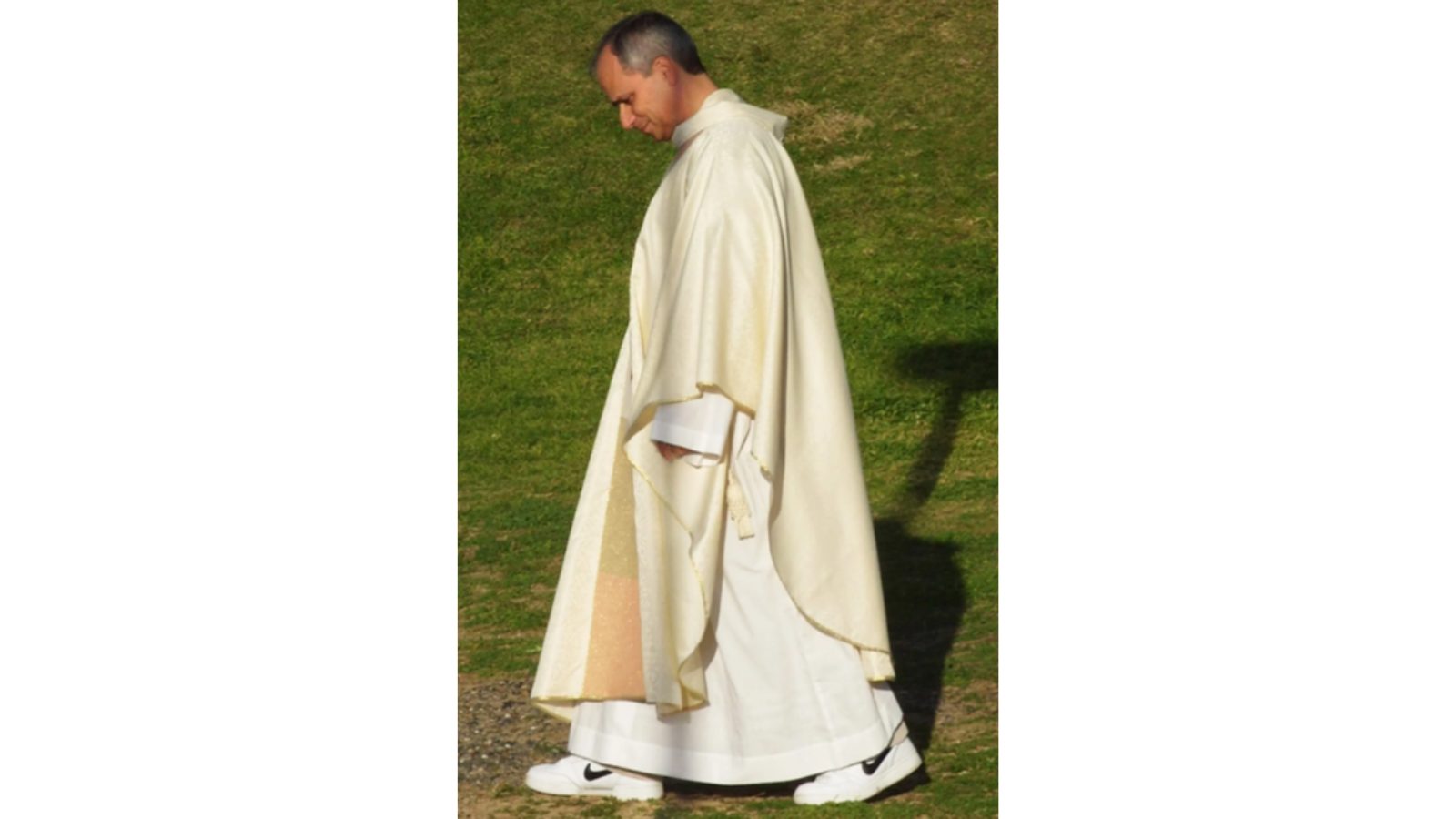
Vanity Fair placed Leo XIV sixth in its “Originals” category in its 2026 best-dressed list, praising the distinctive combination of his cream-colored cassock and sneakers. The category, revived this year after Vanity Fair had discontinued the classification in 2019, is reserved for personalities whose appearance is considered particularly individual, innovative and full of surprises.
The Pope appears alongside figures from very different worlds, including filmmaker Spike Lee, Olympic skater Alysa Liu, Studio Museum of Harlem director Thelma Golden, writer Hilton Ela and fashion blogger Colby Mugrabi. Behind him in the ranking are designer Sandy Powell and singers Rosalía, Yseult and Björk.
It is the second time during Leo XIV’s pontificate that a major fashion publication has singled him out. In December 2025, Vogue included him among its 55 best-dressed people of the year.
The fascination is easy to understand. Robert Prevost, before becoming Pope, was not known for cultivating a flamboyant public image. Yet photographs of him in informal settings, sometimes wearing baseball caps and, notably, Nike sneakers, have given the new Pope an unexpectedly recognizable visual identity.
Fashion correspondent José Criales Unzueta told The New York Post that Leo’s appeal lies partly in an “innate American identity,” particularly in the way sporting footwear and other casual elements can coexist with ecclesiastical dress.
But the apparent contradiction is precisely what makes the Pope’s clothing interesting.
A wardrobe that speaks before the Pope does
Papal clothing is not simply ceremonial costume. Much of it functions as a visual vocabulary, communicating office, authority, liturgical purpose and continuity without requiring a single word.
One of the clearest examples is the red mozzetta, a short cape worn over the cassock. Leo XIV revived its use when he appeared on the central balcony of St. Peter’s Basilica after his election, bringing back a familiar element of papal dress that had been less visible during the pontificate of Pope Francis.
The mozzetta is not a liturgical vestment. Its history reaches back centuries, and it eventually became part of the ceremonial wardrobe of popes, cardinals and bishops. For the Pope, it is associated with his ecclesial authority and, when worn with the papal stole, with his universal pastoral jurisdiction.
Its return therefore communicates something quite different from a pair of sneakers. The mozzetta places Leo within a long institutional history; the sneakers make him immediately recognizable as a contemporary man.
The same contrast can be seen in the white cassock.
The white cassock is perhaps the most instantly recognizable element of papal dress. White has traditionally carried Christian associations with purity, holiness and the glory of Christ. The modern papal white cassock acquired particular importance during the pontificate of Pope Pius V, the Dominican who continued wearing the white habit of his religious order after becoming Pope.
Even small details have traditionally been given symbolic interpretations. The cassock’s 33 buttons, for example, have been associated with the traditional reckoning of the years of Christ’s earthly life.
Alongside it is the white fascia, the ceremonial sash worn around the waist. Its symbolism is connected with dedication, obedience and readiness to serve the Church and the people of God.
Then comes the stole, which belongs to a different category. Unlike the mozzetta and fascia, it is a liturgical vestment associated specifically with ordained ministry. Priests wear it around the neck, while deacons wear it over the left shoulder and across the chest. Leo XIV has frequently appeared in richly embroidered red or burgundy stoles, although white and other designs have also featured in his public appearances.
The symbolism is ultimately one of service rather than personal prestige: the authority of the ordained minister is understood as a responsibility to imitate Christ.
That makes the Pope’s wardrobe less a matter of personal fashion than a carefully layered language.
Between tradition and American informality
This is where Leo XIV’s fashion-list appearances become more revealing.
The same man can appear in centuries-old papal attire and, in a less formal setting, be photographed in athletic shoes. The contrast does not necessarily represent a rejection of tradition. Quite the opposite: the visual effect depends on the fact that the traditional clothing remains immediately recognizable.
The resulting image is unusual: a Pope whose office is expressed through some of the oldest visual traditions of Western Christianity, while his personal appearance can occasionally evoke the culture of American sportswear.
That combination may explain why the fashion world finds him compelling.
Not fashion for fashion’s sake
There is a temptation to treat the Vanity Fair listing as little more than an amusing celebrity footnote. It is certainly an unusual distinction for a Pope. But it also illustrates how profoundly visual the modern papacy has become.
A Pope is now encountered not only in cathedrals and Vatican ceremonies but also through photographs, social media and the rapidly circulating images of everyday life. Clothing can therefore become part of the public conversation about a pontificate long before observers have fully understood its policies or priorities.
Leo XIV’s case is especially interesting because his visual identity does not depend on abandoning traditional symbols. The novelty comes from the juxtaposition.
The mozzetta recalls centuries of papal history. The white cassock identifies the office itself. The stole points toward sacramental ministry. The sneakers and baseball cap, by contrast, communicate something much more ordinary: an American personality comfortable with elements of contemporary culture.
Vanity Fair may have placed Leo XIV among its “Originals” because of an unexpected outfit. But the deeper story is that the Pope’s appearance demonstrates how tradition and modernity can coexist without necessarily cancelling one another.
Thank you for reading our content. If you would like to receive ZENIT’s daily e-mail news, you can subscribe for free through this link.

Publicaciones relacionadas:
 From Castel Gandolfo, Pope Leo XIV Calls for Peace Amid Gaza’s Agony and UN Genocide Allegations
 This is what the Pope’s trip to Turkey, Lebanon, and Latin America would look like: more details and even dates are emerging
 Pope Leo entrusts the important Dicastery that elects bishops to a Carmelite and canonist
 On the Exhortation Dilexi te: when Peter reminds us that the poor are at the heart of the Gospel
