

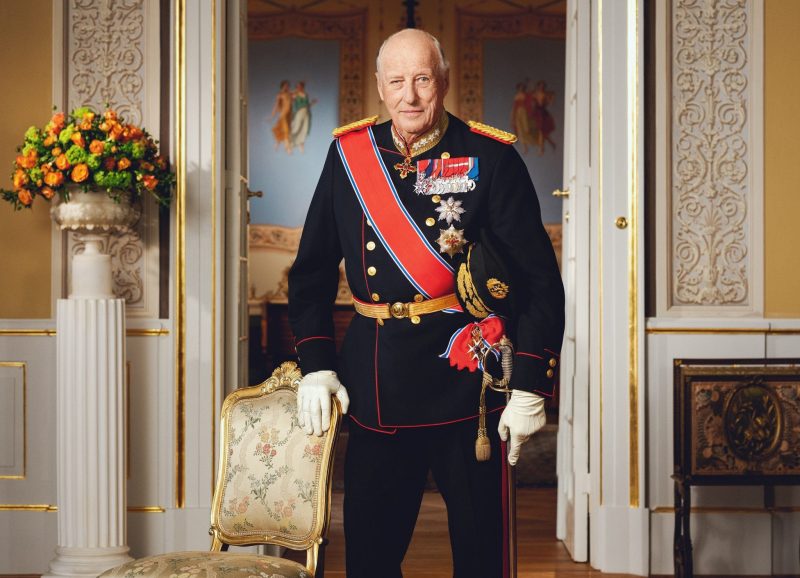
(ZENIT News / Oslo, 08.28.2026).- The death of King Harald V of Norway has brought together two very different dimensions of public life: the personal grief of a royal family and the institutional continuity of a nation. Hours after the Norwegian monarch died on Friday, August 28, Pope Leo XIV sent a message of condolence to his son and successor, King Haakon VIII, placing the death within the Christian horizon of prayer, service and hope.
Harald died at 6:35 a.m. at Oslo University Hospital, Rikshospitalet, at the age of 89. He had been admitted on August 17 after a medical check-up revealed a serious blood disorder. His condition subsequently deteriorated following a bloodstream bacterial infection. He had suffered from hemolytic anemia, a condition in which red blood cells are destroyed more rapidly than the body can replace them.
In his telegram, addressed to the new Norwegian sovereign, Leo XIV said he was deeply saddened by the death and extended his condolences to Haakon VIII, the Royal Family and the Norwegian people. Rather than focusing solely on the end of a long reign, however, the Pope emphasized the meaning of Harald’s decades of public service, expressing the hope that the fruits of those years would endure.
The Pope also assured the new King of his prayers for Harald’s eternal rest and invoked God’s blessings of consolation and peace upon those mourning his death. The message reflects a longstanding Catholic understanding of public authority: a sovereign’s significance is measured not simply by constitutional position, but by the service rendered to the people entrusted to his care.
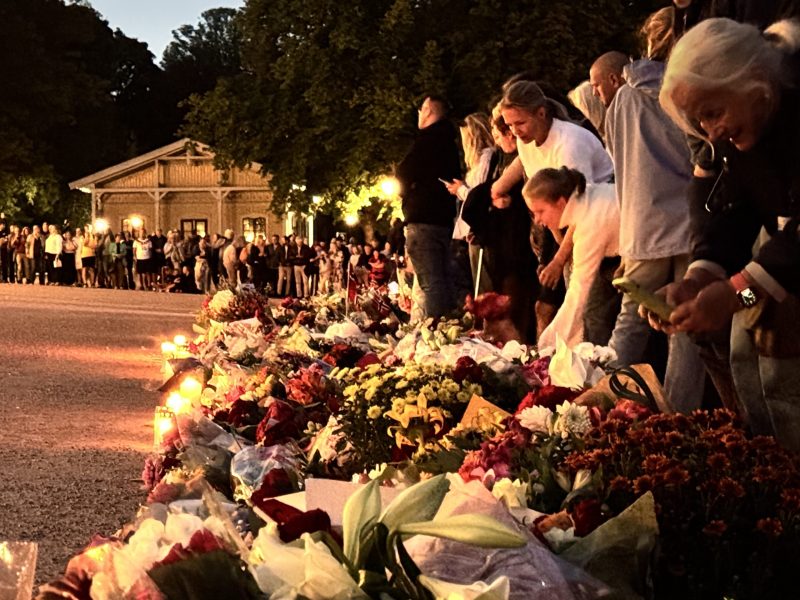
That theme has also emerged in the response of Norway’s Catholic Church. Bishop Erik Varden of Trondheim, who also serves as apostolic administrator of Tromsø and president of the Nordic Bishops’ Conference, offered a tribute on behalf of Norwegian Catholics and entrusted Harald to God’s mercy. He asked Catholics to pray as well for Queen Sonja, the Royal Family and the new King.
Varden began his reflection with the ancient Christian prayer known as the Commendation of the Soul, traditionally associated with the Church’s prayers for the dying. Its central perspective is strikingly different from the language of political succession: death is understood not merely as an ending, but as a passage from earthly life toward eternal life.
The bishop portrayed Harald as a monarch who gave Norwegians a distinctive sense of being recognized and valued. He recalled the King’s wisdom and understated humor, as well as his ability to represent the country without allowing the institution of monarchy to become merely an expression of personal ego.
For Varden, Harald’s death also illustrates something larger about constitutional monarchy: continuity can possess a particular value in periods of uncertainty. The familiar principle that the death of one sovereign immediately gives way to the reign of another is not simply a ceremonial formula. It expresses the idea that national institutions can survive the passing of individuals.
Harald’s own reign lasted more than 35 years. He succeeded his father, Olav V, on January 17, 1991, and became the longest-serving reigning monarch in Europe. He was also a three-time Olympic sailor and oversaw a modernization of the Norwegian royal household during his decades on the throne.
In later years, repeated health problems raised questions about his future as sovereign, but Harald rejected abdication, maintaining that he had sworn before Norway’s Parliament to serve for life.
His death now opens a new chapter for the Norwegian monarchy. His son, Haakon VIII, 53, has succeeded him. Haakon’s accession means that continuity has been preserved even as the country says farewell to a monarch who occupied the throne for more than three decades.
Harald is survived by Queen Sonja, also 89, whom he married 57 years ago, and their two children, Princess Märtha Louise and King Haakon VIII. Haakon’s daughter, Princess Ingrid Alexandra, is now next in the line of succession.
The Catholic response will continue beyond the initial expressions of mourning. A Requiem Mass for Harald is scheduled for August 29 at noon at St. Olaf’s Cathedral in Trondheim, with Lauds and Vespers also offered for the deceased monarch.
Thank you for reading our content. If you would like to receive ZENIT’s daily e-mail news, you can subscribe for free through this link.

Publicaciones relacionadas:
 Pope Leo’s visit to Argentina unofficially confirmed after audience with President Milei
 Before the Pope’s arrival: a survey reveals the popularity of Pope Leo XIV, as well as the expectations and topics of interest among those who will welcome him in Spain
 Keiko Fujimori Visits the Peruvian Episcopate and Gets Involved in the Upcoming Visit of Pope Leo XIV to Peru
 Leo XIV encourages religious to view community life as a source of inspiration and sanctification
