

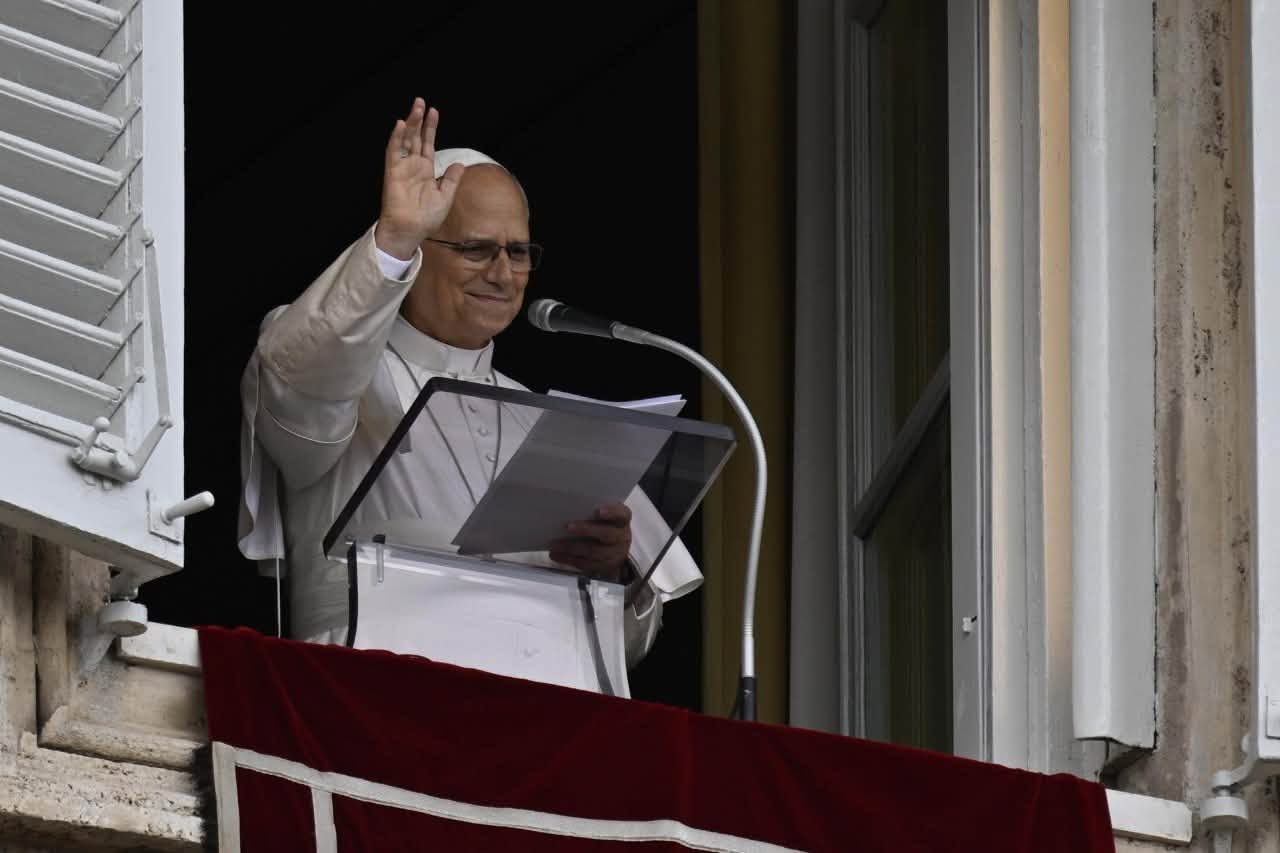
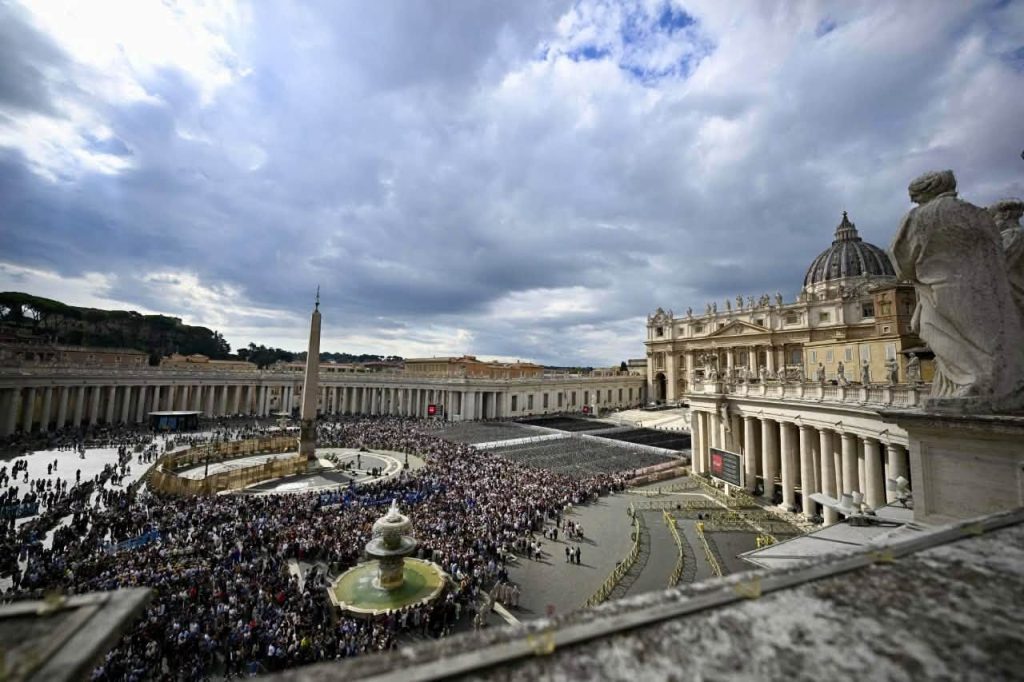
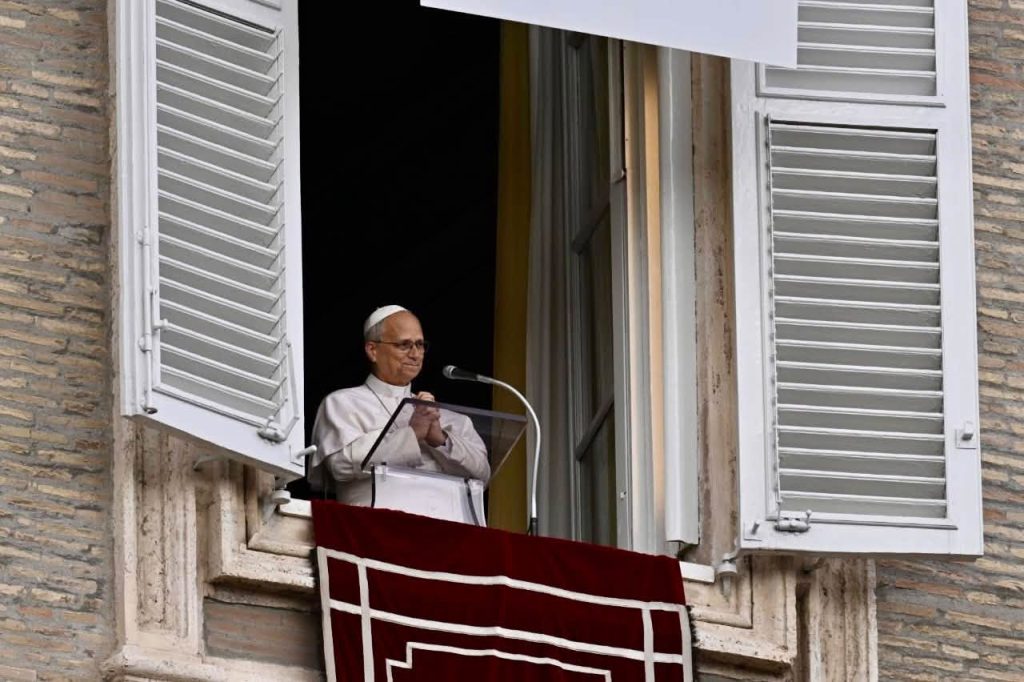
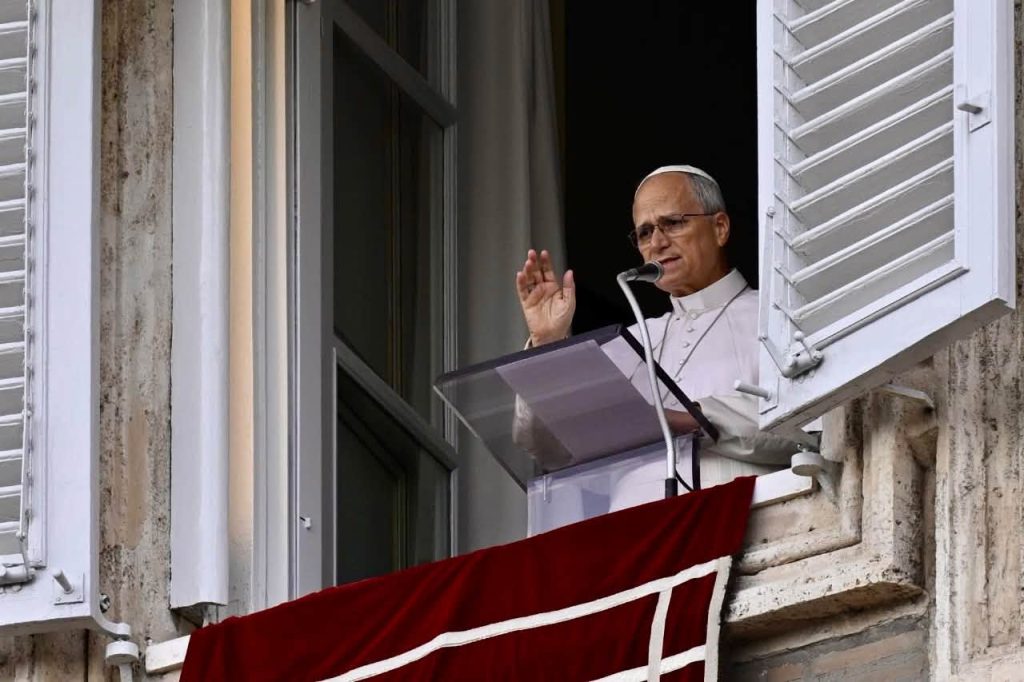
(ZENIT News / Rome, 10.18.2026).- A week after announcing that he would undergo surgery, Leo XIV appeared once again at a large public event at noon on Sunday, October 18. The occasion was the recitation of the Marian prayer, the Angelus, from the window of the papal apartment. For this occasion, there was a particularly large turnout of the faithful. Below is the English translation of the Pope’s words: a brief explanation of the parable of the wedding feast:
***
Dear brothers and sisters, happy Sunday!
In today’s Gospel reading, Jesus speaks of the wedding feast prepared by a king for his son (cf. Mt 22:1–14).
A son’s wedding is a special occasion for any family, and this happy father wants to share his joy with everyone. He prepares a banquet and invites many people. Saint Thomas Aquinas says that goodness, by its very nature, tends to spread: “Bonum dicitur diffusivum sui” (Summa Theologiae, I, q. 5, a. 4, ad 2). The image in the narrative expresses this idea in the context of our lived experience. When something good happens, it kindles a light that leads us to share our happiness with others.
In response to such a gracious invitation, however, instead of coming to the feast, the guests turn away and prefer to continue going about their business. Some are annoyed, insult the king’s messengers and even kill them. Unfortunately, this can happen to us, too, for the good we offer to do is not always understood, recognized or appreciated. Indeed, at times, it is willfully misinterpreted and rejected. Yet this must not discourage us. When faced with rejection, the king does not call off the wedding or cancel the celebrations. On the contrary, he extends his invitation to an even greater number of people, sending his servants out into the streets to call them so that the bride and groom’s joy may be a gift for all.
At this point, we can ask ourselves whom the main characters in this story represent. Saint Jerome identifies the king as the Heavenly Father, the bridegroom as Jesus, and the bride as the Church (cf. Commentary on Matthew, Book III, ch. 22). We are among the main characters as well, chosen by the Lord to share our lives with him and to be bearers of life with him. The wedding feast is ours, and the banquet hall is our churches and homes, the places where we live and where the King’s Son, Jesus Christ, continues to declare his love for us and await our “yes.” We encounter him there, and are clothed like a bride in the white garment of Baptism and adorned with the jewels of good works, which draw us closer to God and to one another.
The joy we proclaim, therefore, is not artificial; it is profound, concrete and real. It is as beautiful as the faces of the people we meet. It is as genuine as the work, the smiles, the tears, the handshakes, and the acts of kindness that fill our days. It is a gift of God for the salvation of the world.
Therefore, let us ask Mary, the Mother of the Lord, to help us grow in this joy. Even when it is not understood, let us proclaim this joy always and everywhere, with generosity, courage and faith.
Thank you for reading our content. If you would like to receive ZENIT’s daily e-mail news, you can subscribe for free through this link.

Publicaciones relacionadas:
 This is how the Pope explains how we are called to unite our waiting for the Savior with attention to what God is doing in the world
 To enter into Christmas: Pope Leo XIV’s beautiful, short, timely, and appropriate meditation on Saint Joseph
 Ordinary time, our baptism, and the memory of a gift received: a simple reflection by Leo XIV
 Is Having Faith «Believing Blindly»? Pope Leo XIV Responds
