

(ZENIT News / Roma, 11.27.2026).- Pope Leo XIV has given the Catholic Church’s prison ministry a new institutional framework, placing it under direct Vatican supervision and challenging local Churches to look beyond prison walls to the social failures that often precede incarceration. The reform, announced on November 25, comes amid growing pressure on prison systems worldwide, where approximately 11.7 million people are currently serving sentences.
Through the apostolic letter In Carcere Eram, et Venistis ad Me (“I Was in Prison and You Visited Me”), signed on November 22, the Solemnity of Christ the King, Leo abolished the International Commission of Catholic Prison Pastoral Care, established in Rome in 1950, and created a new Service for the Promotion of Prison Ministry within the Dicastery for Promoting Integral Human Development.
The Pope has appointed Archbishop Jorge Ignacio García Cuerva of Buenos Aires to coordinate the initiative for five years. The Argentine prelate, who previously served as the Pope’s delegate to the now-dissolved commission, will be assisted by at least three advisers with experience in prison ministry.
The decision is more than an administrative reorganization. Leo XIV wants prison ministry to become a more coordinated expression of the Church’s universal mission, strengthening the relationship between the Vatican and the dioceses, episcopal conferences and Catholic organizations working directly with prisoners.
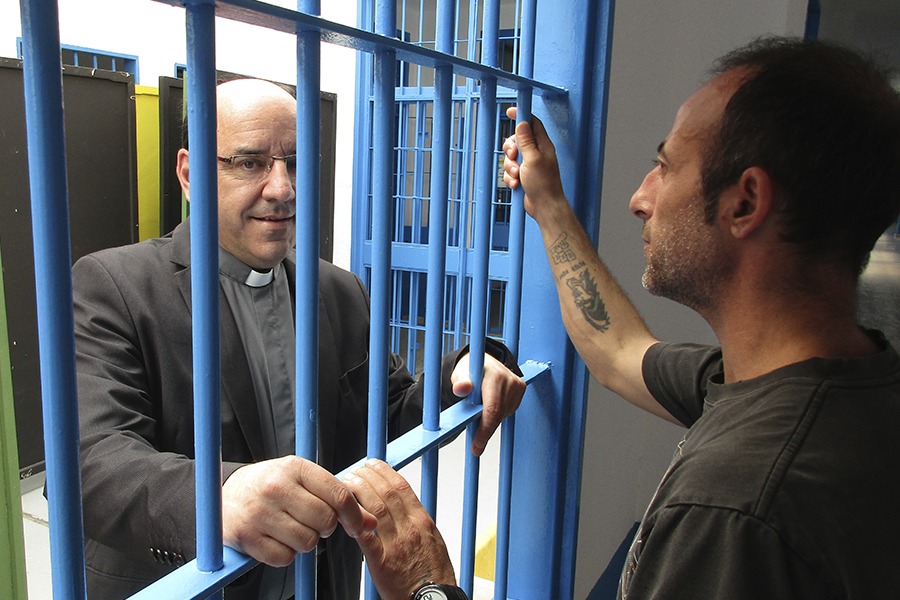
“The problem of prisons is a problem of society as a whole,” the Pope writes, insisting that pastoral care behind bars cannot be treated as an isolated or secondary activity. Its foundations, he argues, must be found in the Church’s evangelizing mission and in the conviction that no human being loses his or her dignity through imprisonment, past mistakes or personal suffering.
That principle is particularly significant in a world where incarceration frequently exposes people to conditions that compound rather than remedy their marginalization.
According to Penal Reform International’s Global Prison Trends 2026 report, the worldwide prison population stands at approximately 11.7 million, of whom 93% are men and 7% women. Since 2000, the number of prisoners has increased by 27%. Overcrowding, inadequate medical care and violence remain widespread problems, with organized crime posing serious threats to both inmates and prison personnel.
For García Cuerva, these circumstances demand a Church willing to enter places that society would rather ignore. He describes prison ministry as a prophetic presence, capable not only of offering spiritual accompaniment but also of challenging public policies that perpetuate injustice.
Speaking to Vatican media, the archbishop recalled that his experience of prison ministry over three decades has shown him how different the realities of incarceration can be from one country to another. The new service, therefore, should not impose a uniform pastoral model. Its purpose will be to identify common spiritual foundations capable of bringing together diverse experiences and inspiring a shared mission.
One of its central responsibilities will be to develop this common spirituality while encouraging theological reflection, training chaplains and pastoral workers, promoting digital educational resources and facilitating the exchange of practical experience. It will also establish dialogue with civil authorities and contribute to efforts to make prison policies more respectful of human dignity.
The new structure will operate as a voluntary international network. Dioceses, episcopal conferences, regional and continental associations, and the hierarchical structures of Eastern Churches will be able to designate representatives for renewable five-year terms, with one renewal permitted. The coordinator may also establish working groups, educational initiatives and academic collaborations involving theology and law.
Unlike its predecessor, the service will not possess independent canonical legal personality. Nor does the document provide for a permanent budget: a separate fund will be established for the coordinator’s mandate, while participating organizations will finance individual projects. The arrangement reflects the Pope’s preference for a flexible structure focused on cooperation rather than the creation of another bureaucratic institution.
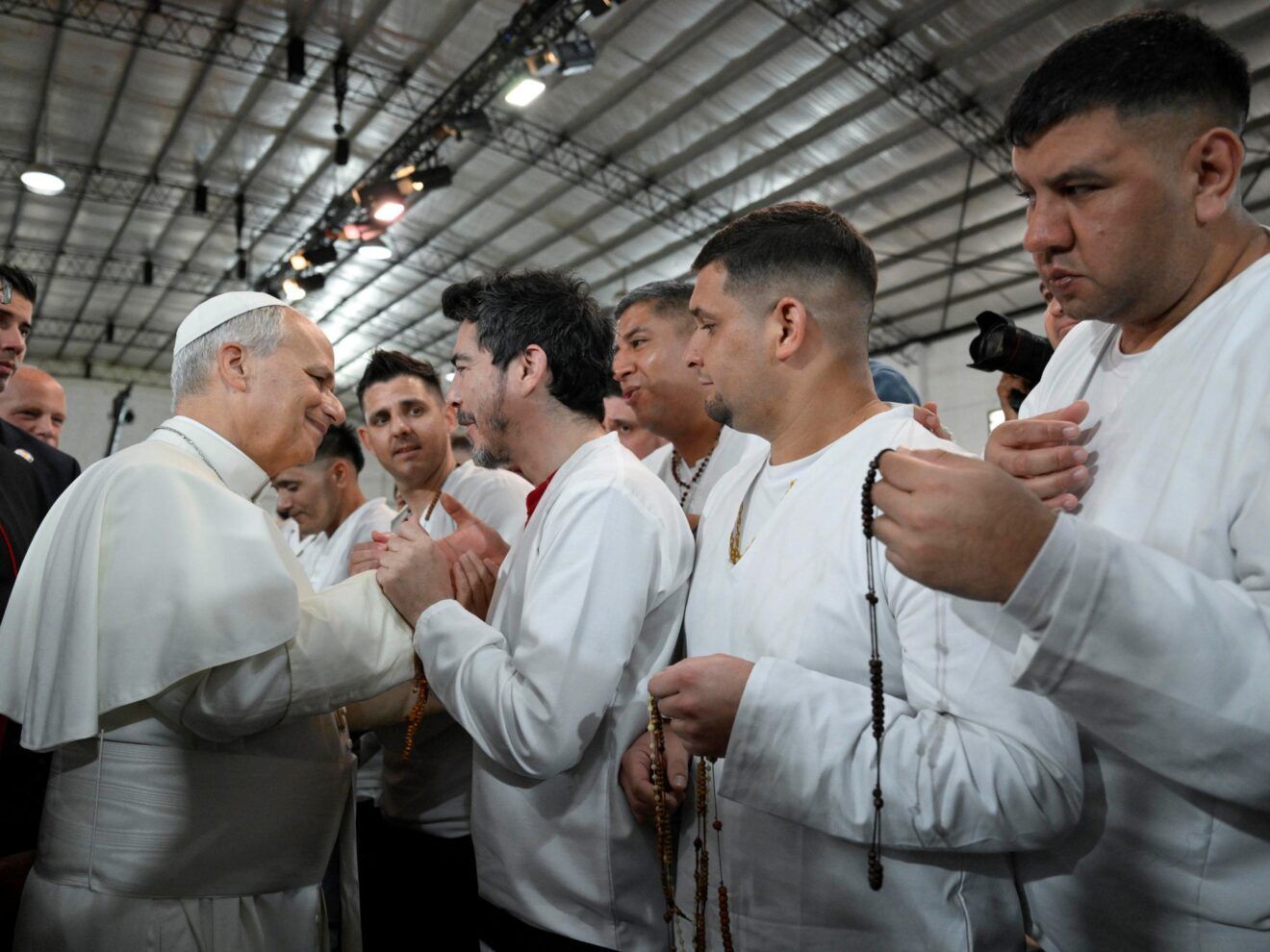
García Cuerva’s appointment also carries particular significance in light of Leo XIV’s recent visit to Villa Devoto prison in Buenos Aires on November 11, accompanied by the archbishop. During that encounter, the Pope encouraged inmates to make peace with God. For García Cuerva, who had visited the facility many times over the preceding 30 years, the experience reaffirmed the importance of remaining close to people whose suffering is largely invisible to the wider public.
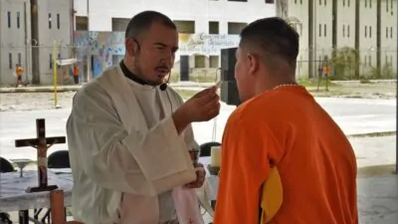
The archbishop also offered a broader diagnosis of the circumstances that bring people into prison. He warned against criminalizing poverty, observing that many inmates come from disadvantaged backgrounds and have been caught in a succession of unresolved conflicts involving their families, neighborhoods, educational institutions and the justice system. Some, he noted, have not even had the financial means to obtain adequate legal representation.
This perspective does not diminish the seriousness of criminal responsibility or the suffering of victims. Rather, it raises a question that any genuinely humane justice system must confront: whether punishment alone can address the social conditions that contribute to crime, or whether rehabilitation, access to justice and the possibility of rebuilding one’s life must also be central concerns.
Leo XIV’s document places this challenge within the Gospel itself. Recalling Christ’s identification with prisoners in Matthew 25:36, the Pope presents the encounter with an incarcerated person as a fundamental criterion for Christian pastoral action. Every prisoner, regardless of personal history, remains someone loved by God and deserving of human respect.
The new service is consequently expected to do more than coordinate chaplaincy activities. García Cuerva has identified its influence on public debate and legislation as one of its major challenges, arguing that the Church must bring the realities witnessed inside prisons into discussions that often take place without any direct knowledge of them.
For the Catholic Church, the reform establishes a renewed international instrument for accompanying prisoners while giving greater prominence to an often-neglected dimension of its social mission.
Thank you for reading our content. If you would like to receive ZENIT’s daily e-mail news, you can subscribe for free through this link.

Publicaciones relacionadas:
 Pope Leo entrusts the important Dicastery that elects bishops to a Carmelite and canonist
 Pope Leo XIV continues to reshape the Roman Curia: Meet the new Australian prefect of the Dicastery for Legislative Texts
 Archbishop of Paris Announces More Details of the Pope’s Visit to the French Capital
 Here’s what the second consistory of Leo XIV will look like: topics, schedule, and procedure. All the cardinals will be in Rome on the last weekend of June 2026
