

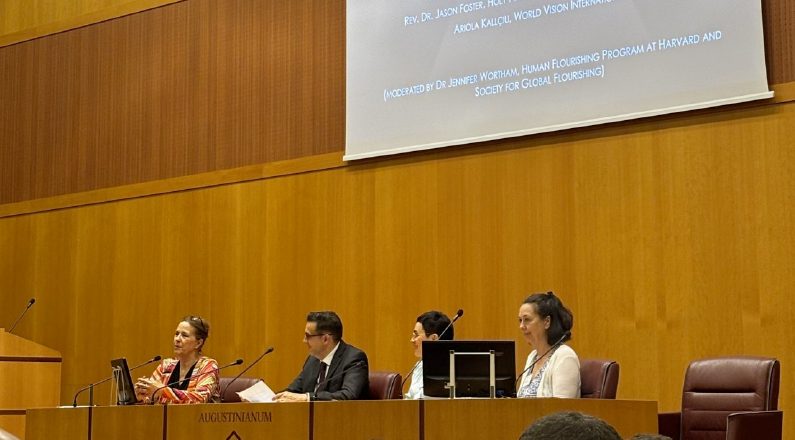
(ZENIT News / Rome, 06.16.2026).- The Pontifical Commission for the Protection of Minors and Ending Clergy Abuse (ECA) convened their first in-person meeting in Rome on 15–16 June 2026, launching a structured dialogue on safeguarding, victim/survivor engagement, and strengthening protection measures across the Catholic Church.
The meeting was proposed by Pope Leo XIV following his meeting with the ECA Board in October 2025. Held in Palazzo Maffei and facilitated through a trauma-informed approach, the “Rome Safeguarding Dialogues” brought together Commission representatives and victim/survivor advocates in a spirit of listening, accountability, and collaboration.
Commission President Monsignor Thibault Verny opened the meeting reaffirming the Church’s duty to listen to victims and survivors, stressing that it must be an active exercise with concrete outcomes to be credible.
ECA Board President Gemma Hickey called for a spirit of curiosity, kindness, and hope, underscoring a shared responsibility to protect children and people in a situation of vulnerability in the Church today from abuse.
Discussions focused on victims’ rights, institutional responsibility, justice, and mandatory safeguarding principles grounded in lived experience. Participants explored how victim/survivor insights can better inform policy, reporting, and practice, while reinforcing a culture of transparency and accountability across Church structures.
The Commission presented its newly promulgated statutes, outlining the strengthened safeguarding framework and spoke of the methodology of the Annual Report in working with victims and survivors in measuring declared safeguarding practices in the local church.
ECA highlighted its advocacy across 14 countries on 5 continents and called for the adoption of a universal zero-tolerance canon law on clergy abuse, modelled on existing Vatican-approved norms in the United States. The proposal emphasizes clear standards, accountability, and permanent removal from ministry of church personnel when an abuse has been admitted or established after an appropriate process in accordance with canon law.
Participants also addressed the need to expand safeguarding beyond minors to include persons in situations of vulnerability, including women religious, priests, seminarians, and members of lay movements. Key challenges discussed included cultural barriers, uneven implementation, and resource constraints across different regions.
Next Steps
Participants agreed to:
- Advance dialogue on a universal zero-tolerance of abuse recommendations
- Share detailed proposals on canon law and strengthen global advocacy efforts
- Expand engagement with victim/survivor communities, particularly in underrepresented regions
- Establish ongoing collaboration and communication mechanisms
- Address barriers to implementation, including cultural and structural challenges
The meeting concluded with a shared commitment to continued cooperation, victim/survivor centered approaches, and concrete action to build a safer Church worldwide.
Thank you for reading our content. If you would like to receive ZENIT’s daily e-mail news, you can subscribe for free through this link.

Publicaciones relacionadas:
 Father Marko Rupnik Corrects the Society of Jesus: He Asked to Leave First and with Him All the Jesuits of the Aletti Center
 Pope Francis expels founder of Sodalitium Christianae Vitae from Sodalitium
 Vatican Assembles Independent Tribunal to Try Former Jesuit Marko Rupnik
 Case of mismanagement of abuse allegations could halt canonization of Jesuit Pedro Arrupe
