
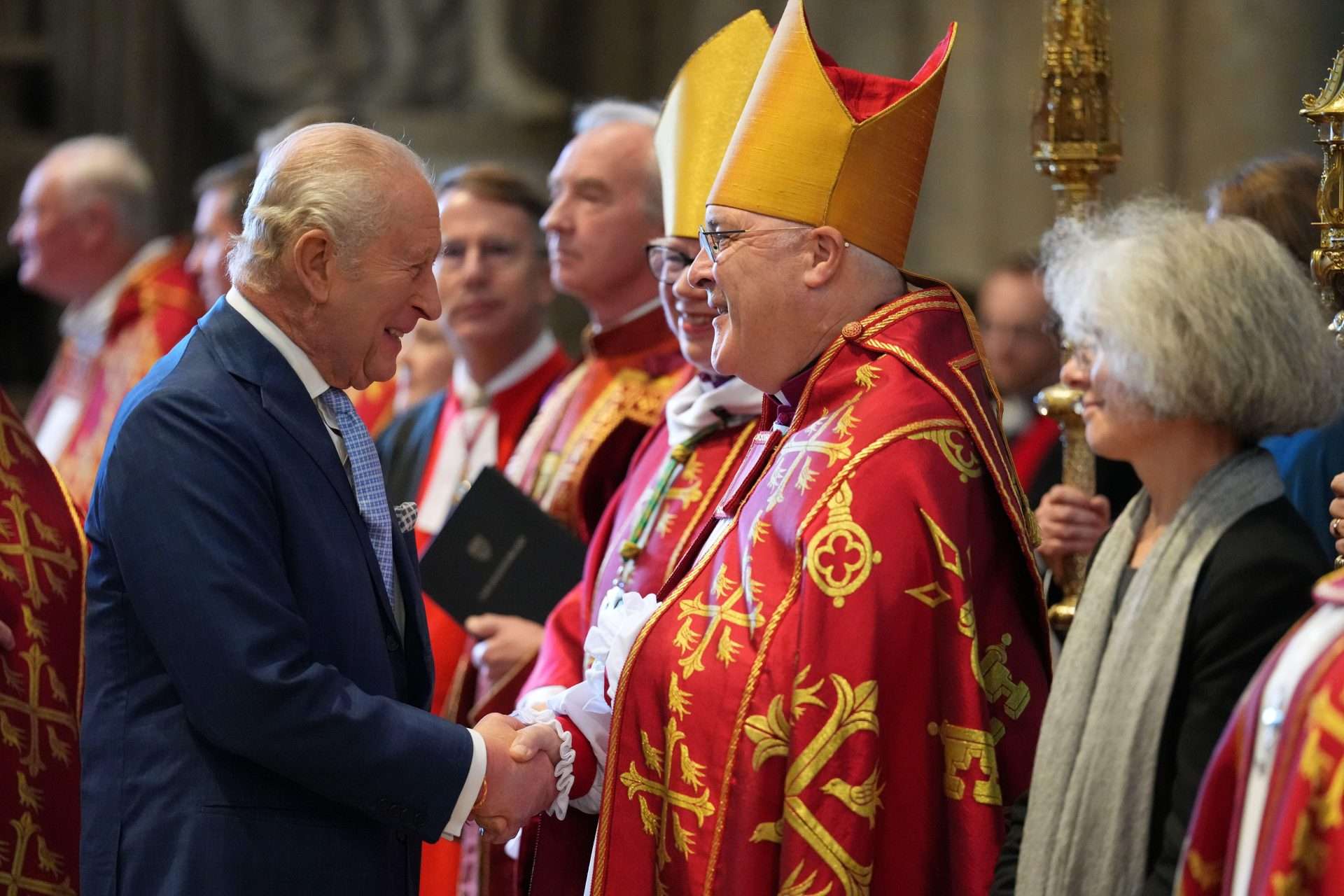
(ZENIT News / London, 11.18.2026).- The opening of the Church of England’s 12th General Synod brought together an unusual combination of voices in Westminster Abbey: King Charles III, the Church’s new Archbishop of Canterbury, Sarah Mullally, and a senior Catholic figure from the Vatican’s synodal process. Their presence underscored a shared concern running through the ceremony: how Christian communities can recover their sense of mission, strengthen cooperation and offer hope in a world marked by uncertainty and division.
One of the most significant moments came with the address by Sister Nathalie Becquart, who served as undersecretary of the Vatican’s Synod of Bishops from 2021 to 2026 and became the first woman with voting rights in that body. She was the first Catholic woman to preach at the opening of a Church of England General Synod, following the appearance of Father Raniero Cantalamessa, preacher of the Papal Household, in 2015.
Her central message was that synodality must not become an exercise in internal church administration or a process detached from the wider world. Its purpose, she argued, is to foster a Church capable of receiving the gifts of others and placing them at the service of the common good.
“The exchange of gifts is at the heart of synodal spirituality,” Becquart told the assembly, emphasizing that participation in a synod should not separate its members from other Christians or from humanity as a whole. Rather, it should deepen their responsibility to listen, discern and walk alongside others under the guidance of the Holy Spirit.
Drawing on the biblical account of Zacchaeus in the Gospel of Luke, she described Christ as the one who takes the initiative, approaches people where they are and shares their everyday lives. Her image of Jesus meeting people in a pub or over a cup of tea at Buckingham Palace brought an informal touch to a theological point: the Church must allow the Gospel to enter ordinary human experience rather than retreat into its own institutional world.
View this post on Instagram
Becquart also acknowledged that this approach inevitably encounters resistance. Some Christians remain suspicious of dialogue and uncomfortable with the possibility that God may be at work beyond their own established circles. The challenge, she suggested, is to resist the temptation to reject gifts simply because they come from people whose perspectives or experiences differ from our own.
For her, synodality is ultimately a spiritual journey rooted in the conviction that God walks with his Church through the upheavals of history. Dialogue is not an end in itself, but a means of discerning how Christians can respond faithfully to the challenges of their time.
King Charles III brought a complementary perspective when he addressed the Synod after the service at Church House. Describing Christianity as the foundation of his personal life and public responsibilities, he called his faith “the sustenance that nourishes and the compass that guides every one of my acts as Sovereign.”
The King recalled that his Christian faith, received through baptism and confirmation, had deepened over the decades. He also paid tribute to his mother, Queen Elizabeth II, who attended ten General Synod openings and maintained a longstanding commitment to the Church of England. As her successor, he said, he shared her dedication to the life of the Church, grounded in the teachings of Jesus Christ.
Charles urged Synod members to pray for Christians facing persecution, particularly in the Middle East and the Holy Land. Their perseverance, he said, bears witness to the enduring power of faith, hope and love. His appeal highlighted the responsibility of established Christian communities to remember believers whose freedom and security remain under threat.
The King also referred to his meeting with Pope Leo XIV in Rome, expressing confidence that closer relationships between Christian traditions could strengthen their shared mission of evangelization. In a period when Christianity is increasingly challenged by secularization and social fragmentation, cooperation between Churches can offer a more credible witness than isolation or rivalry.
Archbishop Sarah Mullally, welcoming the King to the first General Synod opening for both of them, acknowledged the considerable changes that had taken place since the previous assembly began in 2021. She recalled Queen Elizabeth II with affection while encouraging members to examine anew the Church of England’s vocation in a period of instability at home and abroad.
Mullally also pointed to grounds for optimism, particularly the growing number of people returning to churches in search of meaning, community, purpose and an encounter with God. She described parish life as the foundation of the Church of England’s mission, providing a Christian presence in communities across the country.
The three interventions offered different but complementary perspectives on the same challenge. Becquart emphasized listening and the exchange of spiritual gifts; Charles highlighted the sustaining power of Christian faith and solidarity with persecuted believers; and Mullally called attention to the importance of local communities and renewed religious engagement.
Thank you for reading our content. If you would like to receive ZENIT’s daily e-mail news, you can subscribe for free through this link.