

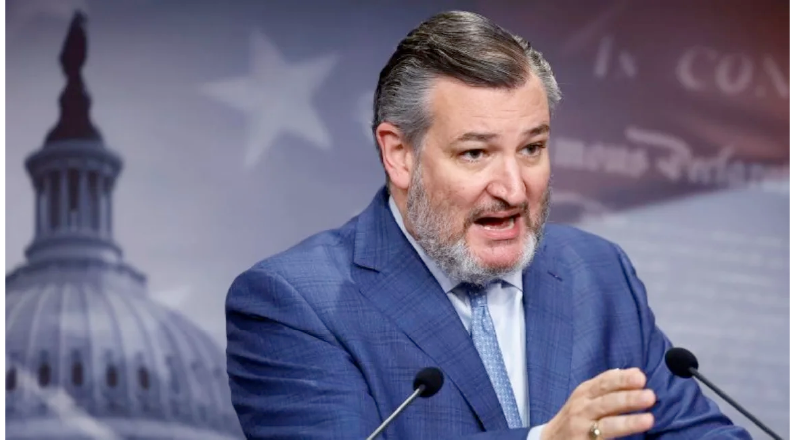
(ZENIT News / Washington, 10.10.2025).- A pointed accusation from U.S. Senator Ted Cruz has reignited global scrutiny of Nigeria’s record on religious violence, drawing a swift and defensive response from the government in Abuja. What the Texas lawmaker framed as a demand for accountability, Nigerian officials dismissed as reckless rhetoric that misrepresents a complex national crisis.
In a post on X on October 7, Cruz cited staggering figures: “Since 2009, more than 50,000 Christians in Nigeria have been slaughtered, and over 18,000 churches and 2,000 Christian schools destroyed.” These atrocities, he wrote, “are the result of decisions made by specific people, in specific places, at specific times — and it speaks volumes about who is attacking now that light is being shone on these matters.” The senator concluded with a pointed warning: “The United States knows who those people are.”
The Nigerian government pushed back sharply. In remarks reported by Newsweek, a spokesman for President Bola Tinubu condemned Cruz’s statements as “careless rhetoric that fuels misunderstanding.” The spokesman added, “Nigeria is not witnessing a Christian genocide; it is facing terrorism that targets everyone.” He accused Cruz and others, including commentator Bill Maher, of “amplifying falsehoods that embolden extremists and slander an entire nation.”
While the Nigerian administration insists that violence in the country is driven by non-sectarian terrorism, international observers paint a darker picture. The advocacy organization Open Doors ranks Nigeria as the seventh most dangerous country in the world for Christians, noting that 3,100 of the 4,476 Christians killed for their faith globally last year were Nigerian.
Human rights watchdogs, including “Freedom House”, acknowledge that while Nigeria’s constitution guarantees freedom of religion, regional power structures often erode that protection. In practice, state and local governments frequently endorse “de facto official religions,” limiting the rights and activities of other faiths. Armed Islamist groups such as Boko Haram and the Islamic State West Africa Province (ISWAP) continue to stage lethal assaults on Christian communities, as well as on Muslims who oppose their ideology.
The U.S. State Department has also expressed concern over the Nigerian government’s response to such violence. Its 2024 human rights report noted that while Abuja occasionally investigates allegations of abuse, prosecutions and punishments “remain rare.”
Cruz’s remarks came as he reintroduced the «Nigerian Religious Freedom Accountability Act», a bill that seeks to impose sanctions on Nigerian officials complicit in religious persecution or in the enforcement of Sharia and blasphemy laws. “Nigerian Christians are being persecuted and executed for their faith by Islamist terrorist groups,” Cruz said in a statement announcing the legislation. “It’s time to impose real costs on officials who enable these atrocities.”
His proposal would use both new and existing mechanisms to freeze assets, restrict travel, and suspend aid to individuals or agencies tied to religious repression.
For Cruz, the issue is not simply geopolitical but moral — a test of whether the United States will act on its stated commitment to religious freedom. For Nigeria, it is a matter of sovereignty and reputation. “Nigeria deserves solidarity in its fight against terrorism,” the government spokesman insisted, “not careless words that deepen misunderstanding.”
Thank you for reading our content. If you would like to receive ZENIT’s daily e-mail news, you can subscribe for free through this link.

Publicaciones relacionadas:
 Number of Catholic missionaries killed increases in 2023
 England: Teacher Refuses to Teach LGBT Ideology in “Christian” School and Is Persecuted
 Nigeria: 200 Christians killed, the largest slaughter in a single day in an African country
 Christians in Remote Indian Village Attacked for Resisting Forced Conversions
